

Louis Style Cabinet
A louis style cabinet brings French 18th-century court design into a room through decorative veneers, curving woodwork and gilt metal mounts.
Louis Style Cabinet
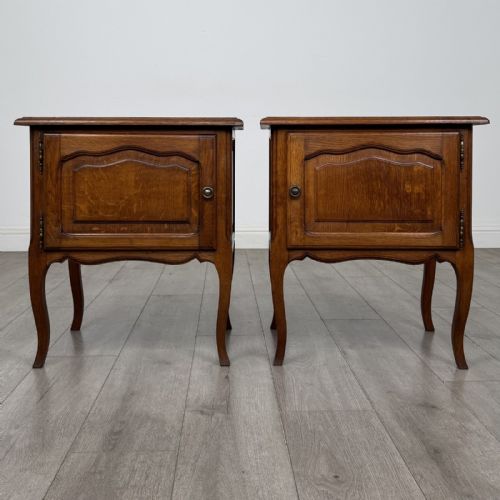
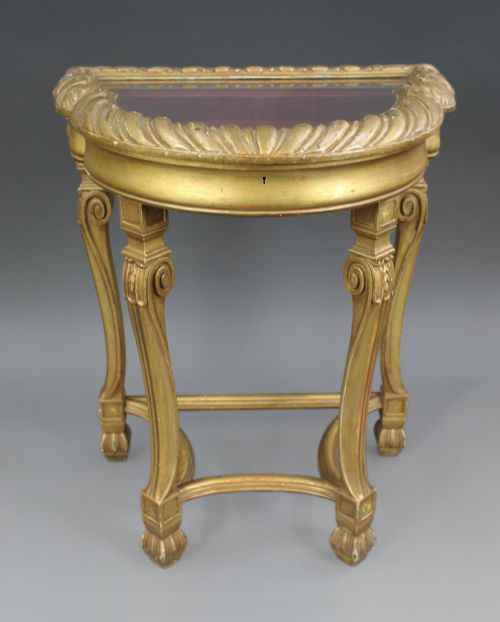
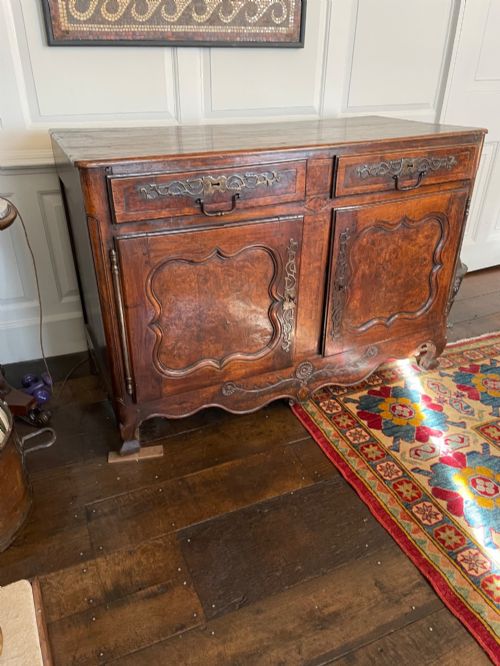
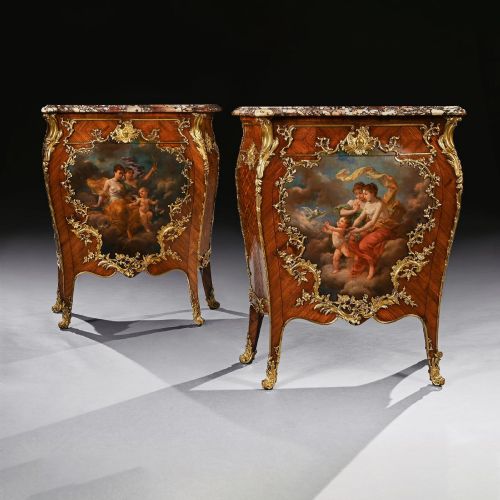
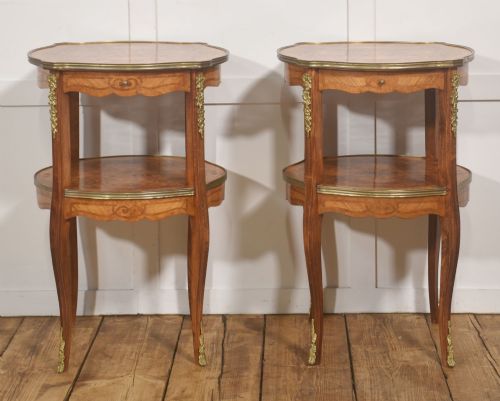
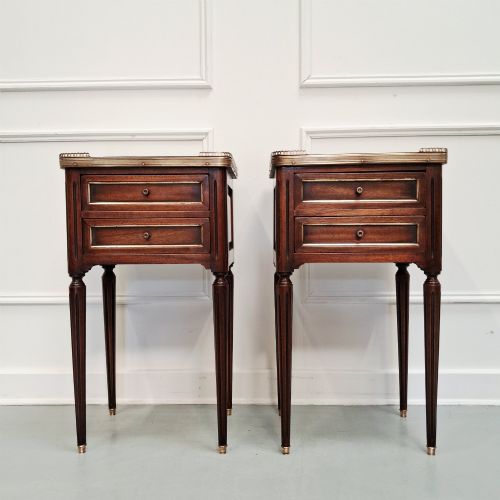
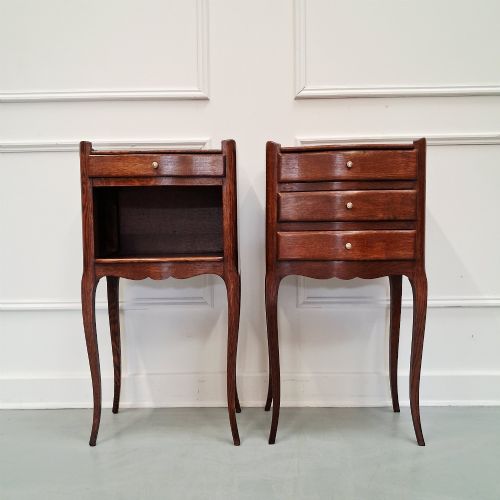
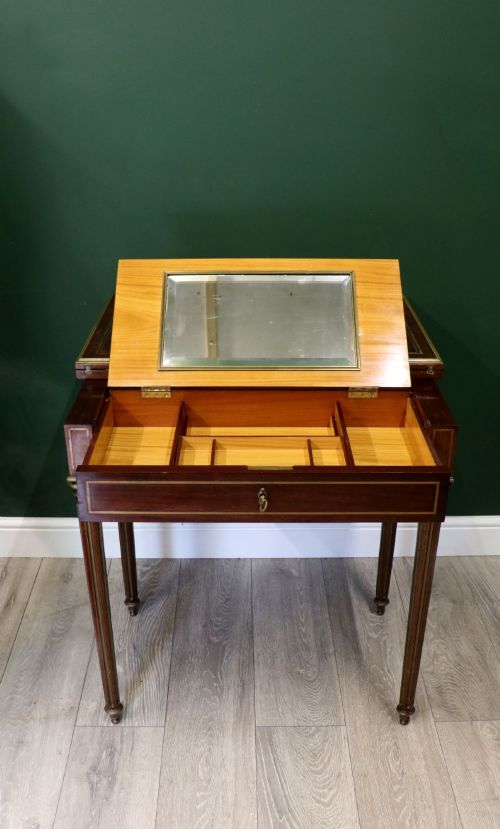
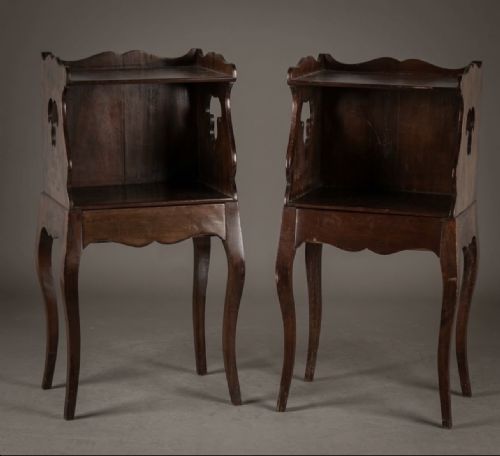
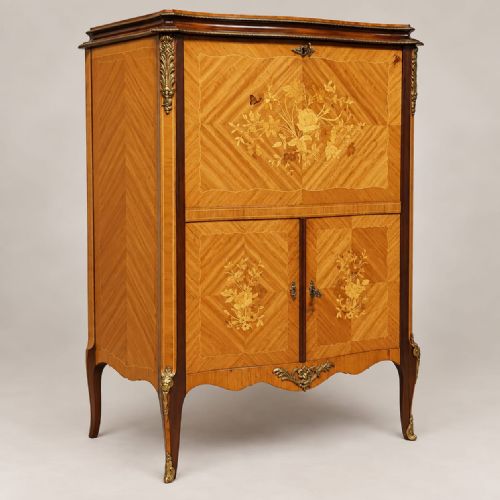
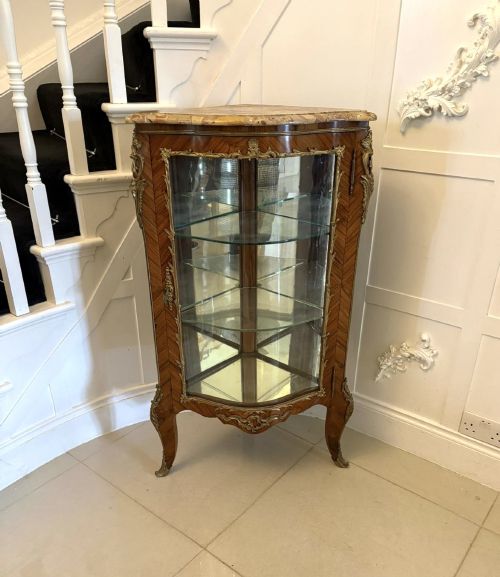
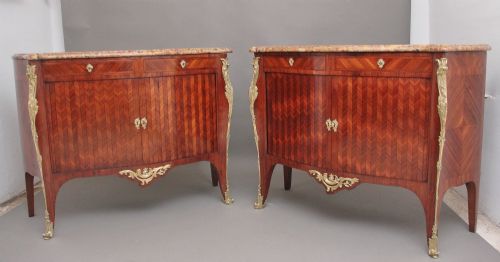
A louis style cabinet encompasses display vitrines, side cabinets, commodes and bedside tables spanning from the mid-nineteenth century into the twentieth century. These pieces draw directly on the revived aesthetics of Louis the Fifteenth and Louis the Sixteenth, translating rococo curves and neoclassical restraint into nineteenth- and early-twentieth-century furniture forms.
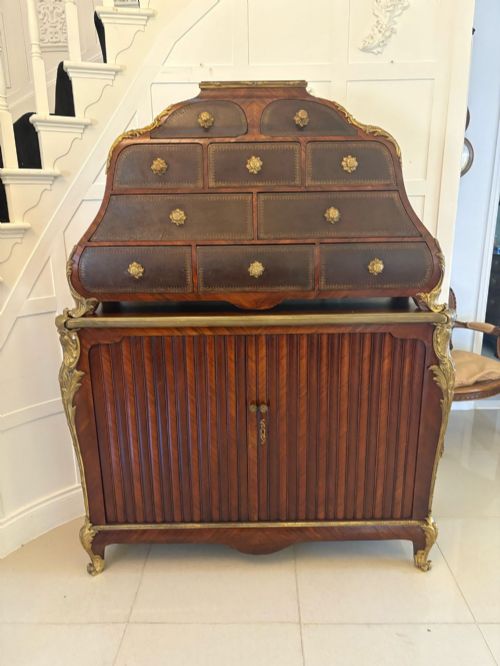
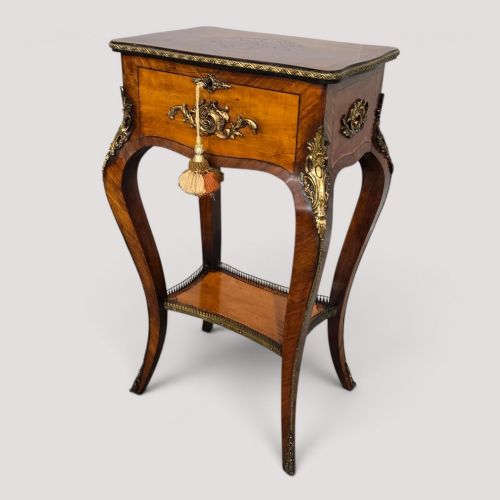
The most frequent finds on this page are nineteenth-century pieces finished in kingwood or walnut, often featuring serpentine fronts and fitted marble tops. Alongside these larger vitrines and commodes appear smaller occasional tables, cartonnier desks and bedside chests dating from the eighteen-fifties to nineteen-thirty.
Makers and workshops across France and Britain produced these items to satisfy a sustained appetite for French taste, combining traditional carcass construction with elaborate surface decoration. Whether formed as a tall display cabinet or a low bedside chest, the category relies on recognisable historical vocabularies for its visual impact.
Evaluating Quality
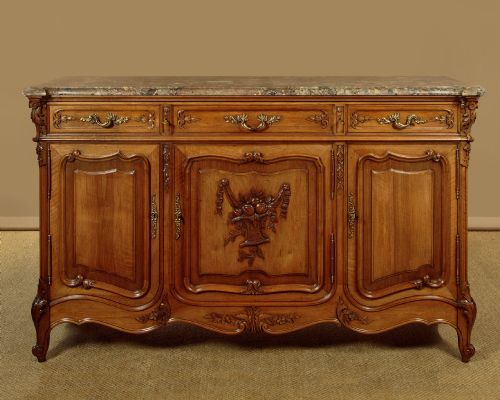
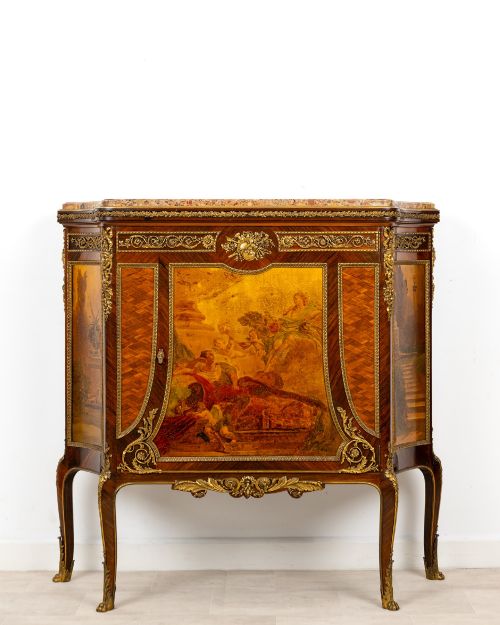
The standard of the metalwork separates baseline production from exceptional pieces, visible in the sharpness and depth of the ormolu mounts. Finer cabinets display hand-chased gilt-bronze details that integrate smoothly with the surrounding timber rather than relying on mass-produced brass fittings.
Timber selection and veneer matching dictate the visual cohesion of the surface, with symmetrical marquetry patterns and well-chosen grain figures marking out superior examples. The weight and finish of the fitted marble top, alongside the precision of drawer joints and door alignment, reflect the original maker's skill.
Louis Style Cabinet Retail Price Guide 2026
Typical asking prices for louis style cabinet among the pieces listed under this phrase on Sellingantiques today, from the lower quarter to the upper quarter. They describe what is for sale here now, not the wider market.
Listings feature periods spanning from the mid-nineteenth century through the nineteen-thirties, incorporating materials like ormolu, marble and kingwood.
François Linke·Gillows·H. J. Hatfield and Sons·Henry Dasson·Louis Constantin Le Gaigneur
The Louis Style Cabinet Glossary
- Ormolu
- Gilded bronze used for decorative mounts and accents on furniture. This technique involves applying a gold amalgam to cast bronze before heating.
- Vernis Martin
- A type of simulated Japanese lacquer developed in France by the Martin brothers during the eighteenth century. It appears as painted panels on cabinets and vitrines.
- Marquetry
- The art of applying pieces of veneer to a structure to form decorative patterns and pictures. Makers utilise various exotic and native woods to achieve tonal contrast.
- Cartonnier
- A piece of furniture designed for holding papers, documents or stationery. These often sit on top of desks or take the form of dedicated standing cabinets.
- Serpentine
- A shape characterised by a waving edge with a convex centre flanked by concave sides. This contour appears frequently on the fronts of commodes and side cabinets.
Louis Style Cabinet: Frequently Asked Questions
What is a louis style cabinet?
A louis style cabinet is a piece of furniture inspired by the decorative arts of the French royal courts under Louis the Fifteenth and Louis the Sixteenth. These items reproduce historical revival designs through veneered timbers, curving woodwork and cast metal mounts.
Such cabinets range from large glass-fronted vitrines for display to low commodes and bedside chests intended for practical storage in domestic interiors.
How do I identify the period?
Dating relies on examining the construction methods, timber choices and mounting styles used across the carcass. Nineteenth-century interpretations often employ heavier ormolu mounts and dense exotic veneers compared to later twentieth-century iterations.
Maker signatures, stamps on the bronze mounts or distinct regional joinery details further help narrow down the decade of manufacture.
Were these made in France?
Many of these pieces originated in French workshops, particularly around Paris where cabinet makers specialised in revival furniture. British makers also produced similar items, sometimes employing French artisans or importing components directly.
Both French and British makers adhered to traditional eighteenth-century design templates while adapting them for nineteenth- and twentieth-century homes.
How do I care for marble tops?
Marble tops require gentle cleaning with a damp cloth and mild soap, avoiding acidic solutions that can etch the polished stone surface. Using coasters and protective pads prevents scratches from objects placed on the display surface.
Periodic gentle waxing of the surrounding wood keeps the timber conditioned without affecting the stone insert.