

Louis Style Bedside
Louis style bedside tables bring continental elegance to a room, combining curved woodwork and decorative mounts in compact forms.
Louis Style Bedside
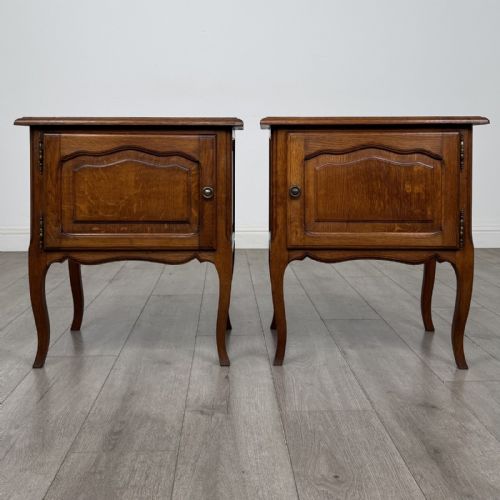
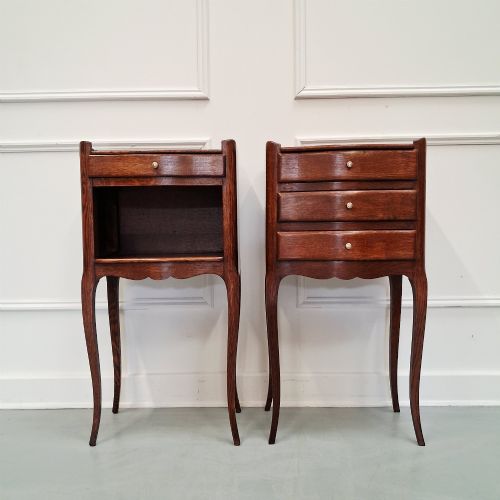
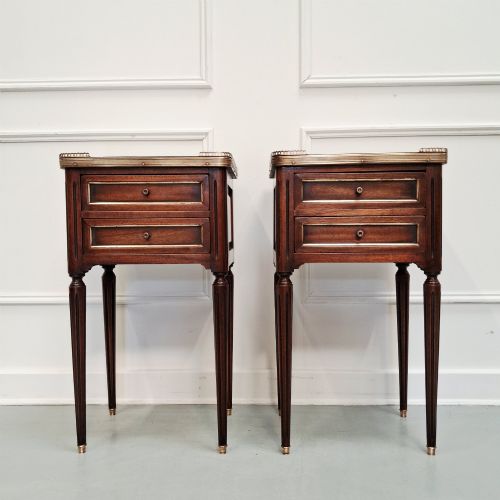
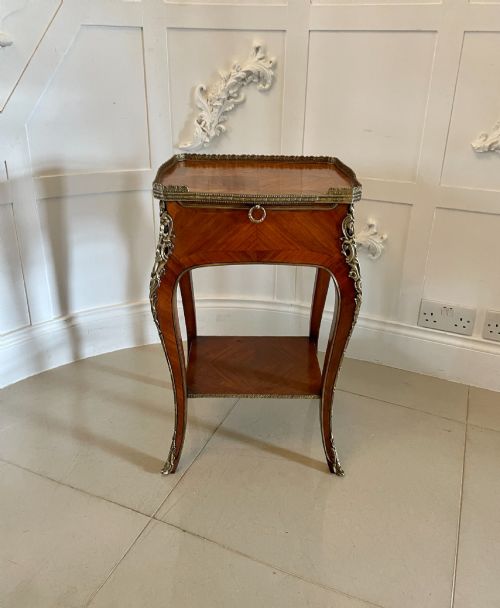
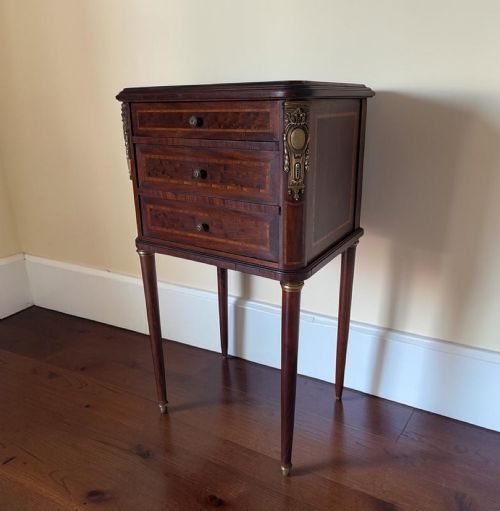
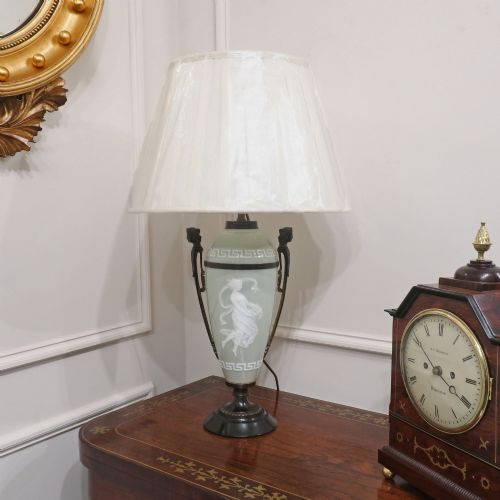
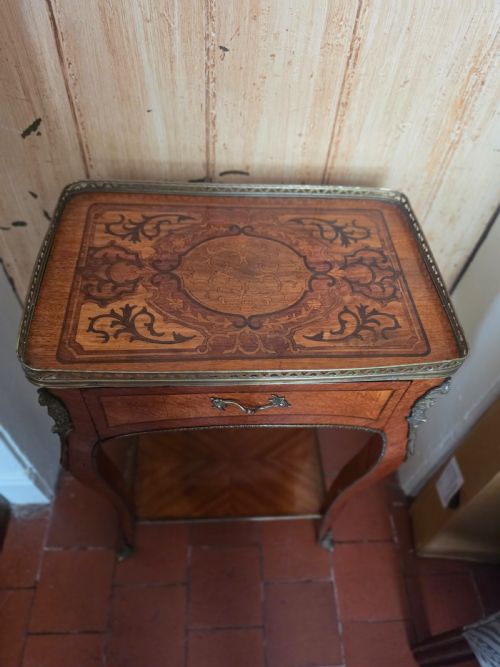
Louis style bedside tables and small cabinets draw inspiration from eighteenth-century French royal aesthetics, particularly the flowing lines of Louis XV and the more rectilinear geometry of Louis XVI. These pieces surface in various forms, from bedside cabinets and chests of drawers to small side tables and lamp tables, originating across the nineteenth and early twentieth centuries.
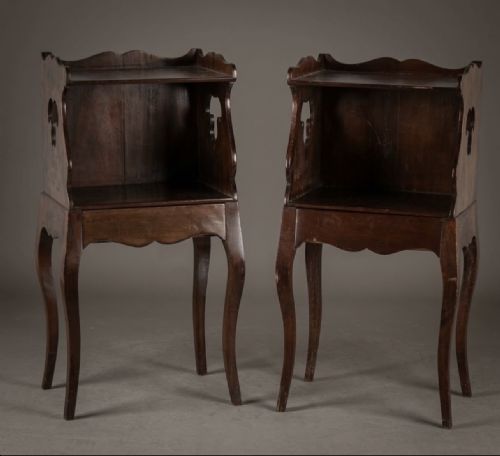
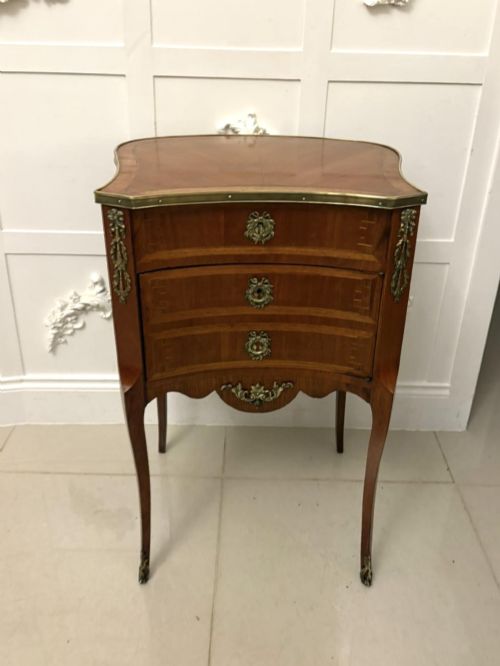
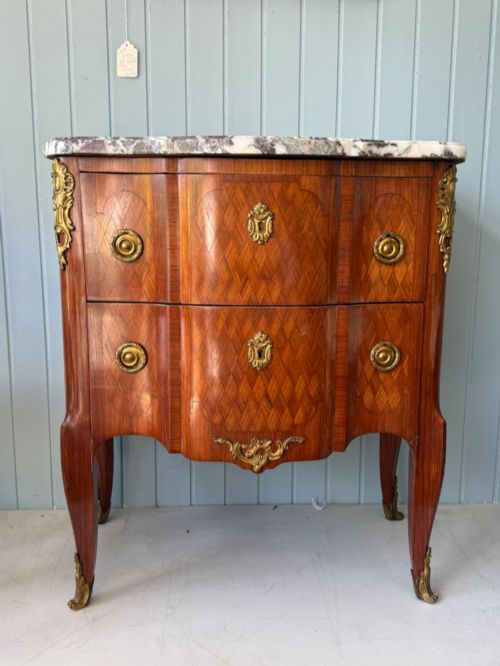
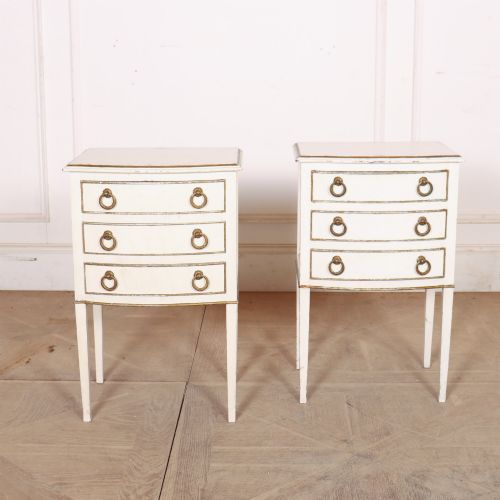
The version most commonly met on this page is the compact bedside cabinet or small chest of drawers, often standing on cabriole legs or short upright supports. These items reflect French provincial and chateau influences, translating grand palace aesthetics down to a domestic scale suitable for a modern bedroom.
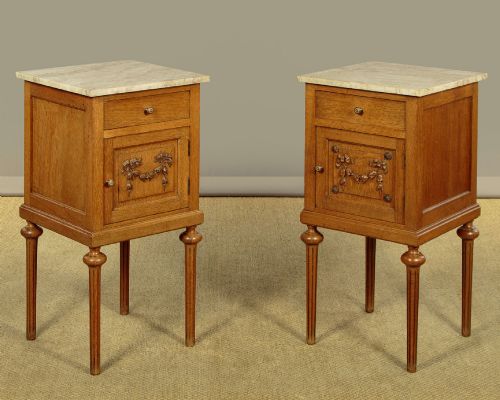
Makers and workshops constructed these smaller items to function as bedside storage or decorative lamp tables, balancing ornamental appeal with practical utility. The forms span walnut, oak, and exotic veneers, giving buyers a range of regional and stylistic interpretations to consider.
Materials and construction
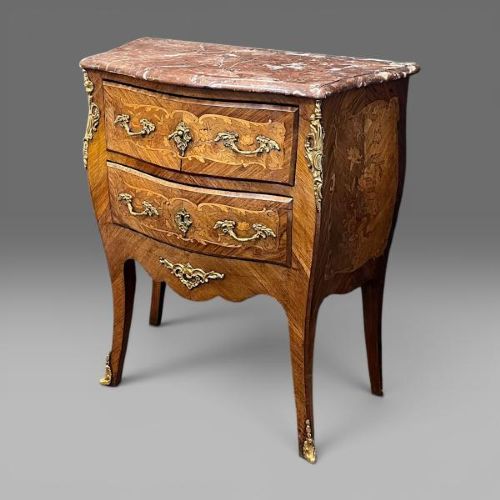
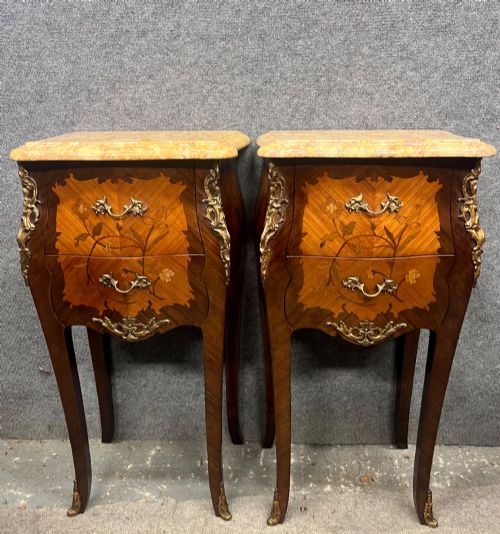
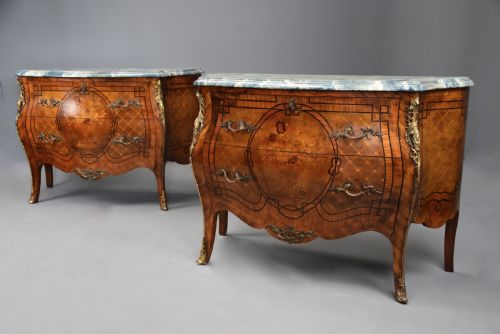
Cabinet makers utilised a foundation of solid timbers such as oak and walnut, frequently applying decorative veneers like kingwood and rosewood over the core structure. Marquetry and inlaid patterns form a significant part of the surface decoration, requiring precise cutting and fitting of contrasting wood types.
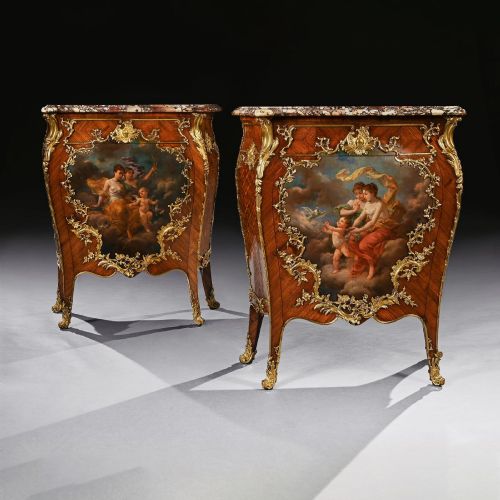
Metal mounts in ormolu, gilt bronze, and gilded metal accent the corners, handles, and legs of these pieces, adding weight and reflective contrast to the timber. Tops frequently incorporate fitted marble slabs, which provide a durable and cool surface that contrasts with the warm tones of the polished wood below.
Louis Style Bedside Retail Price Guide 2026
Typical asking prices for louis style bedside among the pieces listed under this phrase on Sellingantiques today, from the lower quarter to the upper quarter. They describe what is for sale here now, not the wider market.
Some nineteenth-century makers hid tiny secret drawers within their bombe chests, designed for the safe storage of pocket watches and rings.
Assessing quality and execution
The quality of a louis style bedside piece rests on the precision of its marquetry and the crispness of its cast metal mounts. Finer examples display tightly fitted joints, smooth drawer actions, and hand-chased ormolu details rather than mass-produced, unrefined metal attachments.
The choice and figuring of the timber veneer also dictate the hierarchy of these items, with well-matched book-matched grains marking out superior cabinet work. Furthermore, the integration of heavy marble tops, particularly shaped or coloured varieties, signals a higher grade of manufacture from the workshop.
Sormani
The Louis Style Bedside Glossary
- Ormolu
- Gilded bronze mounts applied to furniture for decorative effect. This technique creates a bright metallic accent against dark wood veneers.
- Marquetry
- Decorative patterns formed by inserting pieces of veneer into a wood foundation. Craftsmen use varied timbers to build pictorial or geometric designs.
- Bombé
- A swelling, outward-curving contour found on the front and sides of chests and cabinets. This curved profile requires skilled shaping of the underlying frame.
- Cabriole leg
- A furniture leg that curves outward and then tapers inward, finishing in a pad or foot. The design mimics the shape of an animal limb.
- Chevet
- A small bedside table or cabinet designed for nocturnal storage. This French term frequently appears in descriptions of continental sleeping furniture.
Louis Style Bedside: Frequently Asked Questions
How were marble tops used?
Marble tops were fitted to the upper surface of chests and cabinets to provide a durable, heat-resistant, and visually striking finish. They protected the wooden structure beneath from spills and heavy objects.
Craftsmen shaped the edges of the stone to match the contour of the cabinet below, whether straight or bombe.
How do I care for marble and wood?
Care involves dusting the timber regularly with a dry cloth and occasionally applying appropriate wax to maintain the polish. Avoid exposing the veneer to direct sunlight or moisture.
For the marble top, clean with a damp cloth and mild soap, avoiding acidic substances that can etch the polished stone surface.
How can I tell the period?
Dating relies on examining the construction methods inside the drawers, the type of screws or fixings used, and the wear patterns on the timber. Nineteenth-century pieces often show hand-cut dovetails and heavier internal framing.
Twentieth-century interpretations tend to feature lighter construction and standardised hardware, though they still employ traditional veneering techniques.