
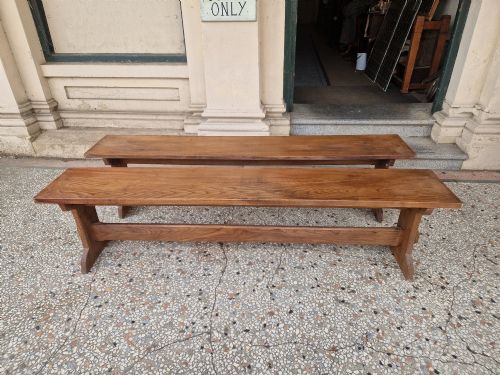


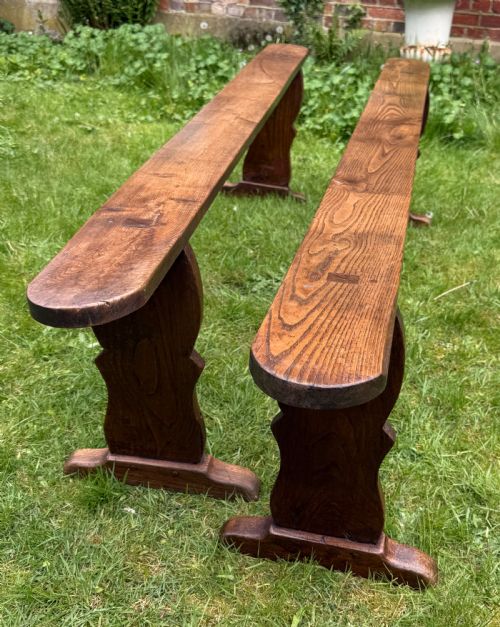
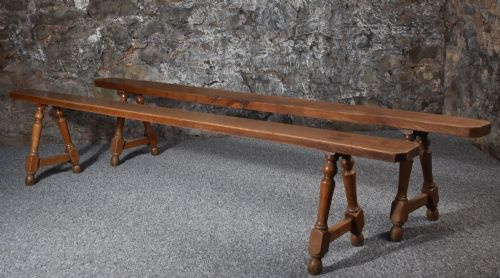
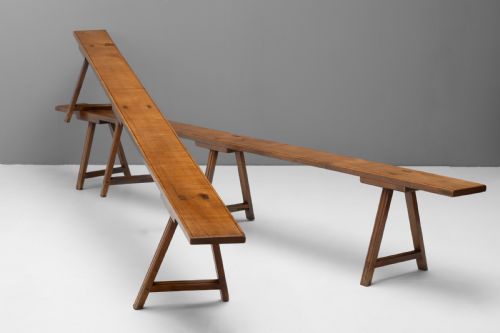


Long Wooden Trestle Bench
A long wooden trestle bench brings honesty and utility to a dining room, offering sturdy communal seating rooted in centuries of practical domestic and tavern life.
Long Wooden Trestle Bench
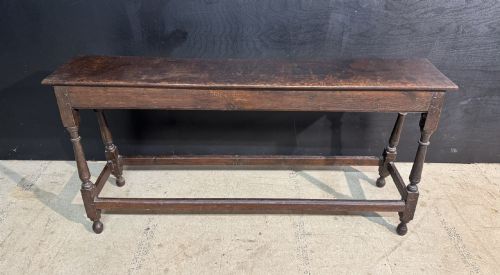
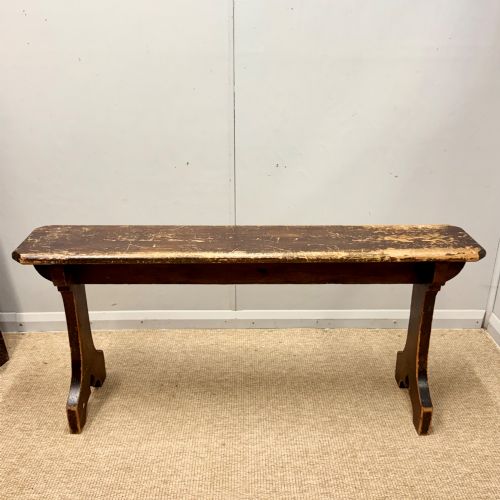
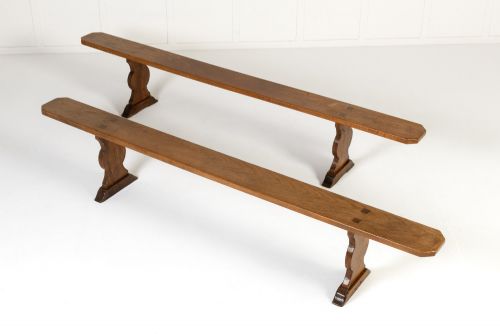
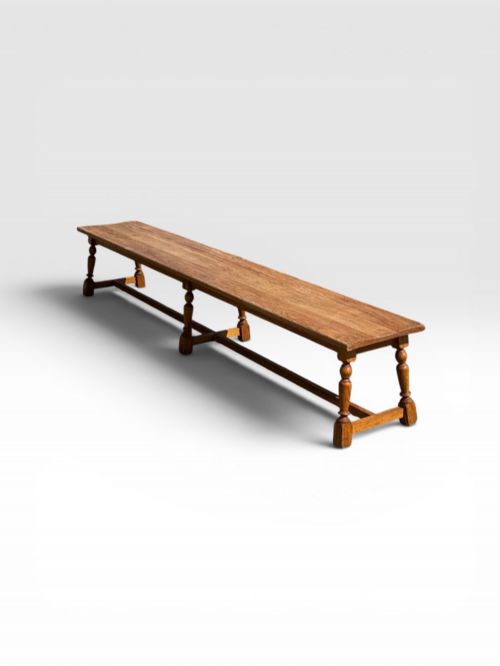
A long wooden trestle bench provides extended seating designed to accompany refectory and dining tables in kitchens, halls and rural interiors. The examples available here span from the eighteenth century through to the early twentieth century, reflecting enduring utilitarian forms.
Buyers will encounter various regional interpretations, including Welsh oak tavern seating, French provincial fruitwood and cherry designs, and Scandinavian pine school benches. These pieces often appear as individual items or matching pairs suitable for long dining setups.
Materials and construction
Makers relied on durable timbers such as oak, pine, elm, cherry wood and fruitwood, selecting each for its density and grain. Solid wood construction ensured these working benches could withstand heavy daily use in domestic and institutional settings.
Traditional joinery techniques secure the tops to robust underframes and trestle supports, often utilising pegged joints or simple tenons. This straightforward assembly method provides the structural rigidity necessary for long spans of seating without excessive ornamentation.
Listings feature timbers including oak, pine, cherry wood, elm, fruitwood and hardwood across periods spanning the eighteenth to the early twentieth century.
Factors of quality
Quality rests in the integrity of the timber and the honesty of the surface timber, where honest wear and patination speak to age rather than neglect. Dense hardwoods like oak and cherry hold their structural stability better over long spans than softer woods.
Proportion and restraint dictate the visual success of the piece, separating utilitarian workshop items from refined provincial furniture. Original surface finishes and untouched structural members carry far greater weight than heavily restored or altered examples.
The Long Wooden Trestle Bench Glossary
- Trestle
- A structural support consisting of a horizontal beam fixed to two splayed legs. This design allows maximum legroom along the length of the seating.
- Refectory
- A term describing long dining tables and associated benches traditionally used in communal dining halls. Such pieces are built for heavy communal use.
- Patina
- The surface sheen and colour developed by wood over decades of handling, cleaning and exposure to light. It serves as a key indicator of genuine age.
- Joint stool
- An early form of sturdy wooden seating constructed with mortise and tenon joints before the widespread adoption of glued upholstery frames. These serve as shorter precursors to full dining benches.
Long Wooden Trestle Bench: Frequently Asked Questions
How do I choose the right length?
Measure the span of your dining table and allow enough clearance for the bench to slide underneath when not in use. Longer examples require careful consideration of room proportions and traffic flow.
Makers constructed these pieces in various lengths to suit specific domestic or tavern settings, so matching the scale of the seat to your table length remains essential.
Are these benches suitable for daily dining?
Solid hardwood and pine construction makes these items entirely practical for modern family meals. Their sturdy trestle frames provide reliable stability on level floors.
Regular use simply adds to the character and depth of the timber surface over time without compromising the underlying structure.
How do I identify eighteenth-century oak?
Early oak displays distinctive medullary rays, often referred to as silver grain, visible across the sawn surface of the timber. Construction details typically feature hand-cut peg joints rather than modern mechanical fasteners.
Analysing the colour, tool marks and density of the wood helps differentiate eighteenth-century examples from later revival pieces.
Can I mix pine and hardwood benches?
Mixing timber species creates a layered, collected interior rather than a uniform suite. Pine offers a softer, lighter tone, while oak and cherry bring deeper hues and harder grain patterns.
Balancing proportions and overall height matters more than matching the exact tree species when pairing seating with an existing table.