
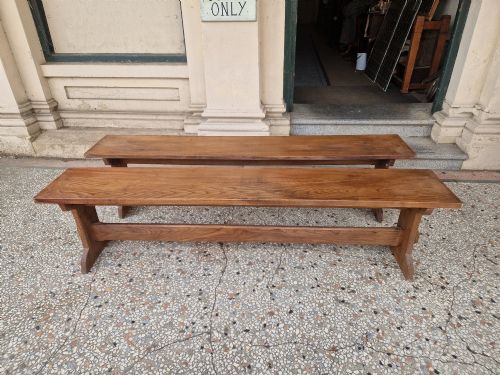


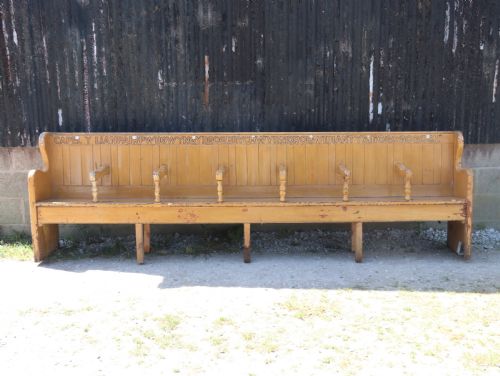
Long Wooden Pew
These long wooden pew items are substantial communal seating forms built from sturdy hardwoods and softwoods, offering lasting utility for generous spaces.
Long Wooden Pew
A long wooden pew provides extended bench seating designed historically for churches, taverns, schools, and large domestic halls. These examples range from simple vernacular forms to more finished Georgian and Victorian designs.
Buyers encountering this selection will frequently find pine and oak variants spanning the nineteenth and early twentieth centuries. Many pieces originate from specific communal settings like chapels, railway waiting rooms, and country houses.
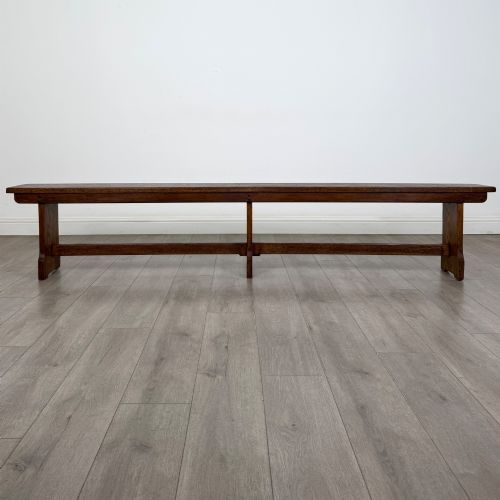
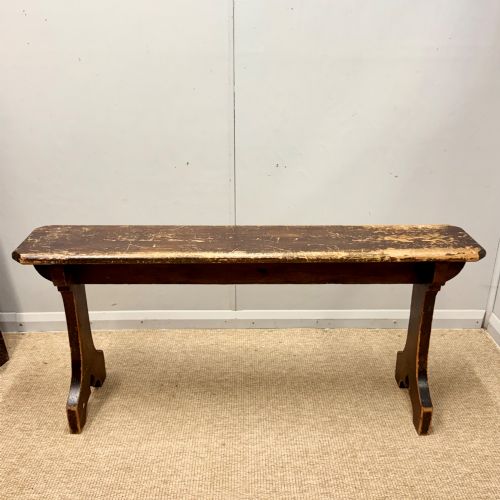
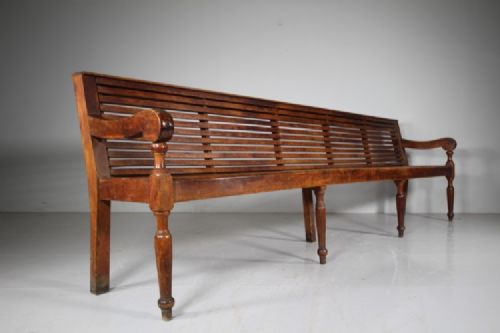
Forms vary from deep painted softwood benches to solid oak tavern seating and slatted waiting room benches. These pieces suit modern hallways, large kitchens, and dining rooms requiring robust, characterful length.
How they were made
Makers utilised solid timbers such as pine, oak, walnut, and softwood to construct these enduring benches. Joinery often incorporates heavy boards and sturdy trestle or framed supports to handle heavy communal use.
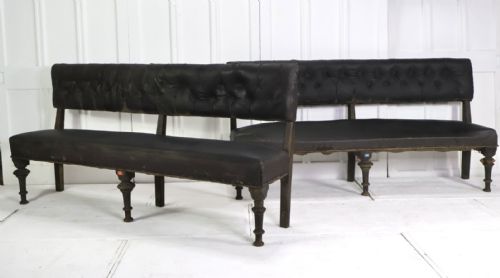
Surface finishes range from scrubbed natural timber and traditional paint to dark polished oak. Iron hardware and leather details appear on specific utilitarian variants like railway and waiting room benches.
The listings feature pieces spanning the Victorian era and the early twentieth century, constructed primarily in pine and oak.
What varies in quality
Quality rests upon the integrity of the original timber selection and the honesty of the construction. Pieces built from thick, solid oak or well-grained pine retain their structural rigidity far better than lighter alternatives.
The character of the surface finish and any authentic historical markings, such as chapel stamps, elevate a piece. Good proportions and untouched original timber patination distinguish superior examples from standard utilitarian seating.
The Long Wooden Pew Glossary
- Tavern bench
- A long seating form traditionally used in public houses and inns. These pieces are typically built from robust hardwoods like oak to withstand constant public use.
- Slatted bench
- A seating design featuring an open back or seat made from parallel wooden laths. This construction reduced weight and improved airflow in waiting rooms and public spaces.
- Vernacular
- Architecture and furniture built by local craftsmen using regional traditions and materials. These pieces prioritise practical function over high-style academic design.
- Refectory bench
- A long, narrow bench designed to sit alongside a communal dining table. They are commonly found in institutional, school, and large domestic settings.
- Patina
- The surface sheen and colour developed by timber over decades of handling, light exposure, and polishing. This quality marks genuine age and use.
Long Wooden Pew: Frequently Asked Questions
How do I clean a pine pew?
Maintain wooden surfaces using a soft, dry cloth to remove dust and grit. Avoid harsh chemical cleaners that strip the historic finish or dry out the timber.
Wax can be applied sparingly to unpainted pine or oak to nourish the grain and protect the surface from moisture.
Are these benches comfortable for dining?
Many historical benches feature upright backs or simple slatted designs intended for public waiting or institutional seating rather than lounging. Adding loose cushions can improve comfort for long dining sessions.
Check the seat height and depth against your table dimensions to ensure proper ergonomics before placement.
How can I date a wooden bench?
Dating relies on examining the timber species, tool marks, joinery methods, and overall style. Nineteenth-century examples often show hand-planed surfaces and traditional peg joinery.
Associated hardware, original paint layers, and provenance markings like chapel stamps also help narrow down the period of manufacture.