



Walnut Wooden Bench
A walnut wooden bench offers a sturdy seat shaped from rich timber, uniting practical utility with decorative character for an interior.
Walnut Wooden Bench
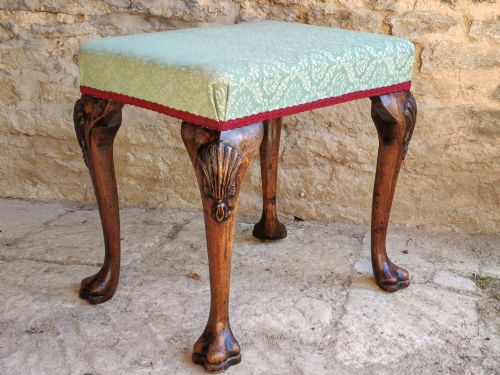
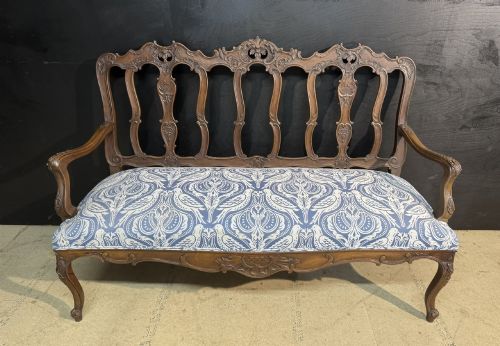
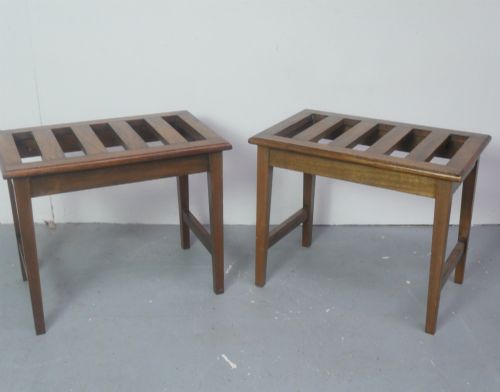
When searching for a walnut wooden bench, buyers encounter a diverse selection of seating forms spanning several centuries and regional traditions. The inventory on this page ranges from modest footstools and window seats to long hall benches and upholstered settees.
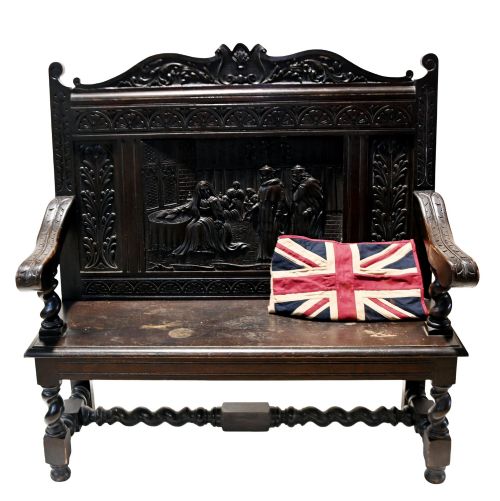
The objects carry influences from various historical revivals, including Victorian, Rococo, Renaissance, and Carolean styles, alongside later Art Deco and mid-century designs. Italian, French, English, and Dutch workshops all contribute distinct regional interpretations to the selection.
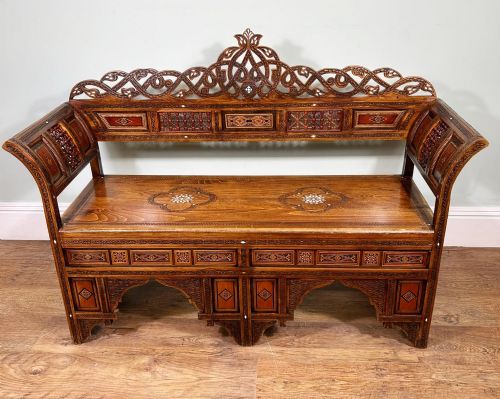
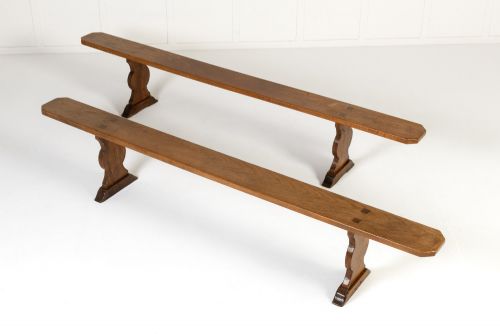
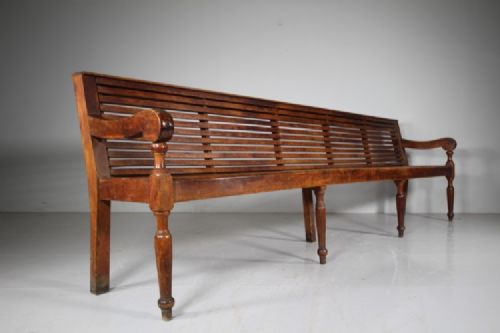
Most pieces date from the nineteenth and early twentieth centuries, though earlier eighteenth-century examples occasionally appear among the listings. Forms vary from simple slatted waiting room benches to heavily carved cassapancas and intricate marquetry settees.
How They Were Made
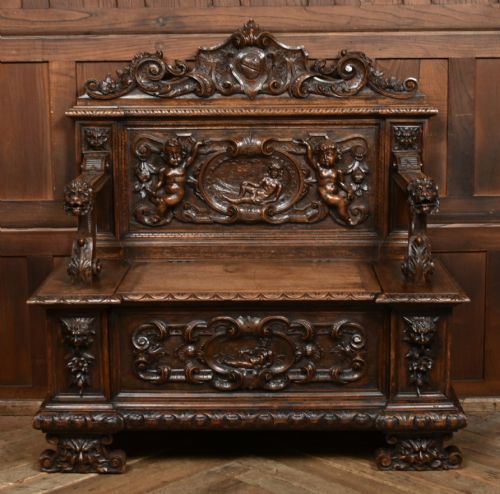
Maker's workshops utilised solid walnut timber for structural frames, relying on dense grain patterns to support intricate hand carving, fluted legs, and applied mouldings. Artisans shaped structural supports through traditional joinery, incorporating brass elements and inlaid details where regional style demanded.
Upholstered variants combine the timber framework with supportive webbing or padding, finished in diverse textile coverings such as velvet, linen, tapestry, and cane. Certain specialised pieces incorporate pearl inlay or intricate marquetry panels directly into the walnut surfaces.
Available seating styles span multiple eras, encompassing Victorian, Art Deco, Renaissance Revival, and French Country designs.
What Varies in Quality
The standard of a walnut wooden bench depends heavily on the depth and crispness of the timber carving, alongside the integrity of the underlying joinery. Superior examples display balanced proportions and harmonious integration of decorative elements without appearing overly cluttered.
Condition of the walnut timber and the authenticity of any upholstery finish influence the overall character of each piece. Variations in regional craftsmanship mean that simpler vernacular forms sit alongside highly ornate items produced by specialist cabinet makers.
Harry & Lou Epstein·Hampton & Son's
The Walnut Wooden Bench Glossary
- Cassapanca
- A traditional Italian wooden bench featuring a hinged seat forming a storage chest beneath, often complemented by a backrest and armrests.
- Bergere
- An enclosed armchair or sofa design featuring upholstered sides set within an exposed wooden frame, commonly utilising cane work.
- Marquetry
- The art of applying decorative veneer pieces of various woods to a structural surface to create pictorial designs.
- Fender stool
- A low, long seat designed to sit near a fireplace hearth, often supported on short legs to keep feet elevated from cold stone floors.
- Carolean
- Pertaining to the reign of Charles II or the distinct restoration style characterised by rich carving, scrolling foliage, and cane panels.
Walnut Wooden Bench: Frequently Asked Questions
Where should I place a walnut bench?
These benches suit various domestic settings, functioning effectively in hallways, at the foot of a bed, or beneath a window as a designated seat. Their substantial timber presence anchors a room while providing functional furniture.
Matching the historical style of the bench to surrounding decor helps integrate the piece into an established interior scheme.
How do I care for walnut wood?
Maintaining walnut timber involves keeping pieces away from direct heat sources and strong sunlight to prevent the wood from drying out or fading. Regular dusting with a soft, dry cloth preserves the natural sheen of the grain.
Avoid using harsh chemical polishes that can damage older surface finishes over time.
How do I identify the period of a bench?
Dating relies on observing stylistic motifs, construction methods, and the specific type of walnut timber used in the primary frame. Details such as carved legs, revival influences, and upholstery styles often point toward particular decades or centuries.
Comparing construction characteristics against established historical design periods clarifies the likely age of the object.