


Long Gallery Carpet Runner
These long gallery carpet runner selections provide heavy wool warmth and linear perspective down extended corridors from the mid-nineteenth century onward.
Long Gallery Carpet Runner
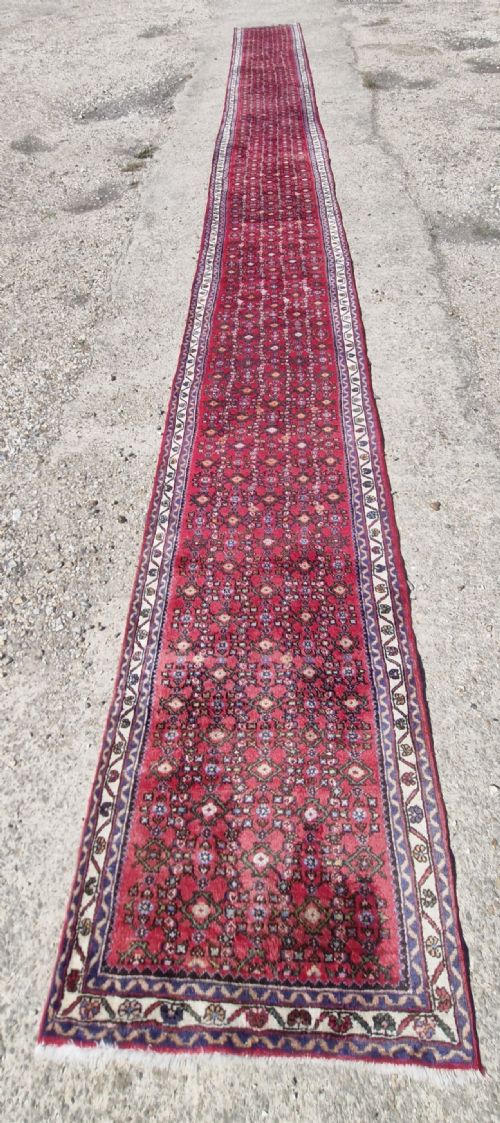
A long gallery carpet runner solves the acoustic and visual problem of an extended hallway or landing by providing a narrow, continuous band of pattern. These pieces stretch from modest dimensions up to massive lengths exceeding seven metres, designed specifically to anchor expansive wooden or stone floors.
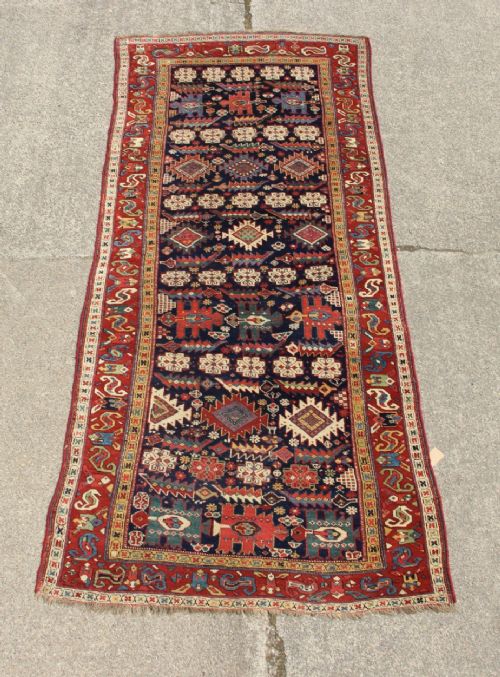
The selections span from the mid-nineteenth century through to the mid-twentieth century, drawing heavily on Persian tribal and village weaving traditions. Common formats include traditional kelleh carpets, narrow room runners, and expansive gallery carpets originating from regions such as Bidjar, Serapi, Malayer, and Kurdistan.
Buyers will encounter various structural formats ranging from tightly knotted Kurdish room rugs to sprawling North-West Persian gallery carpets. Each piece relies on elongated rectangular proportions that guide the eye purposefully through architectural spaces.
Materials and construction methods
Weavers constructed these long gallery carpet runner examples using durable wool piles anchored to sturdy cotton or wool foundations. Hand-spun wool provides the primary surface texture, offering resilience under heavy foot traffic while developing a rich patina over decades.
Natural dyes impart the deep indigo, madder red, and earthy tone variations seen across the pile surfaces. These organic colorants interact organically with the wool fibres, yielding subtle tonal shifts that synthetic dyes fail to replicate.
One exceptionally ambitious weaver decided a standard hallway was simply not long enough, stretching a single narrow runner to over seven metres in length.
Variations in quality and execution
Knot density and structural tightness dictate the foundational integrity of each piece, distinguishing robust village weaves from finer workshop productions. Tighter packing of the foundation warps and wefts ensures the runner lies flat and withstands continuous pressure along high-traffic corridors.
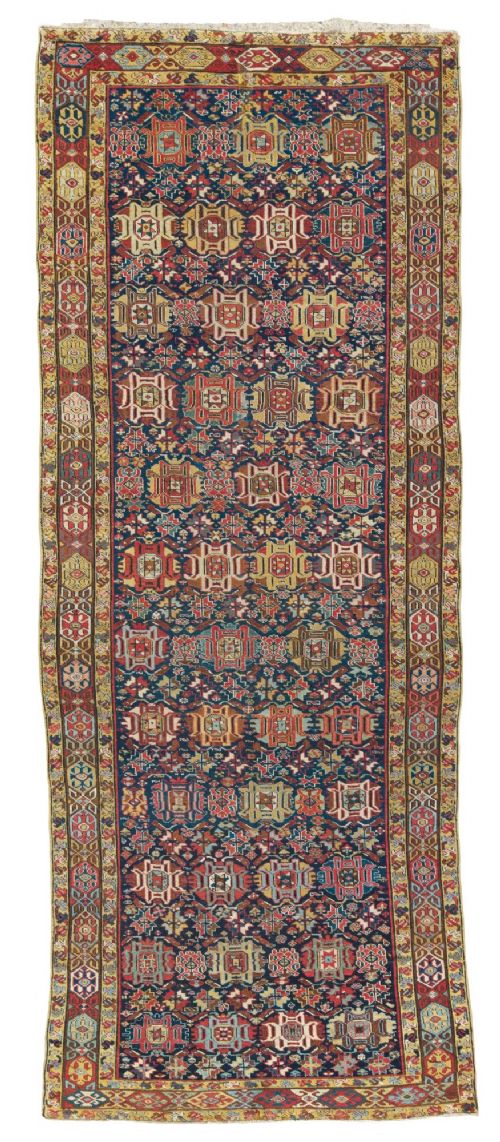
The sophistication and clarity of natural dye palettes separate standard village work from exceptional regional masterpieces. Nuanced colour shading across the field and borders demonstrates superior mastery over the dye vats, lending depth to tribal motifs like the Memling gul or harshang border patterns.
The Long Gallery Carpet Runner Glossary
- Kelleh
- A large format carpet that is longer than a standard rug but narrower than a full-sized room carpet, traditionally suited for the sides of a grand hall.
- Gul
- A repeating octagonal medallion or floral motif frequently found in tribal and nomadic weaving traditions.
- Serapi
- A distinct sub-style of Heriz carpet known for spacious geometric layouts, bold large-scale medallions, and open corner spandrels.
- Harshang
- A traditional crab-like botanical border or field pattern featuring stylized floral palmettes connected by serrated leaves.
- Bidjar
- A durable Persian village rug renowned for heavy construction, stiff foundation structures, and dense knotting often called the iron rug of Persia.
Long Gallery Carpet Runner: Frequently Asked Questions
How do I clean a long wool runner?
Regular gentle vacuuming without a rotating brush roll removes surface grit trapped within the wool pile.
Professional specialist washing remains essential for deep cleaning to protect natural dyes and fragile cotton foundations.
Where should I place a gallery runner?
These narrow formats suit extended hallways, expansive landing corridors, and large entry foyers needing acoustic softening.
Ensure adequate clearance along doors and furniture placement so the entire linear pattern remains visible.
What is a kelleh carpet?
A kelleh represents a specific regional proportion falling between a standard area rug and a full room-size carpet.
These pieces were originally woven to flank larger central carpets or to furnish narrower reception rooms.
How do I identify Kurdish village rugs?
Kurdish pieces often feature robust wool foundations, saturated natural indigo and madder tones, and sturdy geometric village designs.
Motifs frequently incorporate stylized tribal elements, dragon borders, or repeating geometric medallions like the Memling gul.