

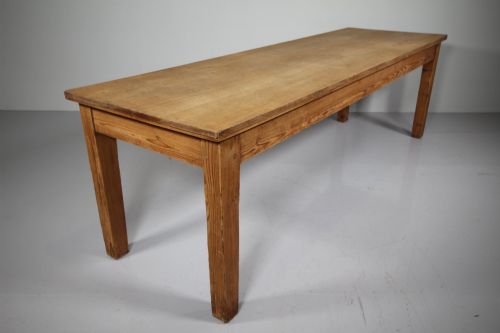
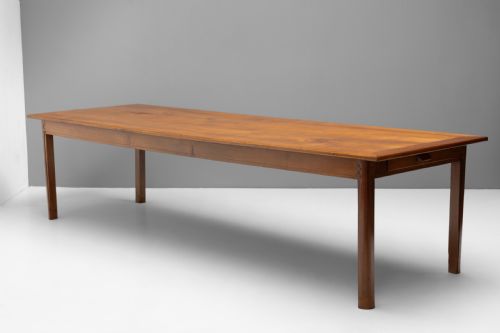


Long Farm Dining Table
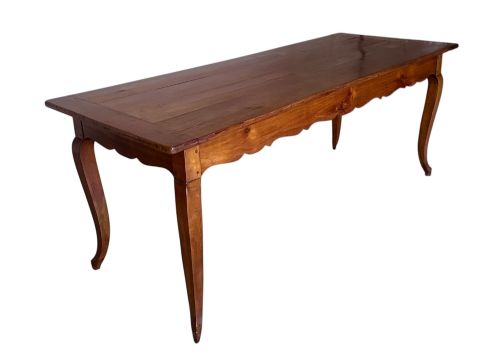
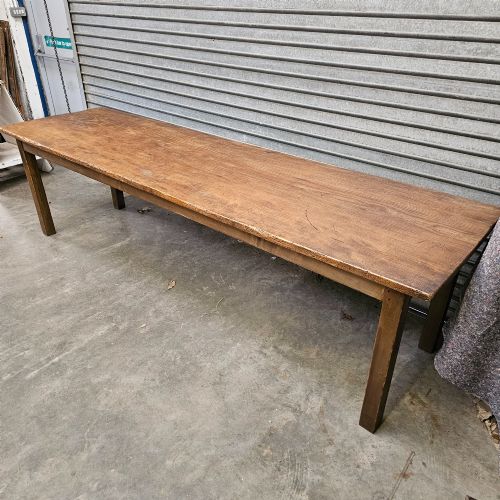
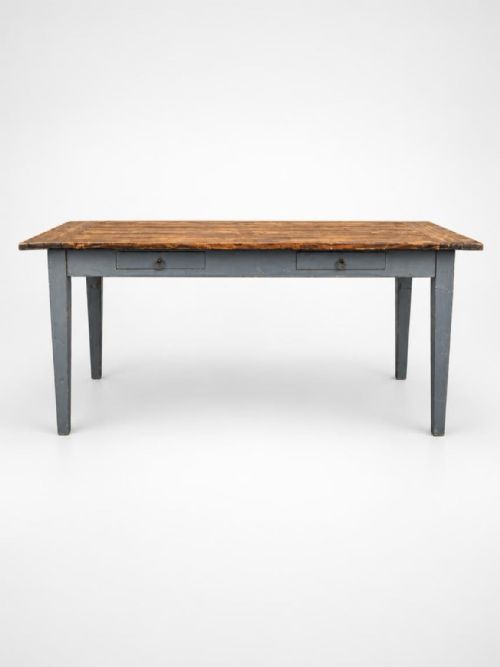
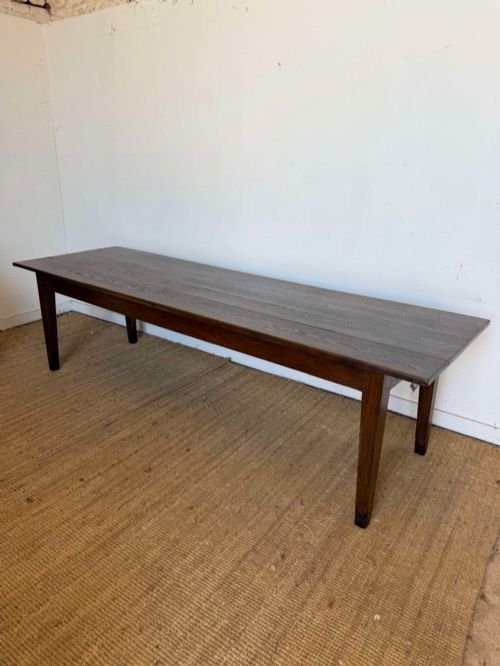
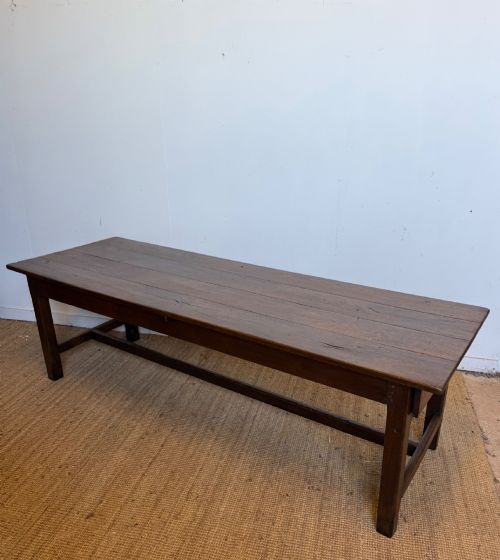
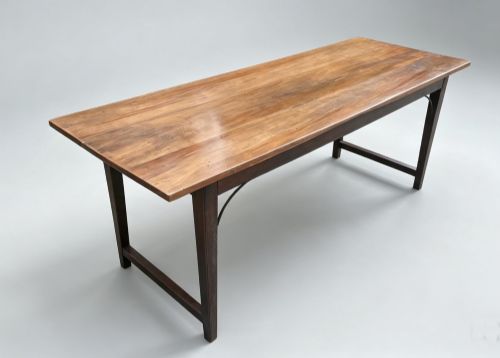
A long farm dining table brings weight and history into a room, offering generous seating fashioned from honest timbers like oak, pine and fruitwood.
Long Farm Dining Table
A long farm dining table is built for communal gatherings, drawing on centuries of domestic and rural life across English, French, Swedish and general European traditions. When searching for a long farm dining table, buyers encounter forms that span the seventeenth century through to the early twentieth century, encompassing rustic farmhouse, French provincial and Georgian country styles.
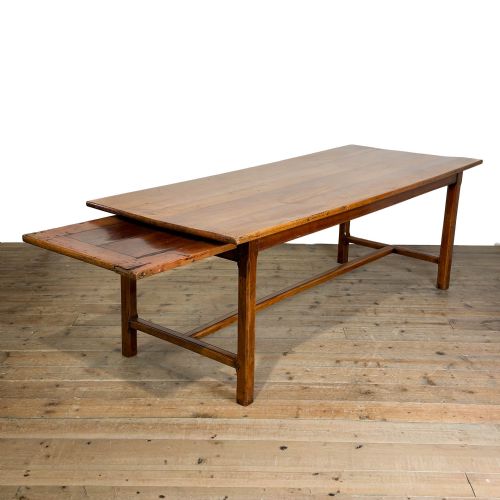
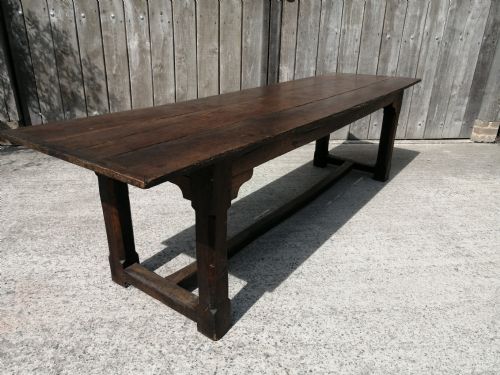
The pieces appearing here include substantial refectory tables, harvest tables and preparation tables, often constructed from heavy woods such as oak, elm and fruitwood. Dimensions stretch significantly, accommodating large rooms and frequent dining with straightforward rectangular tops and sturdy underframes.
Dating ranges from strict seventeenth-century examples down to Edwardian and 1930s variations, showing how utility persisted across eras. Whether sourced from the south-west of France or English country workshops, these tables share a primary purpose of gathering people around timber surfaces shaped by use.
Materials and construction methods
Construction relies heavily on durable hardwoods and softwoods selected for structural strength, predominantly oak, pine, elm, fruitwood, walnut, cherry and poplar. Carpenters utilised thick timber planks for table tops, supported by robust trestles or four-legged frames suited to heavy daily domestic labour.
Surfaces frequently show the marks of hand-planing and scrubbing, particularly on French poplar and scrubbed pine examples where timber was kept clean for food preparation. Iron and brass fasteners or braces appear where structural reinforcement was required beneath large spans.
Finishes range from bleached oak and painted wood to natural wax over centuries of patinated fruitwood and walnut. The integration of elm and oak reflects regional availability, joining simple peg construction with plank-and-batten tops.
Long Farm Dining Table Retail Price Guide 2026
Typical asking prices for long farm dining table among the pieces listed under this phrase on Sellingantiques today, from the lower quarter to the upper quarter. They describe what is for sale here now, not the wider market.
One historic harvest table comes specifically recommended for handling your Christmas dinner, picnic or barbecue.
Markers of distinction and quality
Quality in these large tables is defined by the integrity of the primary timbers and the depth of natural patina accumulated across generations of use. Superior examples display boards of exceptional width and thickness that remain stable without excessive warping or poorly executed modern timber replacement.
The proportion and balance of the base relative to a long top separate standard utility pieces from finer country craftsmanship. Subtle details such as hand-chamfered edges, traditional joinery methods and honest surface wear elevate a piece far above utilitarian workshop output.
The Long Farm Dining Table Glossary
- Refectory table
- A long, narrow dining table originally built for monastic dining halls and later adapted for domestic country use. These tables typically feature long wooden tops supported by substantial legs connected by stretchers.
- Harvest table
- A large utility table designed for seasonal agricultural labour and communal feasting, often characterised by long dimensions and simpler framing. They provide ample length for large groups of diners.
- Trestle table
- A table consisting of two or more support frames connected across a longitudinal beam or stretcher, holding a flat top. This construction allows for maximum legroom along the length of the table.
- Patina
- The surface sheen and colour developed on wood through age, handling, wax and light exposure. It serves as a visual indicator of a table's genuine age and history.
- Stretcher
- A horizontal wooden bar connecting the legs of a table to provide structural rigidity and stability. In long tables, these rails prevent the legs from bowing outward under heavy loads.
Long Farm Dining Table: Frequently Asked Questions
How do I choose the right length?
Consider the dimensions of your room, allowing sufficient clearance around all sides for chairs and movement.
Measure your space carefully against the specific lengths recorded in the listings to ensure comfortable seating.
Can these tables be used daily?
These tables were originally built for hard domestic or agricultural work, making them inherently robust for modern family life.
Their sturdy timber construction and hard-wearing surfaces handle daily dining and gathering with ease.
What is a refectory table?
A refectory table is a long, narrow form originally designed for communal dining in large halls.
Over centuries, this form transitioned into country houses and farmhouses, becoming a staple for large dining spaces.
How do I care for antique timber?
Protect the wood from extreme temperature shifts and direct sunlight to prevent excessive drying or splitting.
Apply natural beeswax periodically to nourish the surface and maintain the historic patina.
Are these tables suitable for modern kitchens?
Many examples historically doubled as preparation tables, making them a natural fit for contemporary kitchen diners.
Their generous dimensions provide a practical and tactile centrepiece for cooking and eating.