


Long Piano Stool
A long antique piano stool gives a room the right proportion and a seat that stays useful by the piano or the bed.
Long Piano Stool
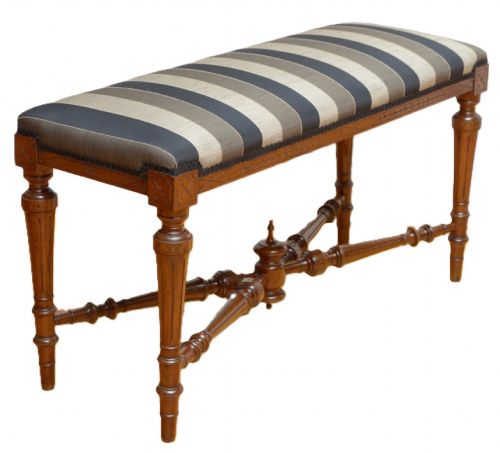
When you search for a long antique piano stool, you encounter extended seating forms spanning the Victorian period through to the early twentieth century. These pieces serve as piano duet stools, window seats, and long bedroom benches designed to accommodate more than one person.
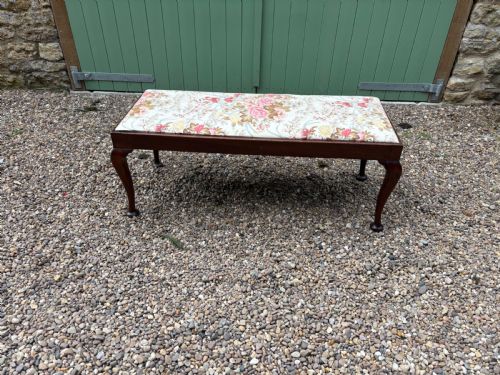
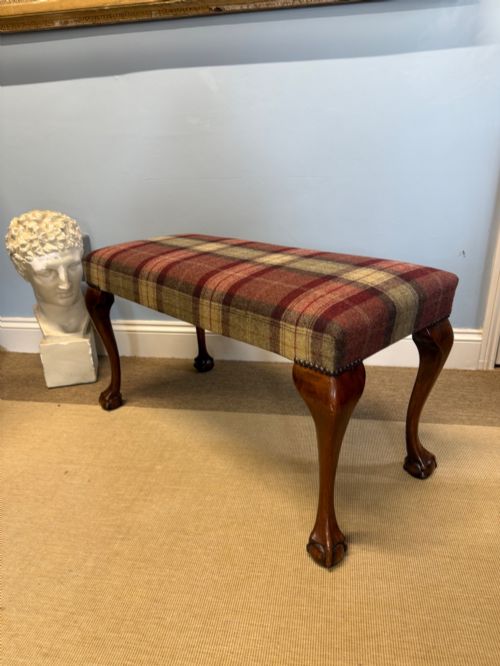
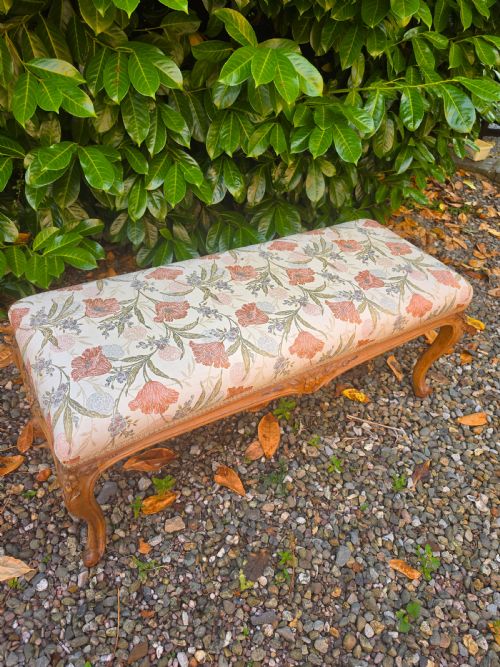
The versions most commonly met on this page are constructed in mahogany or walnut, frequently featuring cabriole legs, hinged seats, and upholstered tops. They bridge the gap between practical music room furniture and decorative seating for the home.
How they were made
Makers shaped these long stools primarily from dense hardwoods like mahogany and walnut, alongside ebonised wood and Swedish birch. These timbers provided the structural rigidity required for frames that needed to support multiple sitters over lengthy periods.
The decorative vocabulary relies on period revivals, utilising cabriole legs, ball and claw details, and hinged seat mechanisms. Upholstery finishes range from standard fabric and wool to specialist textile coverings that define the top surface.
Listings span from eighteen-sixty to nineteen-twenty, featuring mahogany, walnut, and ebonised wood alongside brass and wool upholstery.
What varies in quality
The distinction between ordinary and superior examples lies in the integrity of the timber frame and the precision of the carved details. Hand-carved cabriole legs and ball and claw motifs exhibit a depth and crispness that machine shaping simply cannot replicate.
Internal engineering also divides the range, particularly the smoothness of the hinged seat mechanism and the quality of the original joinery. Pieces that retain their structural soundness without excessive timber shrinkage or loose joints command greater appreciation.
The Long Piano Stool Glossary
- Cabriole leg
- A furniture leg that curves out and then in, mimicking an animal's curving leg. This form appears frequently on mid-nineteenth century walnut and mahogany stools.
- Ebonised wood
- Timber treated with a dark finish to imitate expensive ebony. Victorian makers utilised this technique to create striking, dark-toned frames.
- Hinged seat
- A top panel attached with pivots that lifts to reveal internal storage. Piano stools often incorporated this feature to hold sheet music.
- Duet stool
- An extended bench designed for two people to sit side by side at a keyboard. These pieces form a major portion of the long seating available.
- Aesthetic Movement
- A late nineteenth century design style emphasising simplicity and artistic expression over heavy historic revival. Pieces from this movement often display refined lines.
Long Piano Stool: Frequently Asked Questions
What is a long antique piano stool used for?
These extended benches provide seating for pianists playing duets where two people share the instrument. Beyond the music room, they function well as window seats or end-of-bed benches.
The long format offers ample space for multiple sitters while maintaining a low profile that fits beneath standard window heights or at the foot of a bed.
How do I date a long stool?
Dating relies on identifying the prevailing timber choices, revival styles, and leg forms recorded across the piece. Victorian examples often feature heavy walnut or mahogany with cabriole supports.
Later pieces from the early twentieth century shift toward Swedish birch or simpler dressing stool formats. Comparing the joinery methods and upholstery substructure helps narrow down the decade of production.
Are piano stools comfortable?
The comfort depends entirely on the condition and density of the internal padding beneath the upholstery fabric or wool. Many period examples feature firm sprung or stuffed tops designed for upright posture during practice.
Buyers intending to use the seat daily often refresh the interior cushioning while retaining the outer textile covering. This preserves the historical exterior while ensuring modern seating comfort.
How do I choose the right wood?
Selecting a timber depends on the existing furniture in your room and your preference for grain and tone. Mahogany and walnut offer rich, dark tones associated with Victorian and Edwardian interiors.
Lighter alternatives like Swedish birch provide a paler, more restrained aesthetic suited to bedroom settings. The choice of wood also dictates the weight and visual heaviness of the piece in a smaller space.