


London Watercolour Artwork
London watercolour artwork captures the capital through pigment on paper, offering a direct view of the city's changing streets and rivers.
London Watercolour Artwork
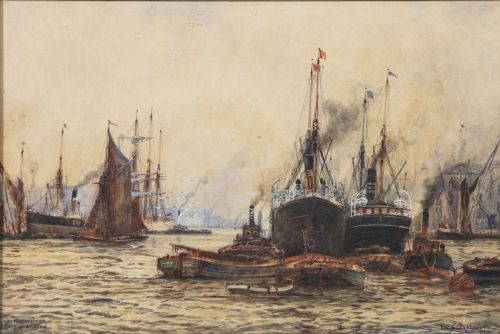
London watercolour artwork comprises topographical and maritime paintings depicting scenes across the capital, from the Thames and Parliament to Leicester Square and Kew Gardens. These pieces record urban views through various lenses, including British Impressionism, Edwardian marine subjects, and Victorian architectural studies.
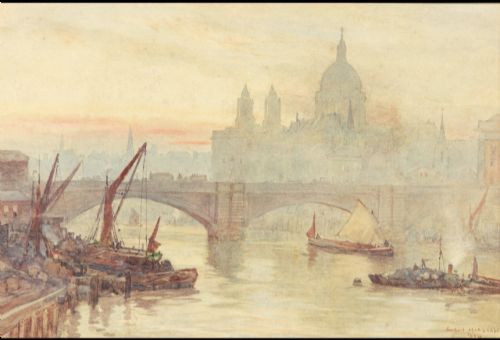
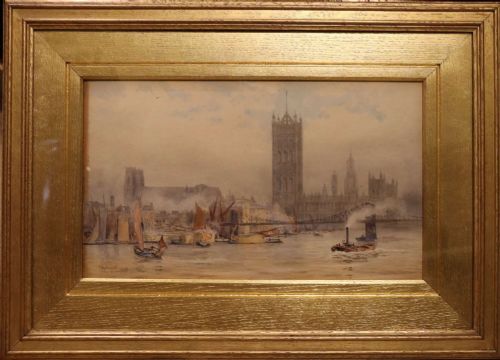
The selections span multiple decades, drawing heavily on works from the nineteenth century, the Edwardian era, and the mid-twentieth century. Buyers encounter river vistas featuring St Paul's Cathedral alongside street scenes of Horse Guards and St James's Park.
Framed works dominate the selection, often protected by glass and housed in wood or gilt wood frames that complement the paper support and watercolour paint. Individual sheets range from detailed architectural draughtsmanship to looser impressionistic sketches.
Materials and technique
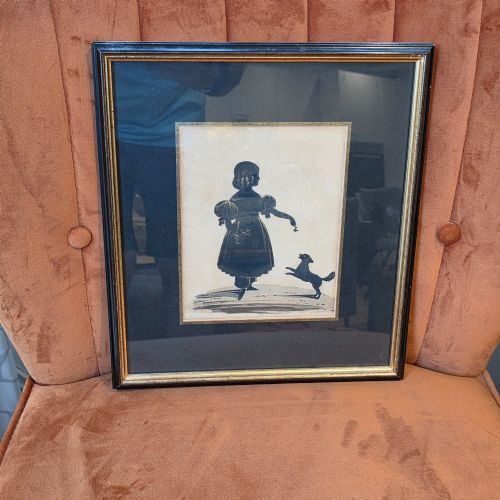
Artists painted primarily with watercolour paint and ink applied to paper supports, occasionally incorporating cut paper elements for silhouettes. These water-based pigments create translucent washes that capture shifting light on the Thames and atmospheric city mists.
Finished watercolours frequently employ protective glass glazing within wood frames, sometimes finished with gold leaf or gilt wood. This framing protects the delicate paper surface from environmental damage while maintaining period presentation.
Listings include works from the nineteenth century, Edwardian period, and the mid-twentieth century, utilising watercolour paint, ink, paper, and gilt wood frames.
Assessing quality
Top-tier examples demonstrate confident brushwork and precise topographical accuracy by recognised hands, capturing the specific light and atmosphere of the capital. Weaker pieces lack tonal depth and rely on formulaic composition without genuine observation of the site.
The handling of light and architectural detail separates accomplished compositions from pedestrian sketches. Stronger works balance the fluid nature of watercolour with structural clarity in buildings and shipping.
H Medlycott·William James Hubard·Frank Watson Wood·Frank William Scarbrough·Charles James Lauder·Rowland Henry Hill·A G Hayward·Jack Merriott·Walter Duncan·Harold E Frecker·Beatrice Parsons·Frances E Nesbitt·William A Macdonald·Herbert John Finn·WD Scull·Henry J Neave
The London Watercolour Artwork Glossary
- Watercolour paint
- A water-soluble medium composed of pigment and binder that produces translucent washes when diluted. It allows artists to build luminous layers of colour on paper.
- Gilt wood
- Wood carved and coated with a thin layer of gold leaf or metallic gilt finish. This traditional framing material adds warmth and reflection around works on paper.
- Topographical watercolour
- An artwork focused on the accurate depiction of a specific real-world location or building. These pieces serve as historical records of urban development.
- British Impressionism
- A painting style focusing on light, atmosphere, and loose brushwork adapted by British artists. It appears frequently in early twentieth-century views of the capital.
London Watercolour Artwork: Frequently Asked Questions
How should I hang watercolour artwork?
Watercolours require protection from direct sunlight to prevent the pigments from fading over time. Position them away from bright windows and damp walls.
Ensure the frame is properly sealed behind glass to keep atmospheric moisture and dust away from the paper surface.
What periods do these paintings cover?
The works span from the nineteenth century through the Edwardian era and into the mid-twentieth century. Styles shift from Victorian topographical views to British Impressionist and maritime watercolours.
Later pieces extend into the nineteen-fifties and sixties, recording post-war urban changes and engineering subjects.
Are these works original paintings?
The selection consists of original hand-painted watercolours on paper rather than modern mass-produced prints. Each piece represents a unique application of pigment by the artist.
Many retain their original framing materials, including wood, gilt wood, and protective glass.
What subjects are most common?
River views of the Thames dominate the selection, featuring landmarks such as the Houses of Parliament, St Paul's Cathedral, and various bridges. Park scenes and major London thoroughfares also appear frequently.
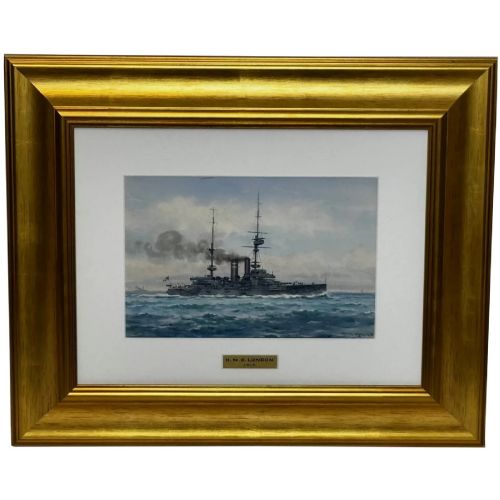
Maritime subjects depict naval vessels and port activity in the upper and lower pools of London.