

Locking Drawer Cabinet
A locking drawer cabinet secures private papers and small valuables behind a clever hinged locking stile.
Locking Drawer Cabinet
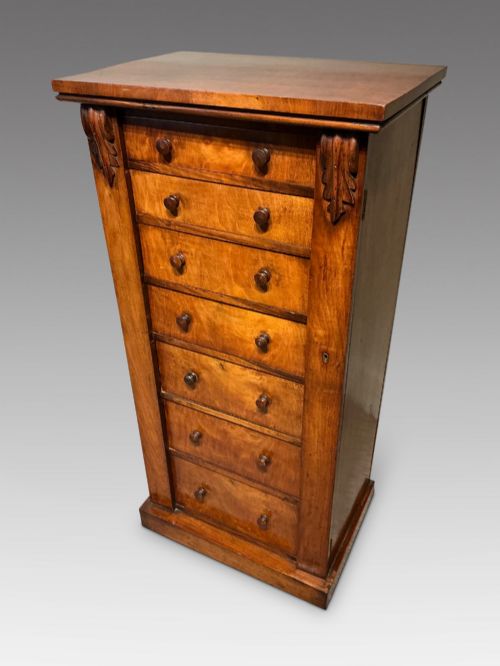
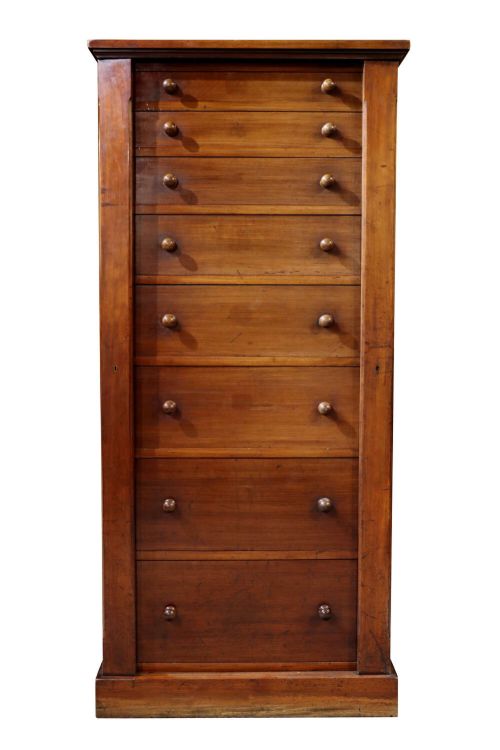
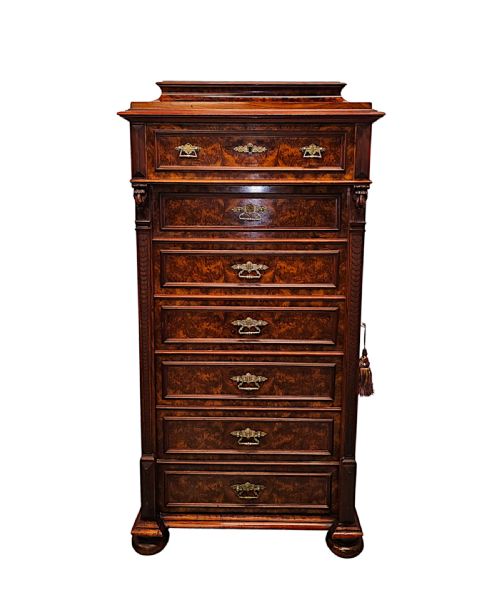
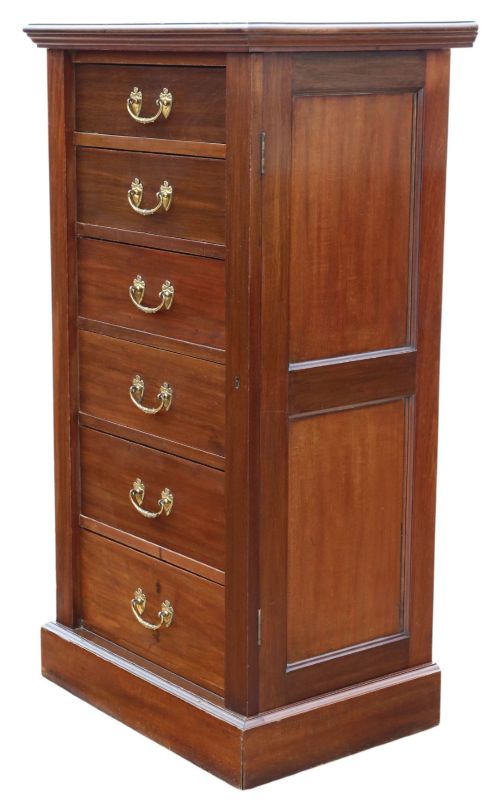
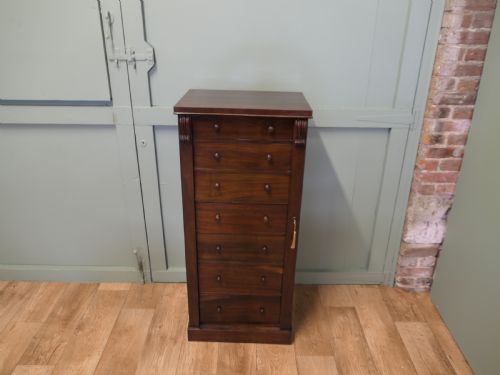
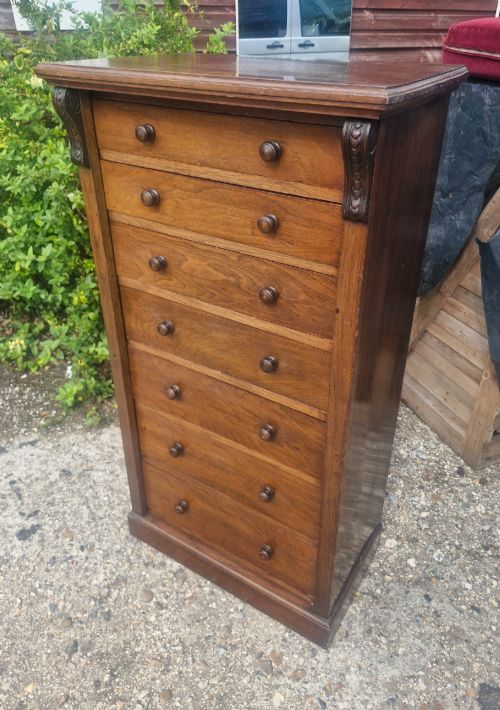
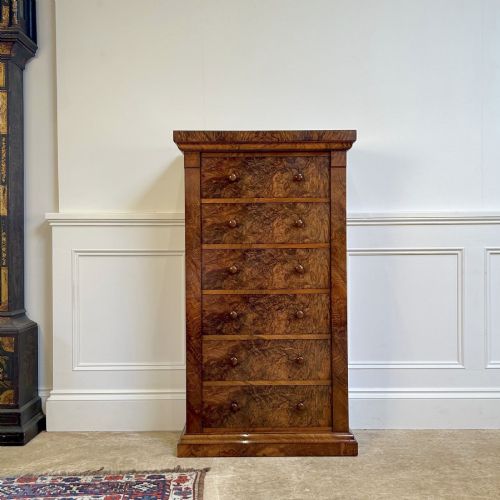
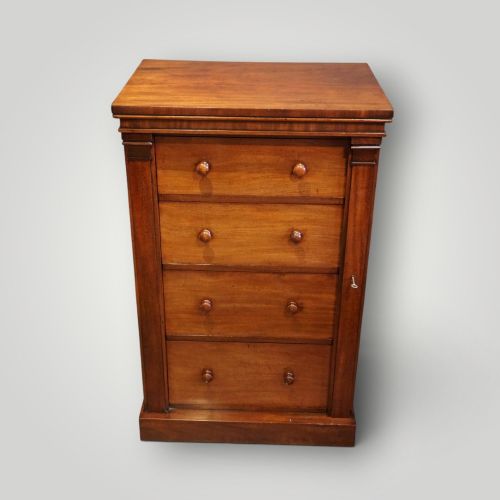
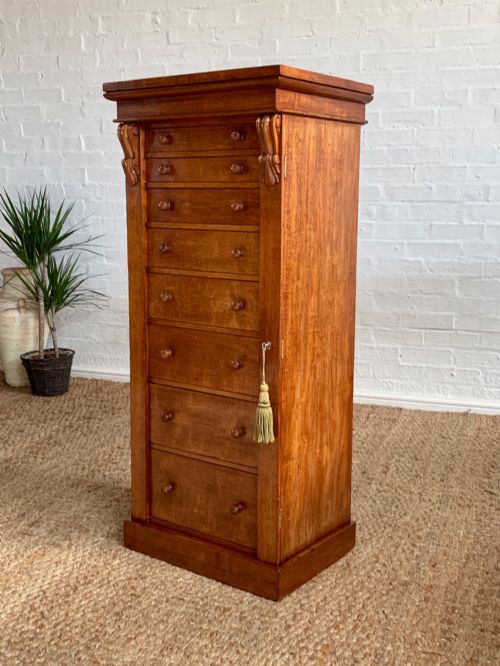
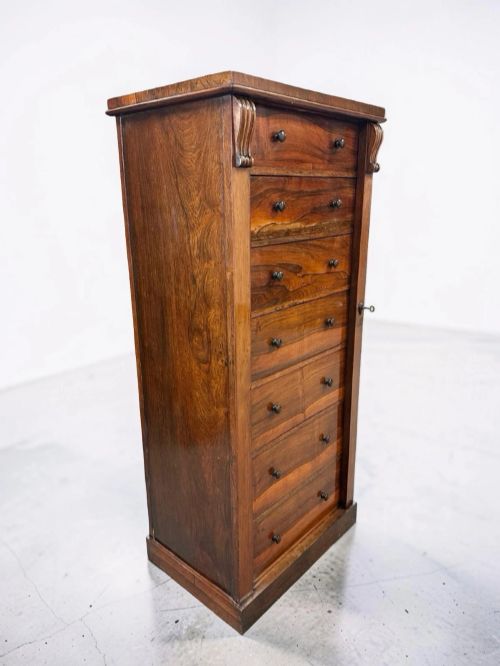
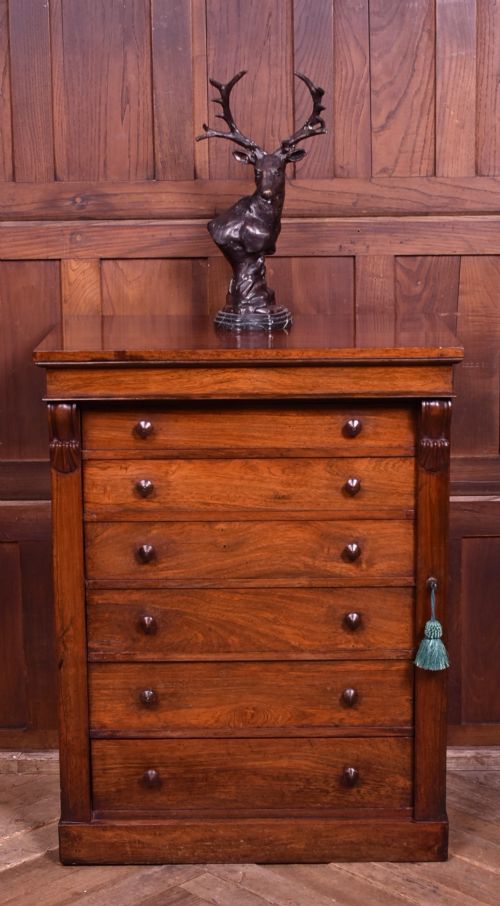
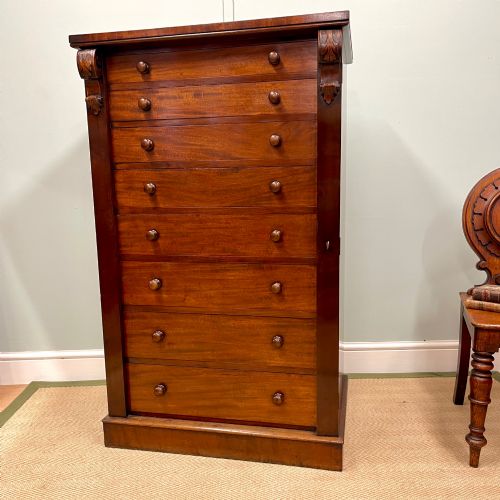
A locking drawer cabinet most frequently appears here as a tall, narrow Wellington chest, alongside specialised collector cabinets, humidors, and corner cupboards. These pieces emerge predominantly from Victorian and Edwardian workshops, spanning the nineteenth and early twentieth centuries.
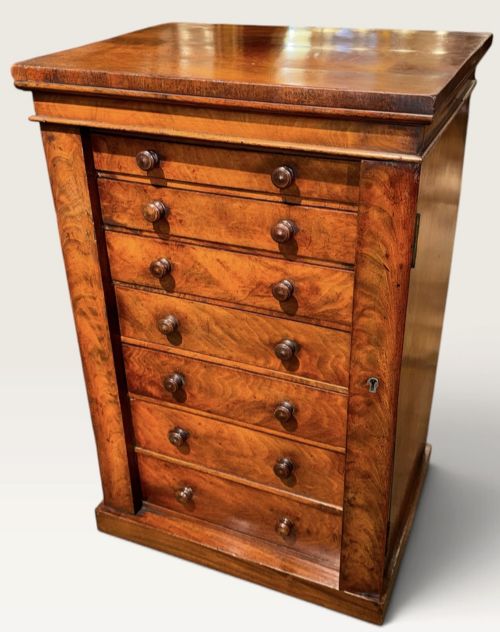
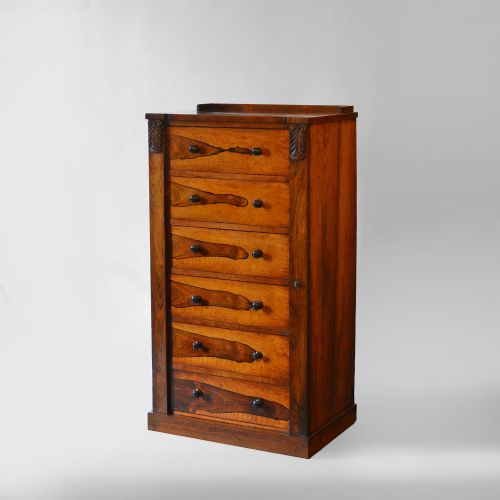
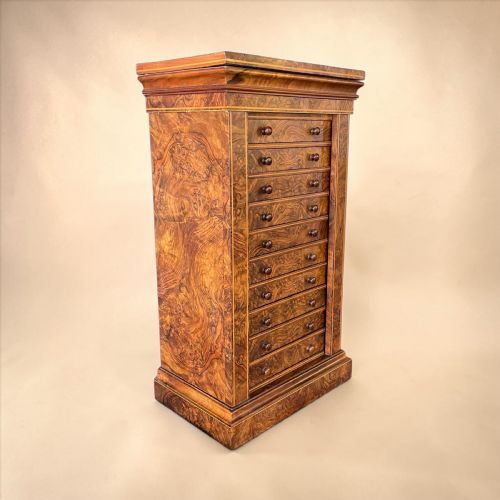
Makers designed these vertical chests with multiple drawers specifically to utilise small footprints while keeping contents secure with a single locking side flap. Buyers encounter figured mahogany, burr walnut, rosewood, and oak versions fitted with original brass hardware and working keys.
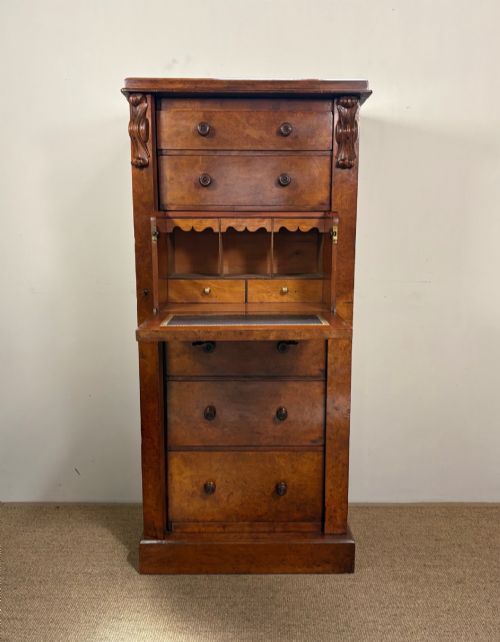
Alternative formats include miniature chests, secretaire variants with folding writing desks, and glazed wall-hanging display cupboards equipped with lower locking drawers. The selection ranges from robust oak commercial filing pieces to finely figured cabinetmaker items meant for domestic drawing rooms.
Materials and construction methods
Cabinetmakers built these tall chests using dense native and imported timbers, selecting mahogany, walnut, rosewood, and oak for structural integrity and visual depth. They applied choice veneers such as burr walnut and figured mahogany over stable secondary woods to create dramatic surface patterns on drawer fronts.
The defining mechanical feature relies on a hinged locking stile or vertical side bar that fastens over the drawer edges when locked with a key. Drawers feature traditional hand-cut dovetail joints and run smoothly within internal partitions designed to prevent tilting.
Locking Drawer Cabinet Retail Price Guide 2026
Typical asking prices for locking drawer cabinet among the pieces listed under this phrase on Sellingantiques today, from the lower quarter to the upper quarter. They describe what is for sale here now, not the wider market.
Several miniature chests appear alongside full-sized wardrobes, offering tiny locking drawers perfectly scaled for dollhouse documents.
Distinctions in construction and finish
Quality rests on the choice of timber figure, the crispness of internal drawer joinery, and the presence of original locking mechanisms with working keys. Superior examples display highly figured grain matching across consecutive drawer fronts rather than random timber cuts.
Master workshops distinguished their output through refined turned wooden knobs, tight-fitting dust boards between drawers, and fully integrated locking stiles that operate without friction. Lesser pieces exhibit plain timber selections, replaced hardware, or simplified internal framing without dust partitions.
Gillows of Lancaster·Holland & Sons·Maple & Co
The Locking Drawer Cabinet Glossary
- Wellington chest
- A tall, narrow chest of drawers secured by a hinged vertical locking flap on one side that engages with the drawer edges when locked. This locking drawer cabinet style originated in the nineteenth century for efficient storage.
- Secretaire
- A cabinet or chest featuring a specialised drawer that folds down to reveal a writing surface and small pigeonholes. It combines storage with a functional desk space behind a secure lock.
- Humidor
- A specialised box or cabinet designed to store cigars at a controlled humidity level. These locking units often feature cedar linings and individual drawer compartments.
- Collector's cabinet
- A piece built with shallow drawers intended for housing specimens, coins, or small artefacts. These cabinets frequently include glazed doors or secure locking mechanisms to protect fragile items.
- Stile
- The upright vertical member of a frame that in these pieces swings outward or unlatches to release the stacked drawers. It forms the primary security component of the design.
Locking Drawer Cabinet: Frequently Asked Questions
How does the locking mechanism work?
A hinged vertical wooden bar on the right side of the cabinet swings outward once the central key is turned in the brass lock. This stile contains internal stops that block the drawer edges until the bar is unlocked and opened.
Closing the stile back against the drawer stack and turning the key re-engages the mechanism across every drawer simultaneously. This clever setup secures a tall stack of drawers using a single lock.
Were these cabinets used for clothes?
Cabinetmakers originally designed these narrow vertical chests to store private papers, journals, and valuable personal items in studies or dressing rooms. Their shallow drawer configuration suits documents and accessories rather than bulky garments.
Over time, owners adapted them for various storage needs, including specimen collections, cigars, and files. Their compact footprint made them practical for smaller Victorian rooms.
How do I date a Victorian piece?
Dating relies on examining timber selection, drawer construction details, and secondary woods like oak or pine used in the interior linings. Mid-nineteenth-century examples often feature dense figured mahogany or rosewood with hand-cut dovetails and turned wooden knobs.
Later Victorian and Edwardian pieces incorporate machine-sawn elements, lighter oak or pitch pine timbers, and different brass hardware styles. The presence of retailer stamps or maker signatures also helps narrow down the production decade.
Can I find replacement keys?
Working original keys remain desirable because they operate the specific lever locks integrated into the locking stiles. Many antique cabinets retain their matching brass keys, which adds to their functional completeness.
A skilled locksmith can often fit a new key to an old lever lock if the original is missing, provided the internal mechanism remains unaltered.