

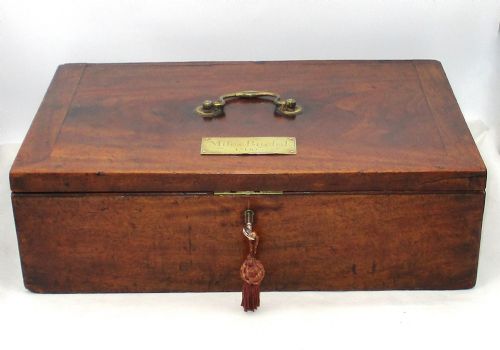
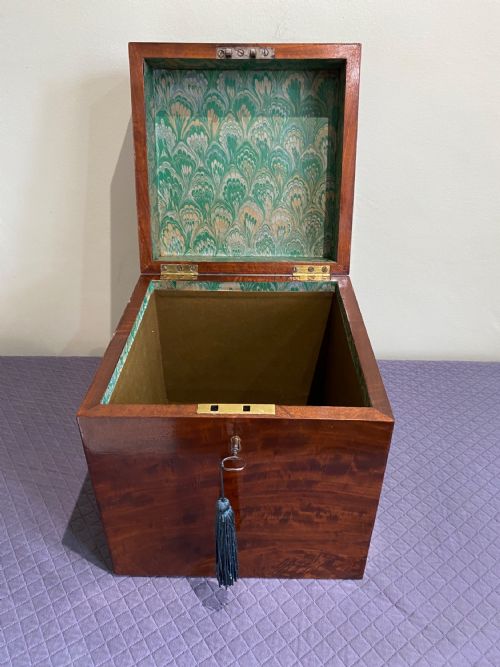
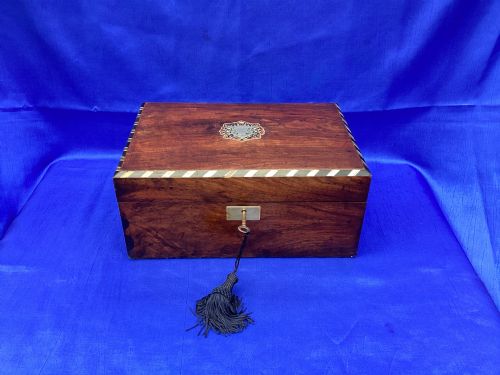


Lockable Wooden Keepsake Box
These lockable wooden keepsake box examples offer secure storage for personal valuables, combining functional security with period craftsmanship.
Lockable Wooden Keepsake Box
A lockable wooden keepsake box serves as a secure container for personal treasures, jewellery, and documents. These pieces appear across several historical periods, including Georgian, Regency, and Victorian eras.
The version most commonly met on this page is the Victorian or Georgian wood box. These range from simple mahogany document cases to elaborate rosewood and burr walnut dressing chests fitted with mirrors and compartments.
Makers adapted these forms for various uses, resulting in tea caddies, trinket boxes, and presentation cases. Materials such as brass, mother of pearl, and specific timbers like mahogany, rosewood, and burr walnut define the construction.
Quality Variations
The standard of a lockable wooden keepsake box depends on the selection of timber veneers and the precision of the cabinetwork. Finer examples display meticulously matched grain patterns and tight joinery.
Internal fittings dictate the complexity of the piece, separating standard storage from high-status dressing chests. Complete fitted interiors with original mirrors, trays, and velvet or silk linings elevate the status of the box.
The quality of hardware, such as integrated working locks with matching keys and substantial brass mounts, distinguishes superior workshop production from simpler utilitarian items.
Lockable Wooden Keepsake Box Retail Price Guide 2026
Typical asking prices for lockable wooden keepsake box among the pieces listed under this phrase on Sellingantiques today, from the lower quarter to the upper quarter. They describe what is for sale here now, not the wider market.
Listings feature items spanning the eighteenth, nineteenth, and early twentieth centuries, including Georgian, Regency, Victorian, and Art Deco styles.
The Lockable Wooden Keepsake Box Glossary
- Escutcheon
- A flat plate of brass or other metal placed around a keyhole to protect the surrounding wood. It often adds a decorative element to the front of a box.
- Marquetry
- The art and craft of applying pieces of veneer to a structure to form decorative patterns. Sorrento examples showcase intricate geometric or pictorial designs in various woods.
- Tea Caddy
- A container designed to store loose tea leaves, often featuring internal compartments or canisters. Many include functional locks to protect expensive stored contents.
- Burr Walnut
- Wood taken from a growth on a walnut tree, yielding highly figured and swirly grain patterns. Cabinetmakers prized this timber for high-status Victorian boxes.
- Coromandel
- A dense, heavily grained timber imported from Asia, similar in appearance to calamander. It was utilised for luxury nineteenth-century boxes.
Lockable Wooden Keepsake Box: Frequently Asked Questions
What were lockable wooden keepsake boxes used for?
These boxes served to protect private possessions, letters, and valuables from casual viewing or theft.
Owners kept personal jewellery, documents, and prized items secured inside them.
How do I know the period of a box?
Dating relies on timber choices, construction techniques, and decorative styles typical of eras like the Georgian or Victorian periods.
Specific details like brass mounts and lock mechanisms also help indicate the approximate decade of manufacture.
Do these boxes still have working keys?
Some boxes retain their original keys and functional locks, while others function primarily as decorative containers.
Lock mechanisms vary in complexity depending on the original purpose of the box.
How should I care for a antique wood box?
Keep wooden boxes away from direct sunlight and extreme humidity changes to protect the timber and veneer.
Regular gentle dusting maintains the polished finish without harming the historic surface.