



Lockable Walnut Box
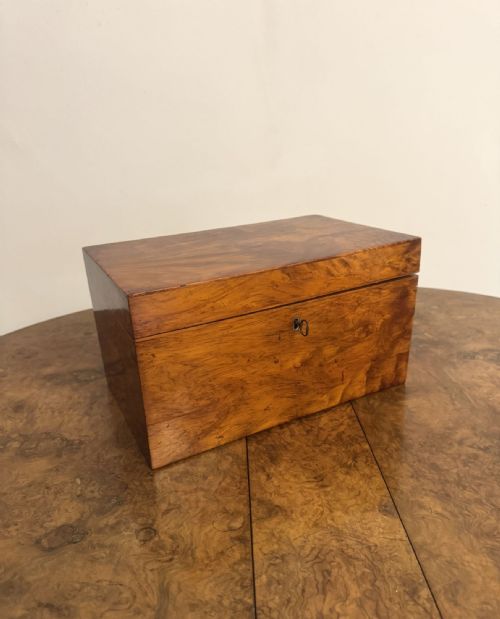
These lockable walnut boxes are substantial vessels in burr walnut, red walnut, and plain walnut, offering secure storage for tea, jewellery, and writing materials across the Georgian, Regency, and Victorian periods.
How they were made
Construction relies primarily on walnut and burr walnut timbers, valued for their rich grain patterns, supplemented by red walnut and general wood substrates. Cabinet makers applied these timbers as fine veneers over sturdy carcases, often selecting burr walnut for its swirling figure on primary display surfaces.
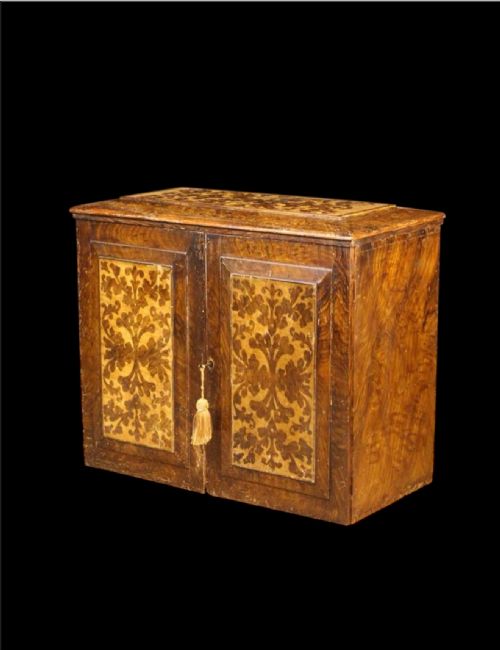
Metal and shell elements provide functional and decorative contrast, with brass utilised for hinges, escutcheons, boundary mounts, and locking hardware. Mother of pearl appears as inlay detail, alongside intricate wood inlay, parquetry, and marquetry work seen in Sorrento pieces and Victorian geometric patterns.
What varies in quality
The distinction between standard and superior pieces rests on the selection and matching of the walnut veneer, particularly the liveliness and symmetry of the burr figures across the lid and panels. Finer examples display meticulous grain continuity and careful timber selection that elevate the visual depth of the box.
Execution of decorative techniques such as brass banding, parquetry, and marquetry defines the upper tier of the range, where inlay work remains flush and crisp. Interior fittings, including fitted mirrors, velvet linings, and compartmentalised trays, demonstrate the level of original craftsmanship dedicated to the utility of the box.
Some Victorian writing slopes hide secret velvet-lined compartments beneath removable stationery trays for clandestine correspondence.
The Lockable Walnut Box Glossary
- Burr walnut
- A figured timber obtained from the warted growths of walnut trees, prized for its complex, swirling grain patterns. It is frequently used as a veneer on the exterior surfaces of high-status boxes.
- Tea caddy
- A container originally designed for storing loose tea leaves securely under lock and key. Many surviving examples feature internal foil linings or divided compartments for different tea varieties.
- Writing slope
- A portable box with a hinged, slanted writing surface that opens to reveal compartments for stationery, inkwells, and pens. These slope surfaces are often lined with leather or velvet.
- Marquetry
- A decorative technique where small pieces of veneer are arranged to form pictorial or geometric patterns on the surface of a box. Sorrento examples frequently utilise this method for scenic or floral motifs.
- Parquetry
- A geometric mosaic of wood veneers assembled to create repeating patterns such as cubes or stripes. It differs from marquetry by strictly following geometric rather than pictorial designs.
- Escutcheon
- A protective plate surrounding the keyhole of a lock, usually fabricated from brass or mother of pearl. It serves both to reinforce the wood around the aperture and to provide a decorative focal point.
Lockable Walnut Box: Frequently Asked Questions
What were lockable walnut boxes used for?
These boxes served secure domestic functions for storing valuable commodities such as tea, correspondence, and personal jewellery. The addition of a working lock protected expensive items from household servants and guests.
Tea caddies preserved precious leaves in airtight compartments, while writing slopes and jewellery cabinets organised personal effects with dedicated trays and hidden drawers.
How do I identify a Victorian walnut box?
Victorian examples frequently showcase high-contrast burr walnut veneers, brass banding, and elaborate fitted interiors complete with velvet linings and mirrors. Stylistic markers often include Gothic Revival influences or detailed marquetry.
Earlier Georgian and Regency pieces tend toward simpler, heavier proportions in red walnut or plain walnut, focusing on timber grain rather than applied brass mounts.
Are the locks original and working?
Many boxes retain their original brass mortise locks, though functionality varies due to age and the presence or absence of a matching key. Replacement keys are frequently fitted to operational locks by dealers.
Buyers should examine the escutcheon and interior strike plate to determine whether the locking mechanism has undergone historical repair or replacement.
What is Sorrento marquetry?
Sorrento marquetry refers to decorative woodwork originating from the Italian town of Sorrento, commonly associated with nineteenth-century Grand Tour souvenirs. These pieces feature intricate geometric and pictorial veneer work.
Boxes from this origin combine walnut structures with multi-coloured wood inlays depicting buildings, musical instruments, or floral arrangements.
How should I care for antique walnut?
Antique walnut benefits from stable environmental conditions away from direct sunlight and dramatic humidity fluctuations, which can cause timber to split or veneer to lift. Gentle dusting with a dry cloth maintains the surface.
Avoid modern silicone polishes, relying instead on traditional microcrystalline wax applied sparingly to nourish the historic timber finish when necessary.