


Burr Walnut Desktop Cabinet
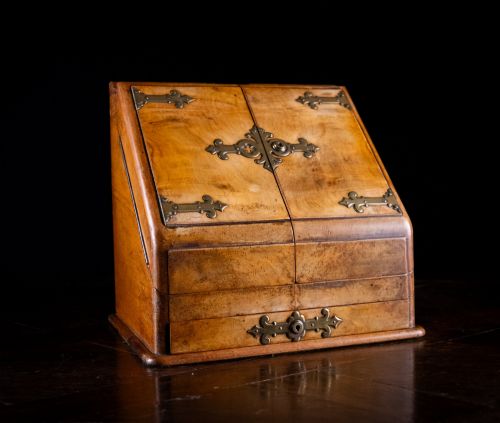
These burr walnut desktop cabinet pieces are compact repositories of wood and brass, selected for their figured grain and practical utility.
Burr Walnut Desktop Cabinet
A burr walnut desktop cabinet represents a refined category of small storage, encompassing table cabinets, cigar humidors, stationery boxes, and miniature chests of drawers. Originating mostly across the Victorian and Edwardian eras, spanning from the 1860s through to 1910, these objects sat upon desks and tables to hold letters, tobacco, or specimens.
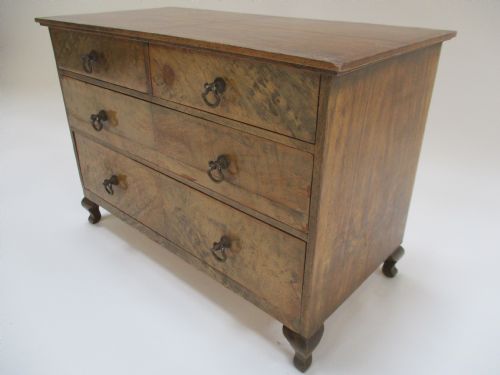
The version most commonly met on this page is the Victorian or Edwardian table cabinet, frequently constructed with brass mounts and fitted interiors. Alongside stationery boxes and cigar cabinets, one encounters miniature chests of drawers and apprentice pieces built in the Queen Anne style.
Makers of the period utilised the striking grain of burr walnut to create visually engaging surfaces for domestic and gentleman's studies. The forms range from lockable specimen chests to display cabinets, reflecting the varied storage requirements of nineteenth and early twentieth century life.
How they were made
The construction relies heavily on the use of burr walnut veneer applied over a solid timber carcasing, chosen specifically for the swirling patterns in the wood. Cabinet makers combined this figured timber with brass for handles, hinges, locks, and banding to reinforce corners and secure lids.
Interior fittings frequently incorporate inlaid wood, glass panels, and leather surfaces to organise letters, cigars, or small specimens. Joinery techniques from the nineteenth century ensured that these compact boxes and miniature chests remained sturdy through decades of daily desktop use.
Some nineteenth century gentlemen required a locked cabinet just to keep their best cigars safe from appreciative houseguests.
What varies in quality
Quality in a burr walnut desktop cabinet is determined by the selection and symmetry of the veneer grain across the visible panels. Finer examples display a richer, more continuous pattern of burr walnut, matched carefully across the front and top surfaces.
The integration of heavy brass mounts, functional locking mechanisms, and detailed marquetry inlay further separates standard production from superior pieces. Internal appointments, such as fitted stationery dividers or lined cigar compartments, indicate the original tier of the cabinet.
The Burr Walnut Desktop Cabinet Glossary
- Burr walnut
- A veneer taken from the wart-like growths on walnut trees, prized for its complex, swirling grain patterns. It provides a highly decorative surface for nineteenth century cabinet work.
- Stationery cabinet
- A desk accessory designed to hold writing paper, envelopes, and pens, often featuring tiered wooden compartments inside. These pieces usually include drop-fronts or hinged lids.
- Cigar humidor
- A specialised box or cabinet built to store cigars, sometimes lined with cedar and fitted with locking mechanisms to preserve contents. They appear frequently among nineteenth century walnut desk accessories.
- Apprentice chest
- A small-scale chest of drawers constructed by a tradesman in training to demonstrate mastery of woodworking techniques. They mirror the joinery and proportions of full-size furniture in miniature.
- Marquetry
- The art of applying pieces of veneer to a structure to form decorative patterns and pictures. Edwardian examples often employ this technique alongside plain walnut fields.
Burr Walnut Desktop Cabinet: Frequently Asked Questions
What is a burr walnut desktop cabinet used for?
These cabinets served to organise stationery, store cigars, or hold small specimens and trinkets upon a desk. Their compact footprint allowed them to sit conveniently within a study or library.
Inside, compartments and drawers kept writing materials or tobacco secure and tidy. Many feature locks to protect private correspondence or valuable items.
How do I date a burr walnut desktop cabinet?
Dating relies on stylistic clues, construction methods, and materials associated with periods like the Victorian or Edwardian eras. Pieces from the mid nineteenth century often feature robust brass binding and simpler forms.
Later Edwardian versions occasionally incorporate marquetry inlay and lighter framing. Examining the interior fittings and lock types also helps narrow down the decade of manufacture.
Are these cabinets made of solid burr walnut?
Burr walnut is almost exclusively applied as a decorative veneer over a stable secondary timber carcass. The swirling nature of burr growth makes solid construction impractical for large panels.
Craftsmen sliced thin layers of the figured wood and laid them symmetrically across the exterior surfaces. This technique highlighted the natural grain while ensuring structural stability.
How should I care for burr walnut furniture?
Keep these desktop pieces away from direct sunlight and heat sources to prevent the walnut veneer from drying out or splitting. Gentle dusting with a dry cloth maintains the finish.
Avoid using harsh chemical polishes that can damage the historical polish or the underlying wood. Waxing occasionally helps preserve the lustre of the grain.