
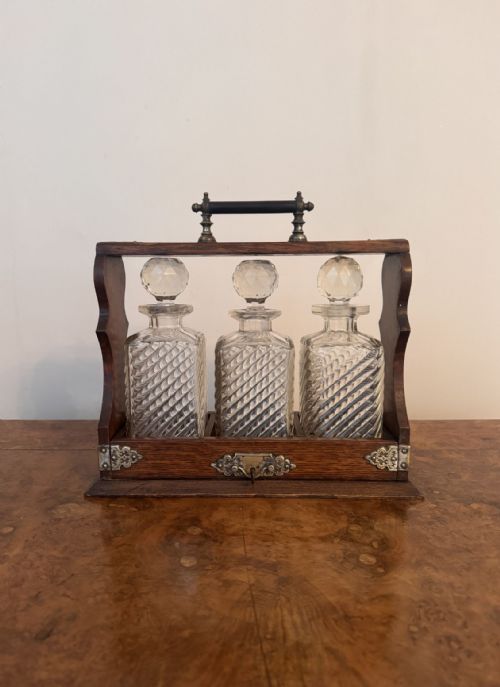
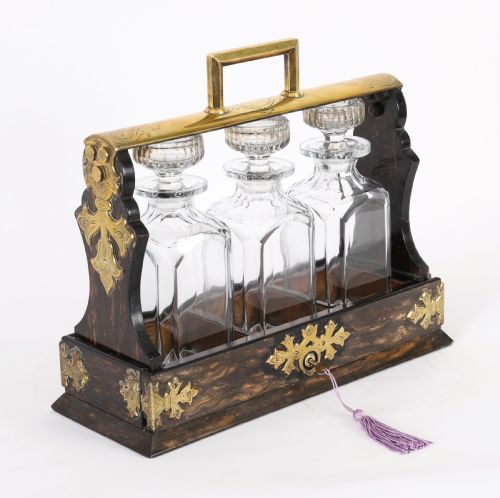

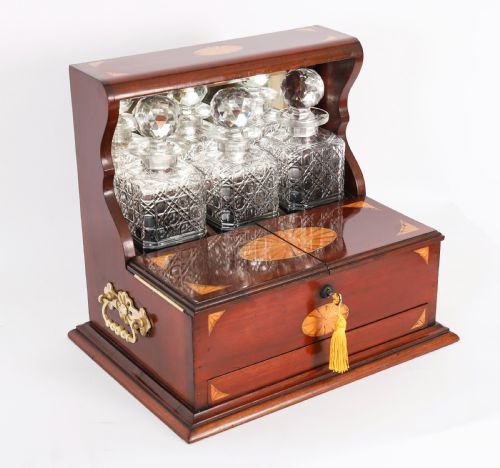


Lockable Spirit Decanter
These lockable spirit decanter pieces are secure barware housings designed to keep precious drink safe under lock and key.
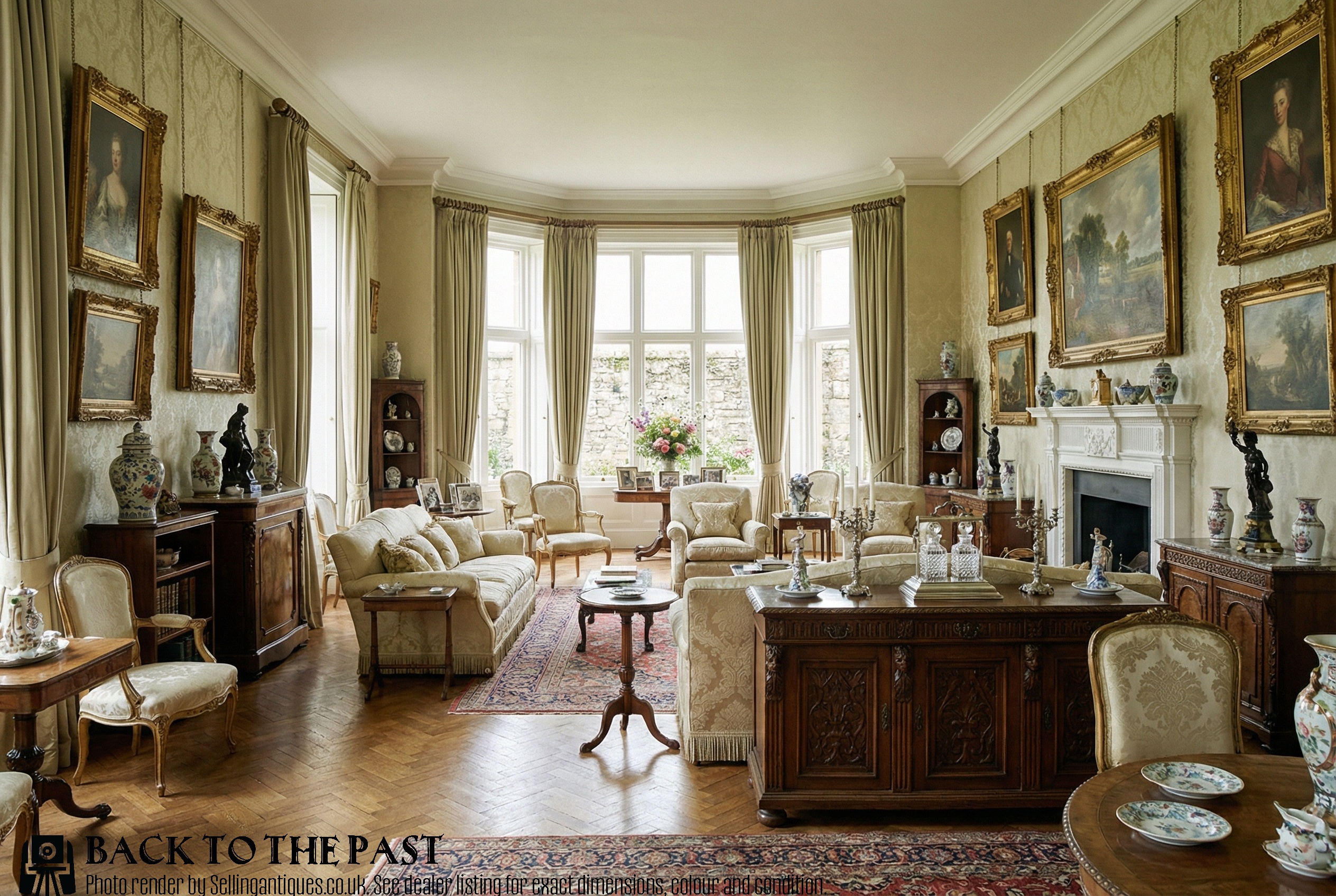
Lockable Spirit Decanter
A lockable spirit decanter typically manifests as a tantalus or fitted decanter box housing multiple bottles securely. These drinking cabinets protect expensive spirits from unauthorized access while displaying the glass vessels clearly through open frames or enclosed wooden cases.
The selections on this page span from Victorian and Edwardian periods down to Art Deco designs. Buyers most frequently encounter sturdy oak, coromandel, or walnut frames fitted with silver-plated mounts and cut crystal decanters.
Compositions often include integrated games compendiums alongside the bottles for dual entertainment and refreshment storage. These robust pieces reflect the social habits of late nineteenth and early twentieth century home entertaining.
Distinguishing quality across examples
The refinement of the timber and the complexity of the cabinetry define the upper tier of these pieces. Marquetry inlay, satinwood detailing, and choice hardwoods such as coromandel elevate the visual weight far above plain oak or simple mahogany constructions.
Hardware complexity and glass integrity separate fine examples from standard production. Fully functional locking mechanisms with matching keys, combined with heavy cut crystal decanters that match the original housing precisely, command greater regard.
Materials span cut glass, cut crystal, oak, mahogany, walnut, coromandel, satinwood, brass, silver plate, chrome, and metal.
The Lockable Spirit Decanter Glossary
- Tantalus
- A locking drink cabinet holding decanters securely so the contents remain visible yet physically unreachable without a key. This clever apparatus derives its name from the mythological figure of frustration.
- Decanter Box
- A fully enclosed wooden chest fitted internally to hold multiple glass bottles safely. These portable cases protect the glassware during travel and storage.
- Games Compendium
- A multi-use container storing board games and cards alongside drinking vessels. These combination boxes serve both social entertainment and hospitality functions.
- Cut Crystal
- High-clarity glass shaped with faceted geometric patterns that refract light brilliantly. This material provides the sparkling visual centrepiece for most tantalus housings.
- Silver Plate
- A thin layer of silver bonded to a base metal substrate for decorative hardware. This technique gives handles, lock plates, and frames the appearance of solid silver.
Lockable Spirit Decanter: Frequently Asked Questions
What is a tantalus?
A tantalus is a locking barware stand that holds decanters firmly within a wooden and metal frame. The locking mechanism secures the stoppers so the bottles cannot be removed without the key.
This clever design allowed hosts in past centuries to control access to expensive spirits while still displaying the handsome decanters to guests.
How do you open the lock?
Opening the mechanism requires a matching key to release the top locking bar. Once unlocked, the metal retaining arm swings or lifts upward to free the decanter necks.
Many surviving pieces retain their original working keys, though replacement keys can sometimes be fitted by specialists.
What periods do these come from?
The available pieces originate primarily from the Victorian and Edwardian eras, with occasional Regency and Art Deco examples. Design styles shifted from heavy, ornamented walnut and coromandel cases toward streamlined chrome and glass forms by the early twentieth century.
Victorian pieces often feature elaborate brass mounts and marquetry, while Edwardian models favour clean oak and silver-plated fittings.
How many decanters do they hold?
Most standard housings accommodate two, three, or four matching decanters arranged neatly within the wooden base. Three-bottle configurations appear most frequently across Victorian and Edwardian editions.
Fitted boxes and larger compendiums often house up to four crystal decanters alongside dedicated spaces for glassware and games.
How do I care for the wood and glass?
Maintain the timber housing with appropriate paste wax applied sparingly to nourish the grain and protect the polish. Avoid harsh chemical cleaners on the silver-plated mounts to preserve the finish.
Wash the cut crystal decanters gently by hand with warm water, ensuring stoppers are stored safely outside the bottles when not in use.