



Lockable Decanter Set
A lockable decanter set safeguards your finest spirits inside oak, mahogany, and silver-plated frames.
Lockable Decanter Set
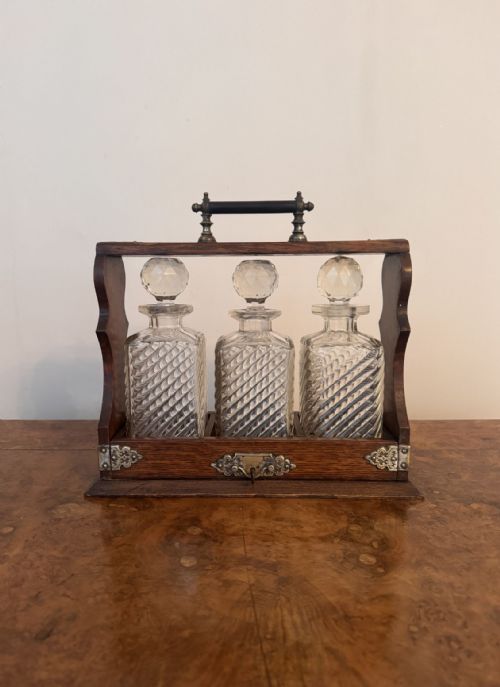
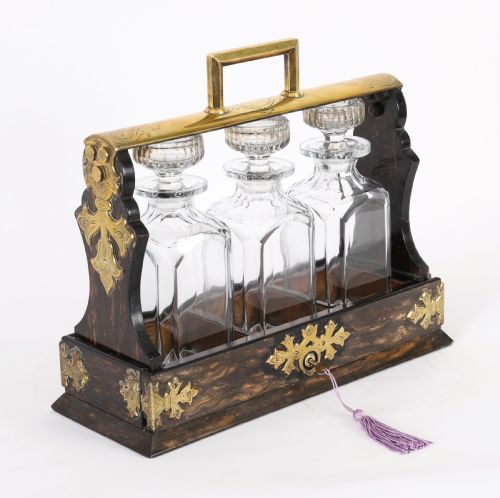
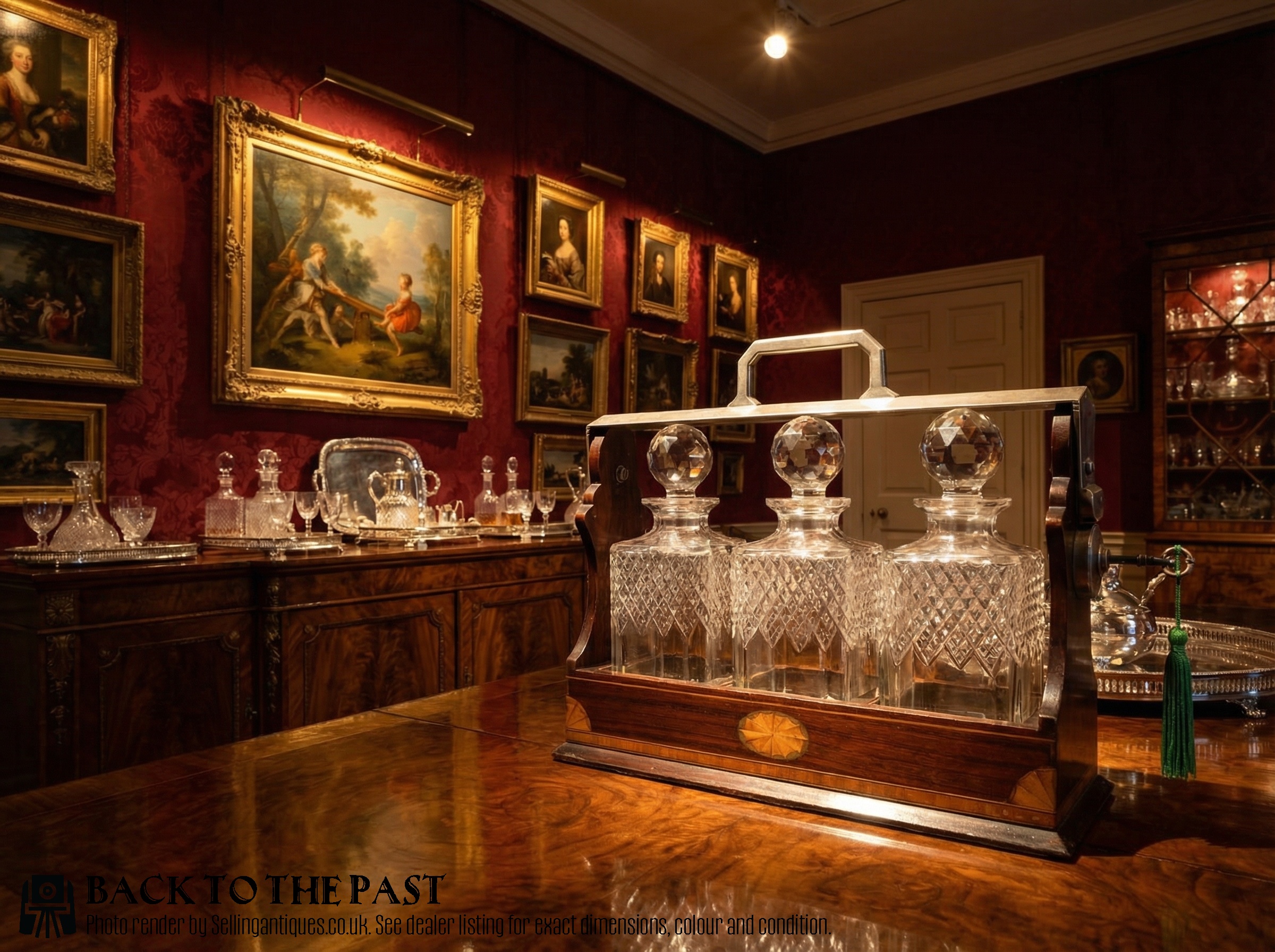
A lockable decanter set takes the form of a tantalus or games compendium, securing three cut crystal or cut glass decanters beneath a metal bar. These pieces emerge predominantly from the Victorian and Edwardian eras, spanning walnut, oak, coromandel, and satinwood constructions.
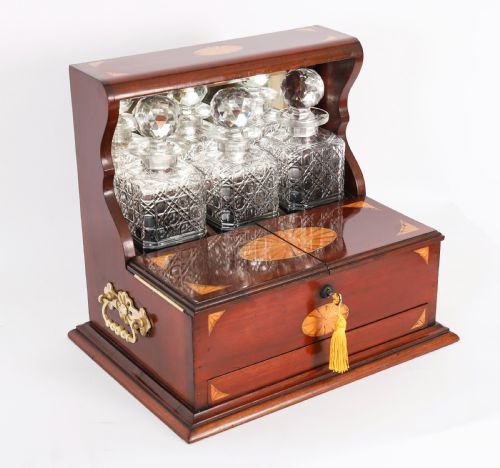
Most examples house either two or three matching bottles alongside compartments for cards, counters, or dry bar accessories. The mechanism locks the stoppers in place, preventing access to the contents until a key is turned in the brass or silver-plated lock.
How they were made
Cabinetmakers utilised solid timbers and decorative veneers such as coromandel, walnut, and satinwood, often embellishing the frames with marquetry stringing and brass mounts. Silver-plated security bars and handles were engineered to slide or lift once the lock disengaged.
The decanters themselves feature heavy cut crystal and cut glass, matched with faceted stoppers that sit securely within the locked framework. Chrome and glass variants appeared later during the Art Deco period, introducing modernist lines to the traditional barware format.
Lockable Decanter Set Retail Price Guide 2026
Typical asking prices for lockable decanter set among the pieces listed under this phrase on Sellingantiques today, from the lower quarter to the upper quarter. They describe what is for sale here now, not the wider market.
What varies in quality
The distinction between standard and superior pieces rests on the choice of cabinet timber, the intricacy of the inlay, and the weight of the cut crystal decanters. Marquetry stringing and uncommon woods like coromandel elevate the visual presence of the housing.
Hardware execution also defines the upper tier, seen in robust silver-plated mounts and fully functional locks stamped by known makers. Complete sets retaining their original games equipment or matching stoppers command greater regard among collectors.
The Goldsmith Co.·Philip Ashberry·Jacques Adnet
The Lockable Decanter Set Glossary
- Tantalus
- A locking drink container that holds decanters fast by their stoppers so they remain visible yet inaccessible without a key. The name derives from the mythological figure of Tantalus.
- Marquetry
- The art of applying thin veneers of wood to a structure to form decorative patterns or pictures. Craftsmen used contrasting timbers to create geometric stringing lines.
- Compendium
- A multi-purpose box containing various games, writing materials, or bar accessories alongside the primary decanters. These combined compartments served Victorian drawing rooms.
- Satinwood
- A light-coloured, lustrous timber native to India and Ceylon, frequently employed for inlaid panels and fine cabinet fronts.
Lockable Decanter Set: Frequently Asked Questions
How does a tantalus lock work?
A metal retaining bar drops across the necks of the decanters, holding the glass stoppers firmly in position. Turning a key in the lock secures this bar against the wooden base.
When unlocked, the bar slides or hinges upward to release the bottles for pouring. The design ensures guests cannot pour spirits without the owner's knowledge.
What is a games compendium tantalus?
This hybrid piece combines a secure spirit cabinet with compartments for playing cards, dice, or gaming counters. It served as an all-in-one entertainment station for period drawing rooms.
Lower drawers or folding lids typically reveal the game pieces beneath or beside the central decanters.
How do I date an oak tantalus?
Victorian versions from the 1870s and 1880s often showcase heavy brass mounts, coromandel veneers, and intricate marquetry stringing. Edwardian models lean toward simpler oak housings with silver-plated hardware.
Later 1930s examples shift entirely into modernist chrome and glass construction, reflecting changing domestic tastes.
Are the decanters original to the box?
Decanters fit specific cutouts and locking bars designed for their exact dimensions and stopper heights. Original sets show uniform glass clarity, matching cut patterns, and consistent wear at the base.
Replacements often sit awkwardly beneath the locking bar or lack the correct matching stoppers.