







Lion Mask Wood Carving
These robust lion mask wood carving examples bring fierce sculptural presence to period interiors, from architectural wall brackets to grand sideboards.
Lion Mask Wood Carving
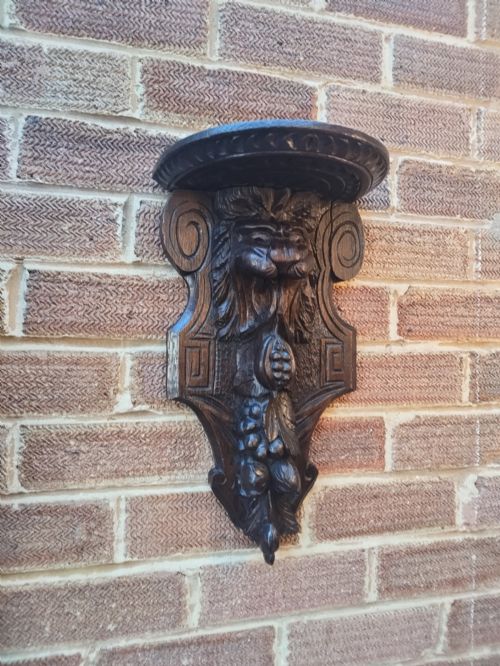
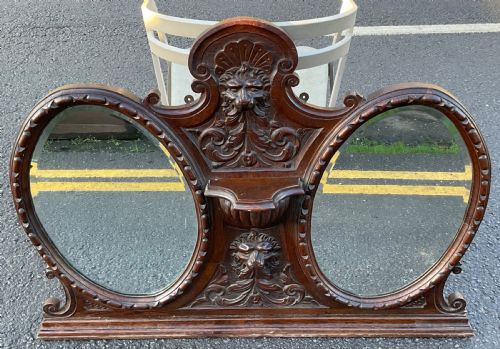
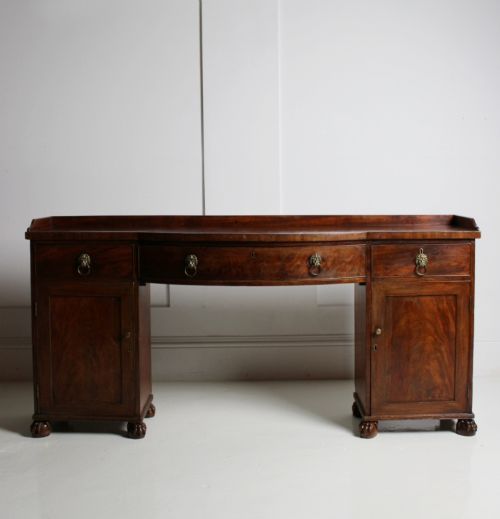
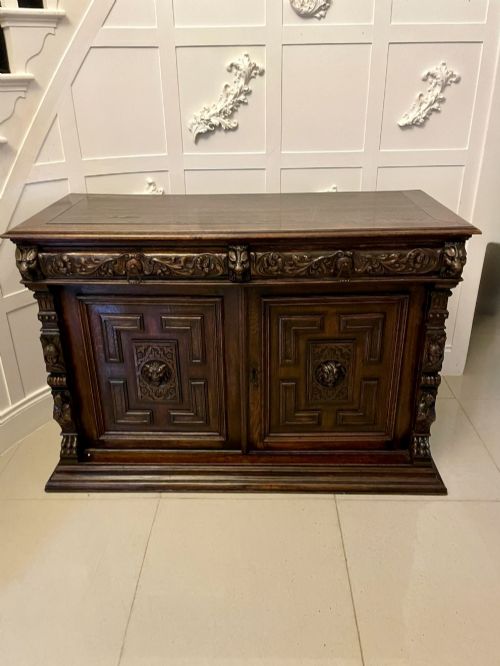
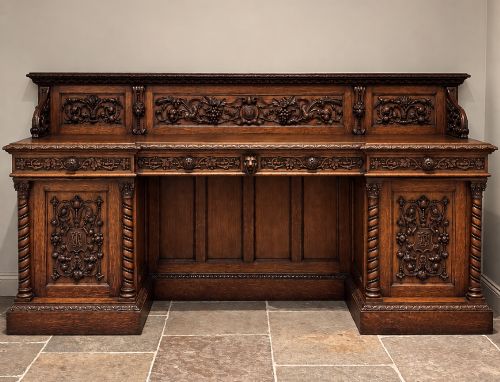
A lion mask wood carving brings together sculptural ferocity and functional furniture design, frequently appearing upon seventeenth-century to nineteenth-century oak and walnut items. Buyers searching this phrase encounter substantial furnishings like sideboards, cabinets on stand, and console tables, alongside isolated architectural wall brackets and large wall masks.
The most common interpretations on this page date from the nineteenth century, particularly utilising carved oak in Flemish Baroque, Victorian Gothic, or Renaissance Revival styles. These pieces integrate the fierce feline visage directly into structural timber, serving as decorative terminals, drawer pulls, or prominent cartouche motifs.
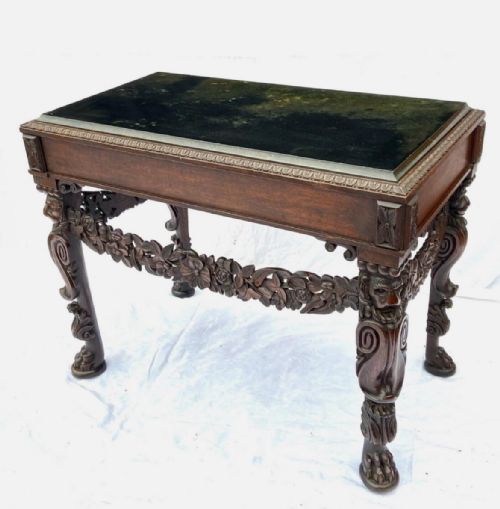
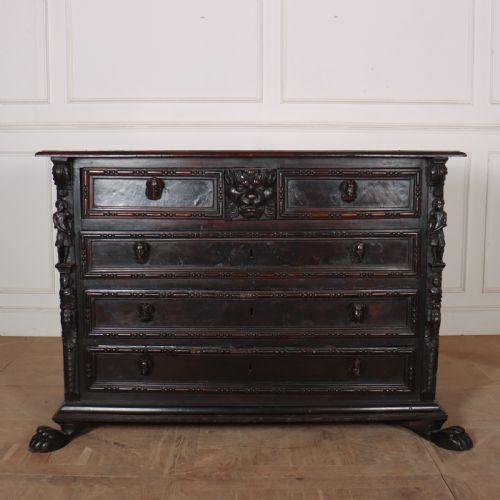
Earlier eighteenth-century variants emerge in walnut or mahogany, often associated with Irish console tables or Italian commodes featuring prominent paw feet and deep relief work. Later nineteenth-century Black Forest interpretations also appear, presenting naturalistic walnut animal heads with intense detailing.
Materials and carving techniques
Craftsmen primarily carved these feline visages from dense domestic hardwoods like oak and walnut, utilising hand chisels and gouges to achieve deep undercutting in the manes and jowls. The timber grain directs the depth of the relief, with harder oak allowing for crisp architectural edges on wall brackets and sideboards.
Giltwood and gesso occasionally surface on Regency pier mirrors and console tables, where the carved wooden base receives a layer of prepared plaster before water gilding. Leather upholstery and brass hardware sometimes accompany the woodwork on larger seating suites and side table drawers.
Lion Mask Wood Carving Retail Price Guide 2026
Typical asking prices for lion mask wood carving among the pieces listed under this phrase on Sellingantiques today, from the lower quarter to the upper quarter. They describe what is for sale here now, not the wider market.
Listings span oak, walnut, mahogany, and giltwood across the seventeenth, eighteenth, and nineteenth centuries.
Assessing quality in carved feline details
Quality rests upon the depth of the chisel work and the anatomical conviction of the lion visage, distinguishing spirited hand-carving from mechanical reproduction. Superior examples display expressive facial musculature, sharply defined teeth, and fur rendered in distinct, flowing locks rather than shallow scoring.
The integration of the mask into the broader object dictates the overall calibre, showing whether the carving forms an organic part of the structural moulding or merely acts as a superficial applied plaque. The choice of timber grain and the preservation of original patination further separate exceptional cabinetwork from lesser output.
The Lion Mask Wood Carving Glossary
- Cartouche
- An ornamental tablet or panel resembling a rolled-up piece of parchment, frequently framing lion masks on furniture friezes.
- Giltwood
- Timber that has been coated with gold leaf over a prepared surface, commonly found on Regency mirrors and console tables in the evidence.
- Black Forest
- A style of nineteenth-century wood carving originating in Switzerland and Germany, noted for naturalistic animal sculptures including walnut lion heads.
- Pier Mirror
- A tall mirror designed to hang on the wall between windows, often matched with a console table beneath.
- Console Table
- A table fixed to a wall or supported by front legs, frequently decorated with carved paws and mask motifs.
Lion Mask Wood Carving: Frequently Asked Questions
What is a lion mask wood carving?
A lion mask wood carving is a decorative sculptural element depicting the face of a lion, integrated into furniture or architectural woodwork.
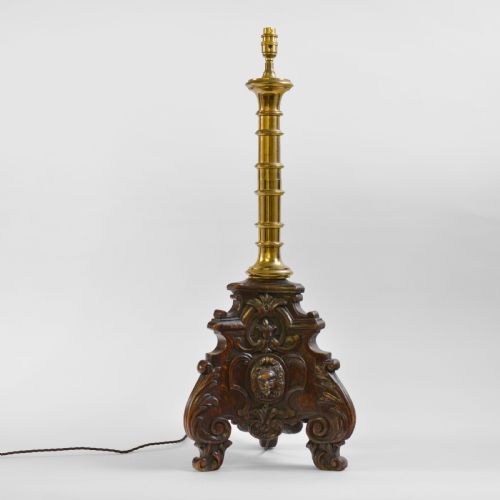
These carvings appear on items ranging from seventeenth-century oak lamps and sideboards to nineteenth-century wall brackets and overmantel mirrors.
How were these carved pieces used?
They served primarily as ornamental motifs on grand furniture, architectural salvage, and wall decorations in period homes.
Cabinetmakers placed the masks on sideboard drawers, console table legs, and cabinet doors to project status and strength.
How do I date a carved oak lion mask?
Dating relies upon the surrounding furniture style, the joinery methods, and the tool marks left within the timber.
Earlier seventeenth and eighteenth-century examples display heavier hand-chamfering, while nineteenth-century pieces often reflect Revival movements like Flemish Baroque or Gothic.
Where should I place a wall mask?
Large wall masks and brackets require sturdy wall fixings due to the weight of the dense oak or walnut timber.
They work effectively as standalone focal points in hallways or studies alongside period sideboards and tables.