





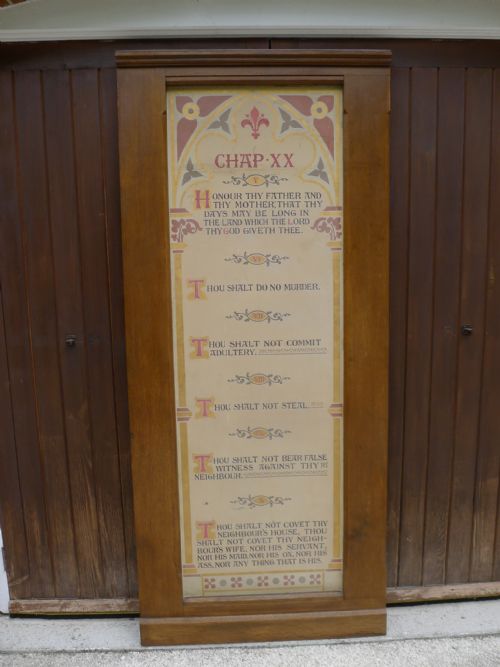
Gothic Revival Wall Mount
Gothic revival wall mount pieces bring architectural weight and rich timber grain to domestic interiors.
Gothic Revival Wall Mount
When you search for gothic revival wall mount items, you are looking at architectural woodwork, shelving, and display furniture designed to anchor directly to room partitions. These pieces draw heavily on medieval ecclesiastical forms, translating stone arches and traceried panels into domestic scales.
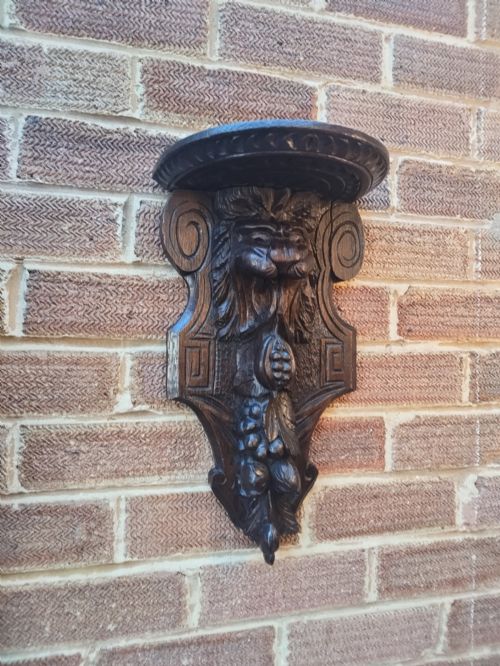
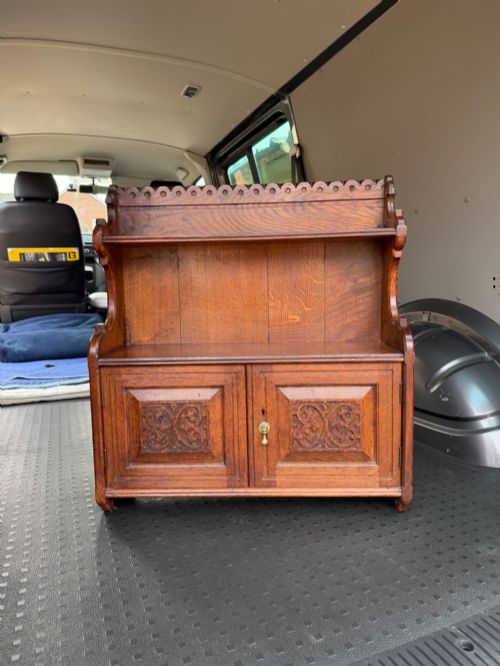
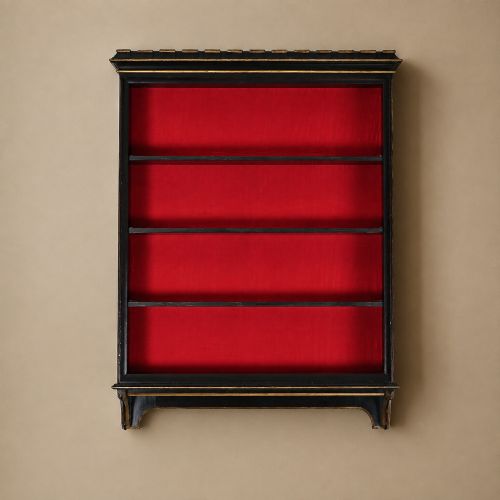
You are most likely to meet nineteenth-century oak and ebonised timber examples on this page, taking the form of wall brackets, hanging bookcases, and carved panels. These fixtures range from domestic shelf units to architectural salvage rescued from period buildings.
The selection includes specific functional forms such as corner cupboards, plate racks, and clock brackets alongside decorative ecclesiastical fragments. Each object serves to project historical gravity onto plain walls through disciplined joinery and relief carving.
How they were made
Joiners and carvers built these pieces primarily using solid oak, rosewood, and ebonised timber, often enriching the structural wood with carved details like lion masks or griffin terminals. Secondary materials such as brass fittings, ceramic elements, and fabric inserts appear across brackets and rail sections to provide contrast.
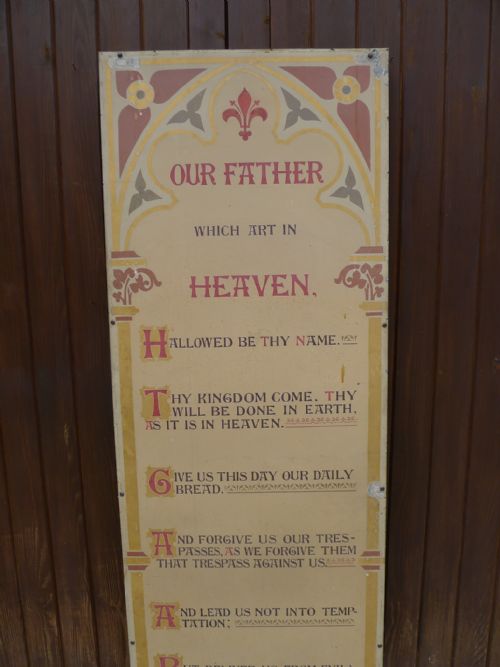
Surface treatments range from deep polish on dark hardwoods to painted finishes and faux tortoiseshell effects on smaller cupboards. Architectural salvage items incorporate structural timber and illuminated text panels originally housed within tin tabernacles.
Gothic Revival Wall Mount Retail Price Guide 2026
Typical asking prices for gothic revival wall mount among the pieces listed under this phrase on Sellingantiques today, from the lower quarter to the upper quarter. They describe what is for sale here now, not the wider market.
Listings feature nineteenth-century oak, rosewood, and ebonised timber wall furniture.
What varies in quality
The standard of a gothic revival wall mount piece rests upon the crispness of the hand-carved ornament and the depth of the timber selection. Sharp relief work on griffin terminals or lion masks indicates a maker with proper sculptural training.
Construction methods also separate utilitarian joinery from finer cabinet work, seen in the precision of corner joints and the integration of architectural mouldings. Pieces attributed to specific designers or originating from substantial ecclesiastical commissions carry a distinct level of compositional authority.
George Edmund Street
The Gothic Revival Wall Mount Glossary
- Ebonised timber
- Wood, often fruitwood or beech, treated with a dark chemical stain or polish to imitate costly ebony. This finish was common in nineteenth-century Gothic revival interiors to create sombre, formal contrast.
- Griffin terminal
- A carved architectural or furniture support shaped like the head and shoulders of a mythical beast. These elements frequently terminate brackets or corbels.
- Tin tabernacle
- A prefabricated corrugated iron church or chapel popular during the Victorian era. Fittings salvaged from these structures often feature religious texts or specialised metalwork.
- Barleytwist
- A turning style resembling a rope wound around a central cylinder, produced on a lathe. This motif appears frequently on nineteenth-century rails and supports.
Gothic Revival Wall Mount: Frequently Asked Questions
What is a tin tabernacle text panel?
Tin tabernacles were nineteenth-century corrugated iron churches fitted with interior timber panels displaying illuminated religious inscriptions. These wall-mounted texts formed part of the original devotional scheme.
Surviving examples provide a direct link to prefabricated ecclesiastical architecture of the period. They bring distinct lettering and painted decoration into a domestic setting.
How do I date an ebonised wall bookcase?
Ebonised bookcases from the gothic revival period typically date from the nineteenth century, aligning with Victorian tastes for dark, solemn woods. Examine the backing boards, joint construction, and screw types to verify the manufacturing era.
Attributions to known designers like George Edmund Street can sometimes be supported by stylistic traits and workshop provenance.
Where should I place a wall shelf?
Wall shelves and corner cupboards work best in spaces with high ceilings where their architectural proportions can breathe. Pair them with complementary period objects such as ceramics or small bronzes.
Keep them away from direct heat sources and strong sunlight to protect aged finishes like ebonised timber, paint, and faux tortoiseshell.