

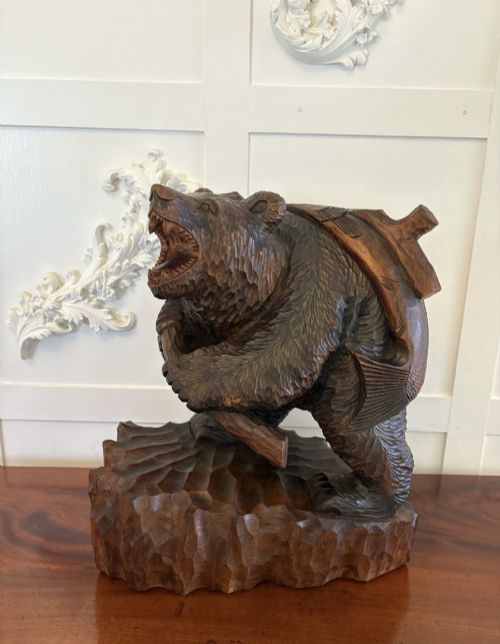


Linden Wood Bear
Linden wood bear carvings are characterful animal figures and functional furnishings that bring tactile warmth and regional European charm to a room.
Linden Wood Bear
When you search for linden wood bear, you enter a distinct world of carved timber sculpture originating primarily from nineteenth and early twentieth century European folk traditions. These pieces take many practical and decorative forms, ranging from free-standing animal sculptures to utility items such as hall stands, bookends, table lamps, inkwells, and tobacco boxes.
The objects on this page span from the late nineteenth century into the Edwardian era and the 1920s, predominantly associated with Black Forest, Swiss, and Japanese folk art styles. You encounter bears carrying fish, holding logs, or serving as upright figures supporting everyday household accessories.
Most examples deploy linden wood or lindenwood as the primary medium, sometimes augmented with glass eyes or metal mountings. The scale varies from small tabletop inkwells to substantial hall stands and chairs designed for functional domestic use.
How they were made
Selected items incorporate secondary elements such as glass for eyes, brass or other metal fixtures for inkwells and lamps, and fabric or stained timber components to complete the functional design of boxes, stands, and lighting pieces.
Linden Wood Bear Retail Price Guide 2026
Typical asking prices for linden wood bear among the pieces listed under this phrase on Sellingantiques today, from the lower quarter to the upper quarter. They describe what is for sale here now, not the wider market.
Several bears are caught in the middle of important business, balancing fish or hauling logs right on your desk.
What varies in quality
The distinction between ordinary and exceptional carving lies in the anatomical precision of the bear and the depth of the fur rendering. Superior carvers captured realistic muscle tension, lifelike postures, and expressive facial details rather than generic silhouettes.
Integration of form and function also dictates distinction, where items like hall stands, inkwells, and tobacco boxes balance sculptural presence with practical utility. The crispness of the tool work and the preservation of the original timber surface determine the enduring visual strength of each piece.
The Linden Wood Bear Glossary
- Black Forest
- A regional style of wood carving originating from the mountainous areas of central Europe, famous for animal figures and rustic furniture. These works often depict bears and other wildlife in naturalistic poses.
- Linden wood
- A pale, close-grained timber favoured by traditional carvers for its cooperative texture and minimal splitting. It allows deep undercut details in sculptural objects.
- Humidor
- A specialised box designed to store tobacco or cigars while maintaining humidity. In carved bear pieces, the animal often forms the lid or body of the container.
- Hall stand
- A tall piece of hallway furniture integrating hooks, umbrella holders, and sometimes a bench or mirror. Carved bear examples use the animal figure as a structural or decorative prop.
Linden Wood Bear: Frequently Asked Questions
What are linden wood bear carvings?
These are carved wooden sculptures and functional items shaped like bears, originating mainly in the nineteenth and early twentieth centuries.
They encompass decorative figures, bookends, table lamps, and larger furniture such as hall stands.
How were these bear items used originally?
Many pieces served practical domestic purposes alongside their decorative appeal, functioning as inkwells, tobacco boxes, bookends, and lighting.
Larger items like hall stands and chairs provided sturdy utility in entranceways while displaying regional carving traditions.
How do I identify the period of a bear carving?
Dating relies on stylistic cues, materials, and documented eras such as the Edwardian period or the late nineteenth century.
Comparing the specific object type, such as an inkwell or hall stand, with known period production helps establish its age.
How do I care for linden wood carvings?
Protect the timber from direct sunlight and sudden temperature shifts to prevent drying or splitting of the wood.
Dust gently with a dry, soft cloth and avoid chemical polishes that might alter the natural surface of the timber.