



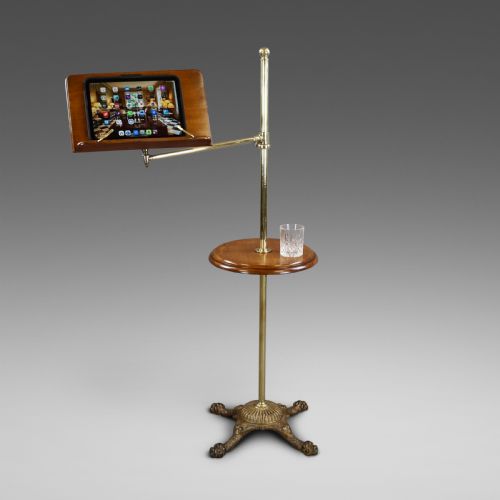


Library Reading Table
A library reading table brings purposeful scholarly design to the home, offering adjustable surfaces tailored for books and study.
Library Reading Table
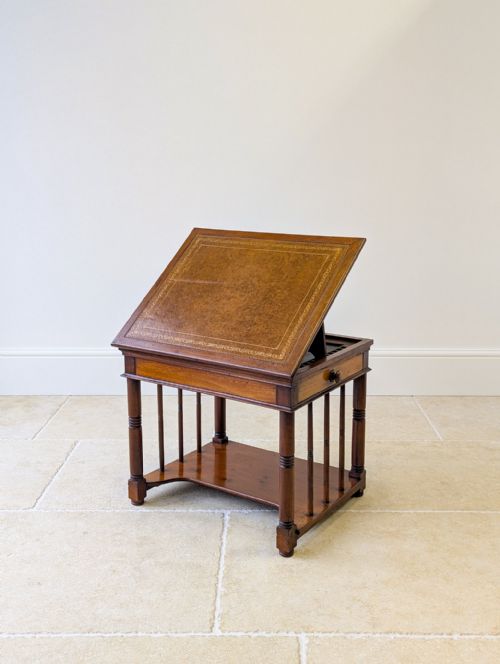
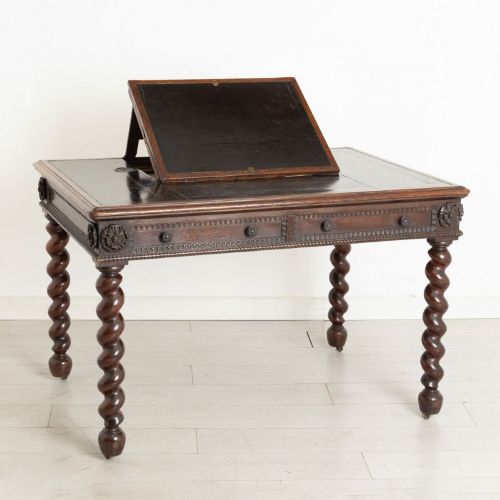
A library reading table is a dedicated piece designed for serious study, featuring specialist mechanisms like adjustable slopes and folding ledges to support heavy volumes. The pieces found on this page span several centuries, with the 18th, 19th and early 20th centuries well represented.
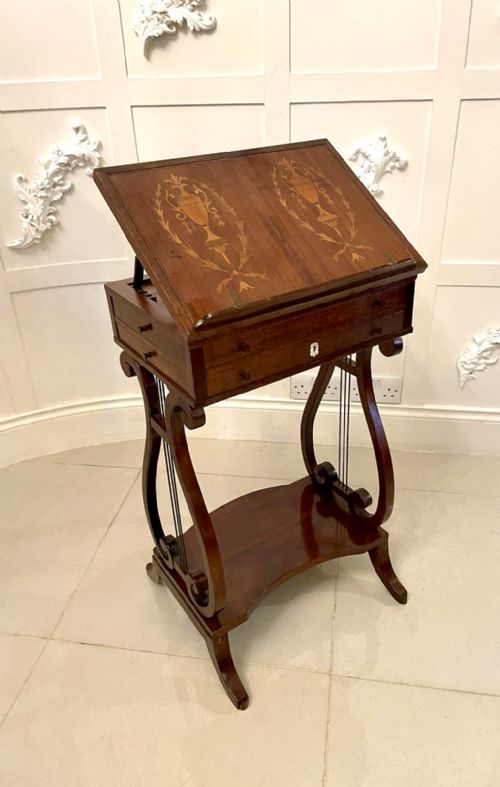
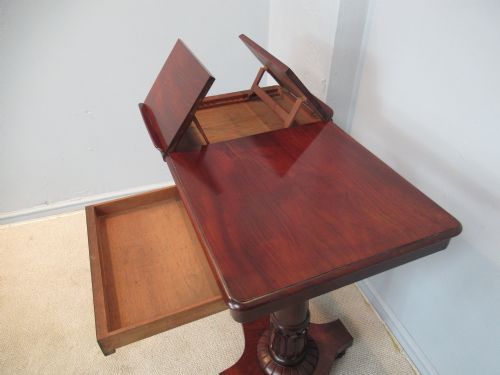
You are most likely to encounter mahogany examples from the Victorian and Georgian periods, alongside rosewood and oak variants. These forms frequently incorporate clever mechanical elements, ranging from cantilever actions to patent reading stands and integrated book troughs.
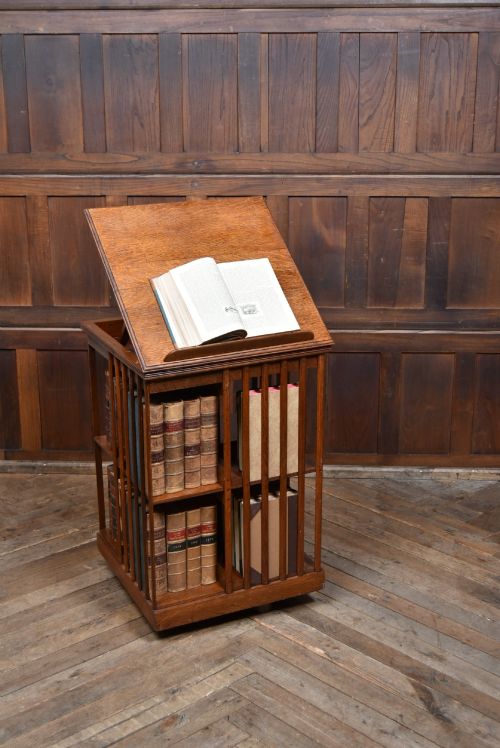
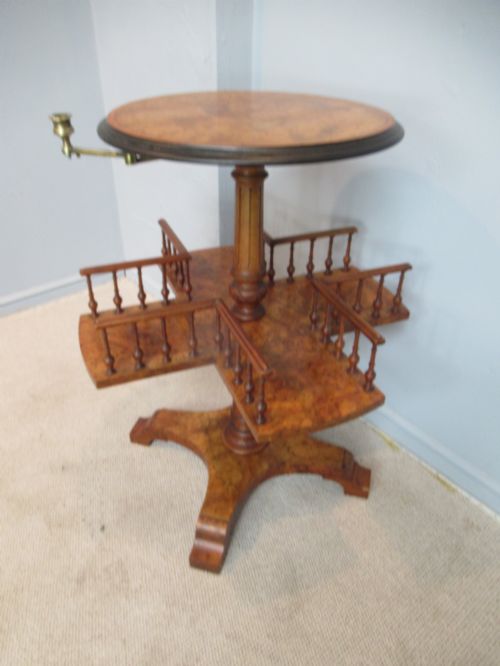
Alongside standard tables, the selection encompasses related study furniture such as revolving bookcases, architects' desks and writing tables with folio stands. Each variant serves the fundamental purpose of organising texts for comfortable reading.
What varies in quality
The sophistication of the mechanical adjustment mechanism often dictates the standing of a piece, with smooth, precise ratchets and patent actions showing superior craftsmanship. Simpler fixed boards sit at the more utilitarian end of the scale.
Timber selection and secondary wood usage reveal the underlying standard of the workshop, where choice cuts of figured mahogany or rosewood signify higher status. Plain framing and simpler secondary woods indicate more modest domestic production.
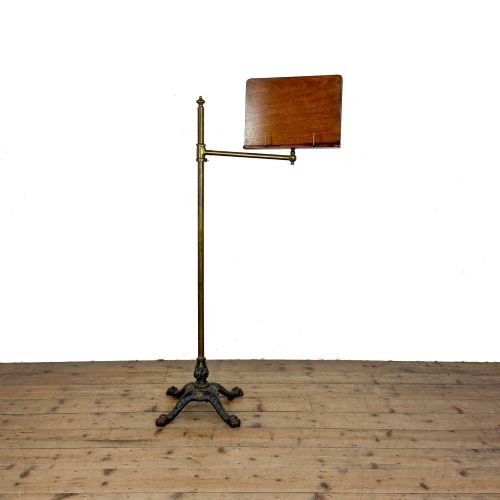
Certain reading tables include patent mechanisms designed to swing over a bed or armchair for the ultimate invalid study session.
Gillows of Lancaster·Faraday and Sons·Wild and Wessel
The Library Reading Table Glossary
- Ratchet
- A mechanical cog and tooth device used to adjust the angle of a reading slope. It allows the user to lock the bookrest at various elevations.
- Folio stand
- A vertical frame or rack attached to a table for storing large volumes and manuscripts. These are often integrated into the side of writing tables.
- Ormolu
- Gilded bronze mounts applied for decorative effect on high-status Regency and French furniture. The technique involves a mercury-gilding process on cast bronze.
- Satinwood
- A pale, lustrous timber utilised for fine inlay and banding on late 18th-century and 19th-century pieces. It provides a striking visual contrast against darker woods like mahogany.
- Toleware
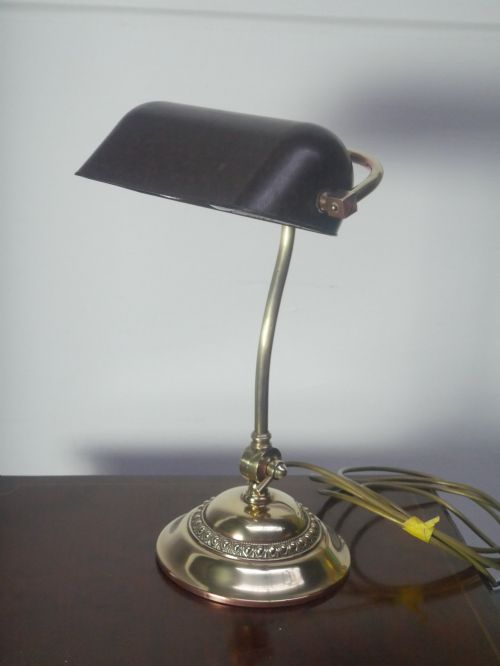
- Painted or lacquered sheet metal used predominantly for desk lamp shades and containers. It frequently appears in shades of green on antique lighting.
Library Reading Table: Frequently Asked Questions
How do adjustable reading tables work?
Adjustable reading tables utilise internal ratchets, wooden struts or brass arms that engage with a series of teeth beneath the surface. This allows the user to raise the reading slope to a comfortable angle.
Many 19th-century examples also incorporate screw mechanisms or counterweights to adjust the overall height of the table top relative to a chair.
How do I care for leather desk inserts?
Leather desk inserts require gentle cleaning with a slightly damp cloth to remove dust and debris. Avoid soaking the hide or using harsh chemical detergents.
Applying a specialist leather balsam or wax periodically helps maintain suppleness and prevents the material from drying out or cracking over time.
Can I use a library table as a modern desk?
Library tables integrate well into modern interiors, offering generous surface areas and sturdy construction suitable for contemporary study or computer work. Their classic proportions suit home offices and studies alike.
When using antique tables with adjustable slopes, consider placing a desk pad over the mechanism if a completely flat surface is required for writing.