





Library Chest Drawers
These library chest drawers bring architectural presence and deep storage to a room, combining the scale of a bookcase with the utility of a chest.
Library Chest Drawers
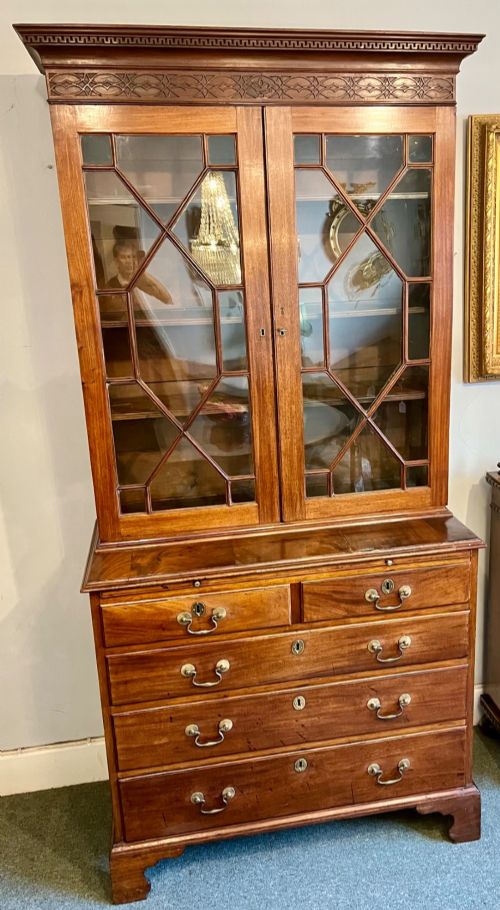
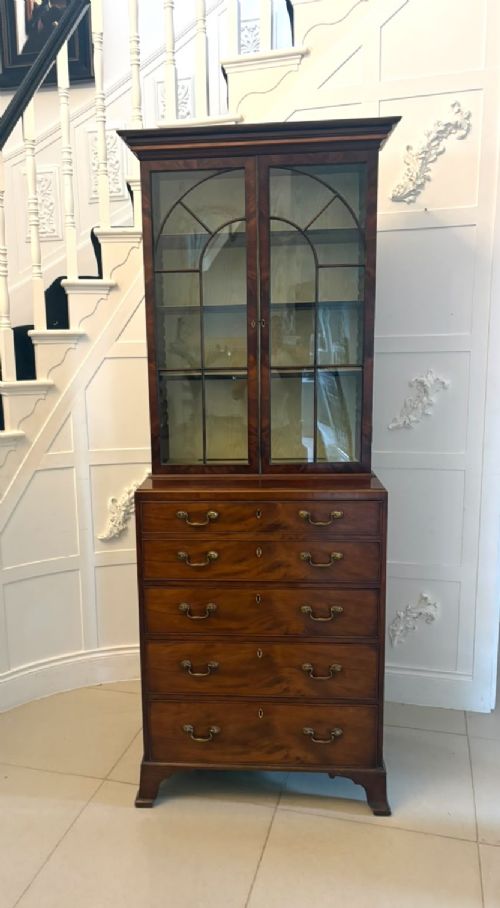
When you search for library chest drawers, you are looking at substantial pieces of furniture designed to house books and papers while anchoring a study or drawing room. The examples seen here range from grand Georgian bookcase combinations to compact Edwardian storage cabinets and multi-drawer filing units.
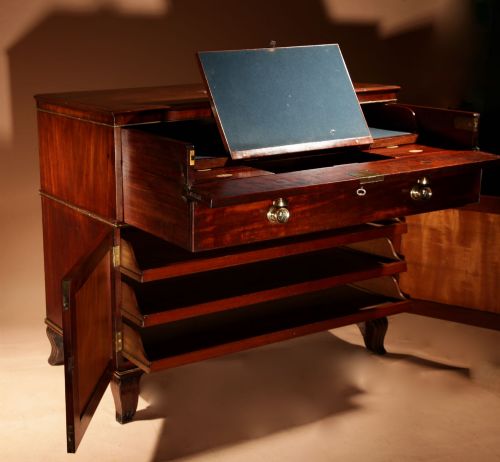
You are most likely to meet mahogany pieces from the nineteenth century, often arranged with glazed upper doors above a chest base or fitted with a pull-out writing drawer. These forms evolved to serve serious collectors and readers, keeping volumes secure behind glass while maintaining everyday paperwork close at hand.
The materials and styles span from eighteenth-century Chippendale designs to Scottish Regency pieces and teak multi-drawer cabinets. Such variety reflects how successive generations adapted heavy timber storage to changing domestic libraries and offices.
What varies in quality
The distinction between standard utility pieces and the finest examples lies in the selection of timber, such as highly figured flame mahogany veneer, and the crispness of the mouldings. Superior workshops employed meticulous joinery that keeps large doors true and drawers running smoothly despite seasonal changes in humidity.
Proportion and architectural detailing also separate the ordinary from the exceptional, with better pieces featuring balanced cornices, finely turned pulls, and well-integrated secretaire fittings. The integration of the upper bookcase with the lower chest requires precise carpentry to maintain stability and visual harmony.
Library Chest Drawers Retail Price Guide 2026
Typical asking prices for library chest drawers among the pieces listed under this phrase on Sellingantiques today, from the lower quarter to the upper quarter. They describe what is for sale here now, not the wider market.
Object types vary from grand glazed bookcase cabinets and secretaire desks down to compact multi-drawer filing units and index drawer pairs.
WILLIAM TROTTER Edinburgh·ROBERT GILLOWS II
The Library Chest Drawers Glossary
- Secretaire bookcase
- A tall cabinet featuring a fitted writing drawer that drops down to reveal small compartments and pigeonholes. It combines a chest base with upper shelving behind glass doors.
- Glazed top
- A cabinet upper section fitted with glass panes, designed to display leather-bound volumes while keeping dust away. The framing often incorporates timber glazing bars in geometric patterns.
- Flame mahogany veneer
- A thin slice of mahogany cut from the point where a branch joins the trunk, creating a distinctive flickering flame pattern. Cabinetmakers applied this to prominent drawer fronts for visual impact.
- Cartonniere
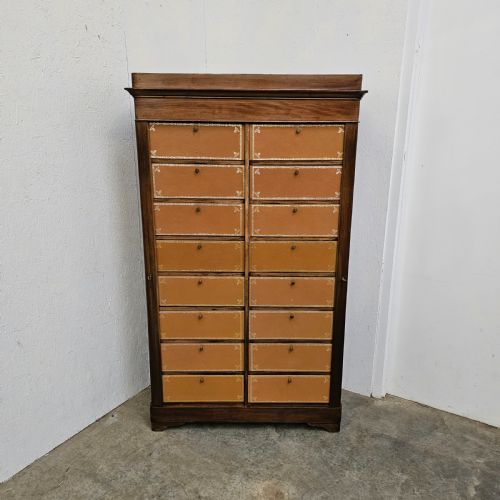
- A freestanding or desk-mounted cabinet containing a series of horizontal pigeonholes or drawers for filing papers. These pieces often incorporate leather accents and French walnut construction.
- Wellington chest
- A tall, narrow chest of drawers secured by a hinged locking stile on one side that fastens with a key. This design originated in the nineteenth century for efficient security of private papers.
Library Chest Drawers: Frequently Asked Questions
How do I clean the leather writing surfaces?
Dust the surface gently with a dry, soft cloth to remove grit that could scratch the leather during cleaning. Apply a specialised leather cream sparingly with a clean cloth, buffing it gently once dry to restore the natural sheen without saturating the material.
Avoid using household detergents, excessive water, or abrasive polishes, as these will dry out and crack antique leather over time. Test any conditioning product on a hidden corner before treating the entire writing slope.
What is the best way to care for mahogany?
Keep mahogany furniture away from direct sunlight and heat sources such as radiators to prevent the timber from drying out and cracking. Maintain a stable room temperature and humidity level to protect both the solid wood and the delicate veneer surfaces.
Apply a traditional beeswax polish occasionally, buffing it well with a soft cloth to nourish the grain and build a protective barrier against moisture. Avoid silicone-based sprays, which can penetrate the timber pores and damage the antique finish permanently.
How do I date a library chest?
Examine the construction methods of the drawer linings and backboards, looking for hand-cut dovetails and tool marks that indicate earlier periods. The timber choices, such as solid mahogany in Georgian pieces versus the incorporation of teak or beech in later examples, also provide clear chronological clues.
Hardware styles, including brass drop handles and escutcheons, often correspond to specific decades, though handles were frequently replaced. Compare the overall proportions and decorative motifs, such as cornice details and bracket feet, with documented examples from the same era.