


Library Book Supports
Library book supports keep heavy volumes upright on shelves while bringing carved wood, brass, and bronze into domestic rooms.
Library Book Supports
Library book supports are functional desk and shelf accessories designed to hold volumes upright, appearing in forms such as pairs of carved bookends and occasional whatnots. These items emerge from periods ranging from the Regency era through the Victorian period and into the early twentieth century.
The versions most frequently met on this page include carved wooden pairs from the Victorian Gothic Revival, Black Forest, and Art Deco styles. Makers utilised native and exotic timbers alongside metals to produce sturdy supports for heavy libraries.
How they were made
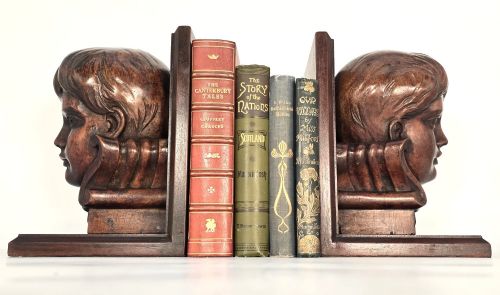
Makers fashioned these pieces predominantly from solid timbers including oak, mahogany, fruitwood, ebony, and yew wood, often employing skilled hand carving to shape figures of animals, putti, and ecclesiastical motifs. Cabinetmakers and carvers worked the grain to ensure structural stability at the base while detailing the decorative terminals.
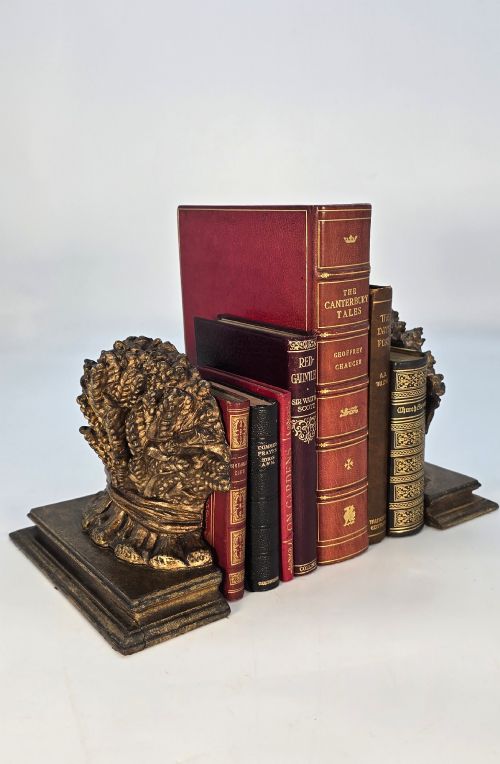
Other examples incorporate brass, gilded metal, and bone details, fixed securely to wooden bases to bear the weight of heavy volumes. The combination of turned wood and cast metal reflects the diverse manufacturing techniques of nineteenth and twentieth century workshops.
Bears and elephants stand guard over the bookshelves, proving that nineteenth century carvers rarely missed an excuse to introduce wildlife to the library.
What varies in quality
Quality in these supports rests upon the depth of the carving and the fidelity of the proportions, distinguishing finely hand-modelled animal or human figures from simpler production pieces. Crisp execution in the feathering of wings, fur of bears and elephants, or grain of the timber separates finer studio work from routine items.
The integrity of the timber and the weight of the base dictate how effectively the support performs its task. Heavier solid woods and substantial metal castings provide the necessary mass to hold folio volumes without tipping.
Thornton Smith Co.·Gillows
The Library Book Supports Glossary
- Bookends
- A pair of objects placed at either end of a row of books to keep them vertical. They are weighted or shaped with a flat base that slips beneath the volumes.
- Whatnot
- A piece of open shelving designed for displaying ornaments or holding books. These items provide multiple tiers for storage in a library or drawing room.
- Gothic Revival
- An architectural and decorative style popular during the nineteenth century, drawing inspiration from medieval ecclesiastical design. Pieces often feature pointed arches, tracery, and carved woodwork.
- Black Forest
- A style of wood carving originating in Switzerland and Germany during the nineteenth century. These objects typically depict realistic animals, particularly bears, carved from Linden or walnut timber.
- Regency
- A British design period spanning the early nineteenth century, characterised by classical restraint and inspiration from ancient Greece and Rome. Furniture and objects from this time employ clean lines and select mahogany.
Library Book Supports: Frequently Asked Questions
What are library book supports?
Library book supports are decorative and functional objects placed at the ends of bookshelf rows to prevent volumes from falling. They combine utilitarian weight with sculptural forms carved from wood, metal, or bone.
Historically used in private studies and institutional libraries, these pieces range from simple wooden blocks to elaborate figural sculptures depicting animals, cherubs, and literary figures.
How were book supports used?
These items stood in pairs on shelves, desks, or tables, using their weighted bases and perpendicular uprights to sandwich a row of books. The weight of the end volumes rested on the flat base plate, anchoring the support.
They allowed readers to keep working volumes close at hand on a desk without needing a full bookcase enclosure.
How do I date an antique book support?
Dating relies on identifying the prevailing style, timber species, and manufacturing techniques evident in the piece. Regency items often feature restrained mahogany craftsmanship, while Victorian examples lean toward Gothic Revival or naturalistic carving.
Tool marks, fixings, and the natural ageing of the wood or metal also provide clear indicators of period origin.
How do I live with antique book supports?
Place them on sturdy shelves or mantelpieces supporting similarly aged volumes of appropriate weight and scale. Solid wood and metal designs require minimal upkeep beyond dusting with a dry cloth to protect the finish.
Keep them away from direct heat sources to prevent timber from drying out or splitting over time.