



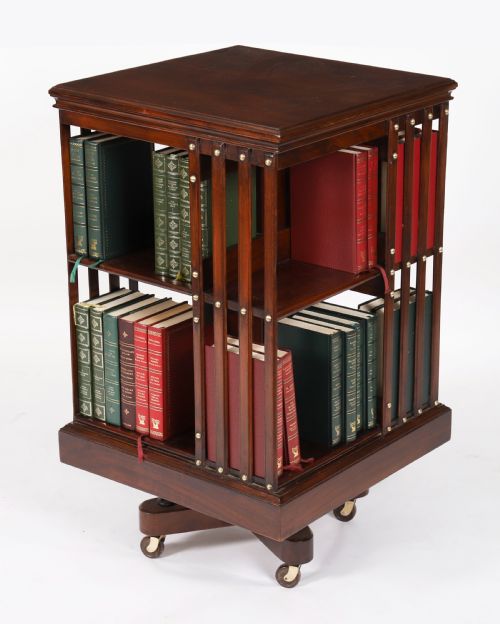


Library Book Carousel
A library book carousel is a rotating stand designed for frequent reference, offering smooth access to tight rows of volumes.
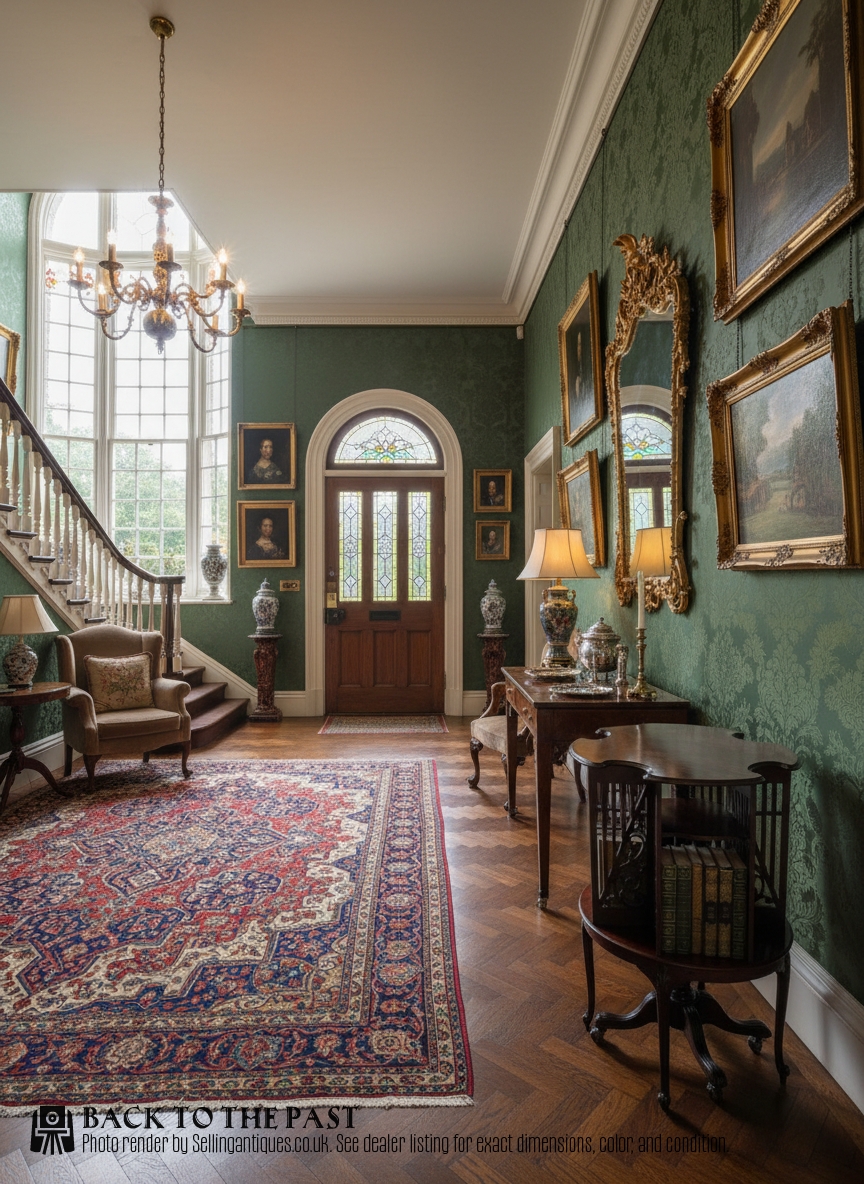
Library Book Carousel
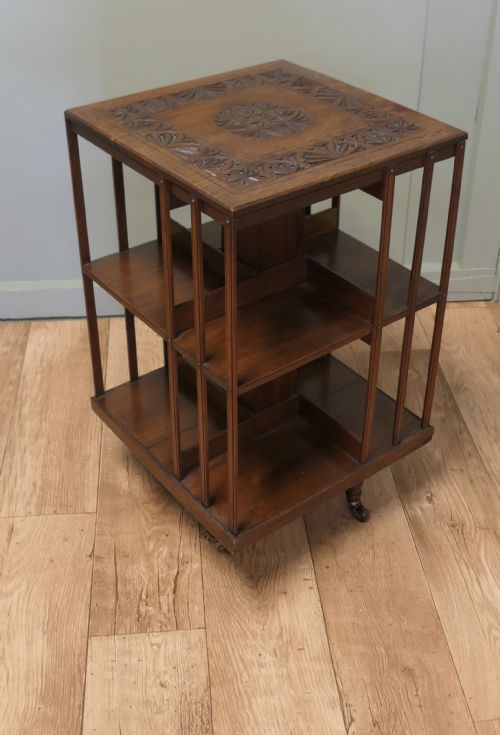
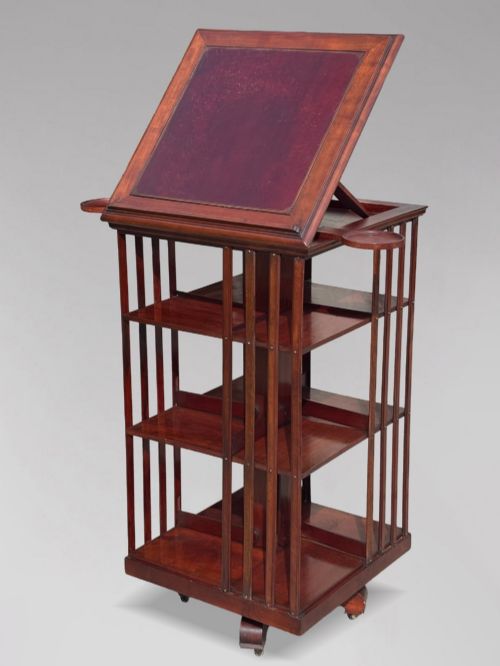
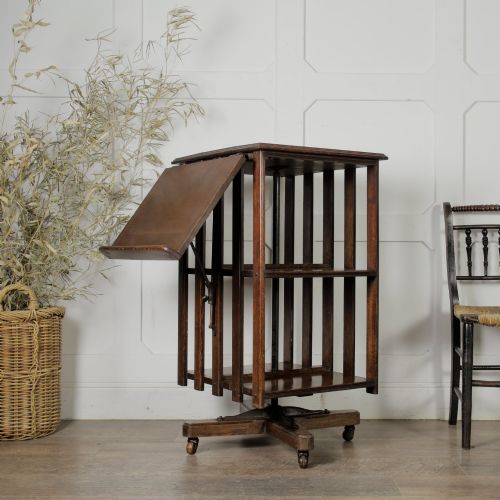
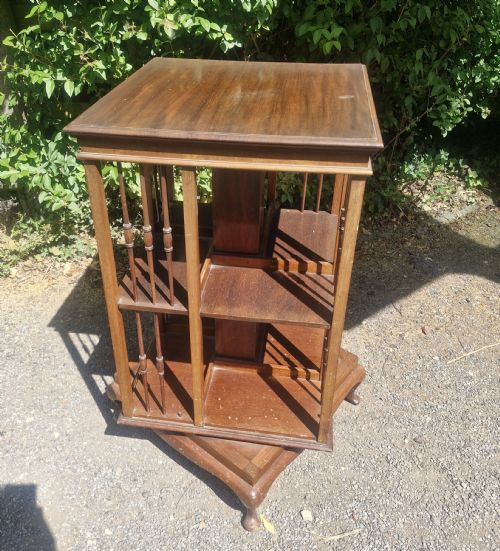
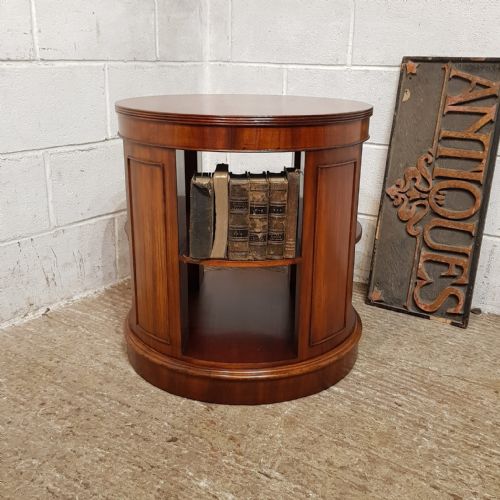
When you search for a library book carousel, you are looking at revolving bookcases and book stands built to sit on a floor or desk. These pieces turn smoothly on a central pivot, allowing multiple volumes to be reached from a single seated position.
How they were made
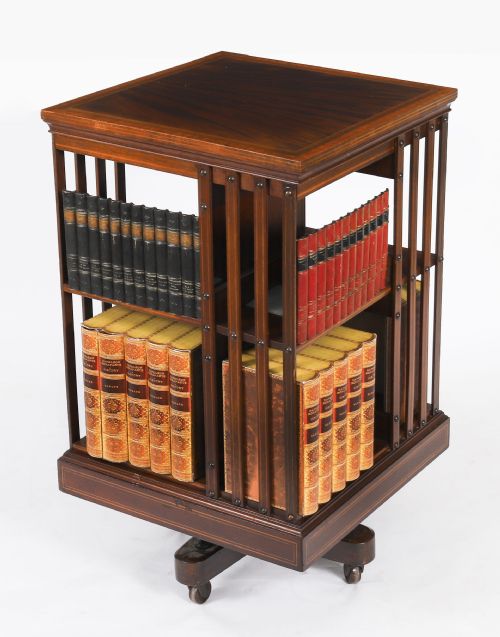
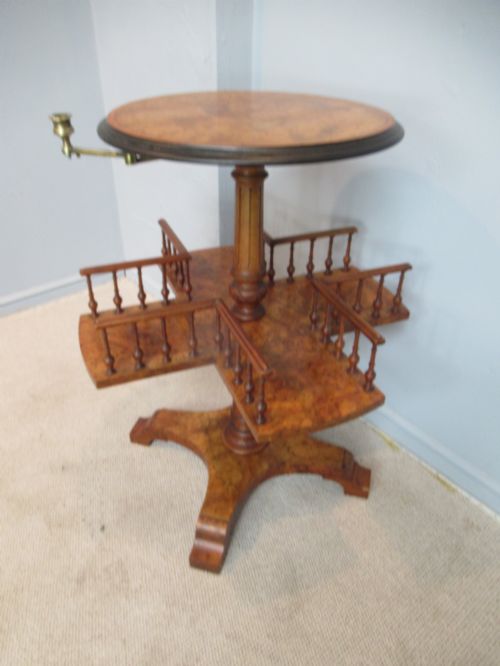
Cabinet makers constructed these carousels using solid and veneered timbers including mahogany, oak, walnut, satinwood, and kingwood. Flame mahogany and burr walnut veneers were frequently selected for the top surfaces to display rich grain patterns.
Internal mechanical components utilised brass, iron, and cast iron to support the weight of heavy books while ensuring effortless rotation. Inlaid decorative work in satinwood and contrasting timbers, alongside ormolu mounts, added refinement to late Victorian and Edwardian examples.
Even the petite four-shelf models demand respect, spinning tales and heavy volumes with equal enthusiasm.
What varies in quality
The distinction between tiers of quality rests largely upon the selection of timber and the complexity of the internal turning mechanism. Superior examples employ choice flame mahogany or burr walnut alongside intricate satinwood inlay, while simpler pieces utilise plain oak.
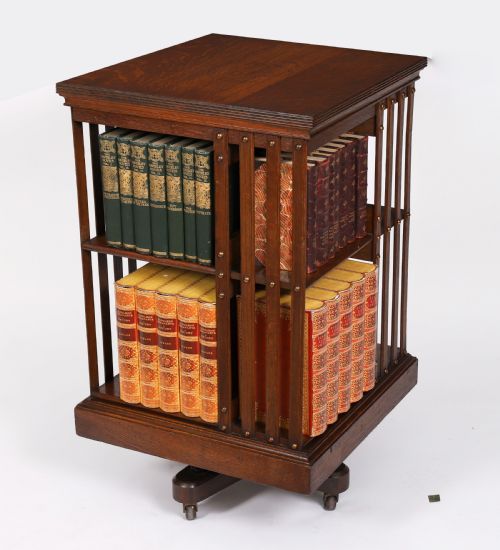
Structural heft and scale also define the hierarchy, moving from petite four-shelf stands to very large, solid oak constructions. Maker attribution, such as pieces bearing the mark of Maple & Co or Heal's, elevates the standing of an individual carousel.
Maple and Co·Heals
The Library Book Carousel Glossary
- Revolving bookcase
- A freestanding or table-top unit designed to turn on a central axis for easy book selection. These pieces date predominantly from the Victorian and Edwardian periods.
- Flame mahogany
- A decorative wood veneer showing a distinctive flame-like grain pattern. It was often utilised on the top surfaces of Edwardian and Victorian library furniture.
- Burr walnut
- Timber taken from a walnut tree growth, prized for its swirling, mottled grain. Scottish examples from the nineteenth century frequently employ this material.
- Ormolu
- Gilt-bronze mounts applied as decoration to furniture. This technique appears on French-influenced revolving bookcases from the late nineteenth century.
- Inlay
- Contrasting pieces of wood, such as satinwood, fitted into the surface of a primary timber to create decorative patterns. Edwardian makers used this extensively on mahogany carousels.
Library Book Carousel: Frequently Asked Questions
How do library book carousels turn?
These pieces rotate on an internal mechanism hidden beneath the base or tiers, typically utilising iron and brass components to bear the weight.
This concealed pivot allows the entire upper structure to spin smoothly in either direction with minimal effort.
Where should I place a revolving bookcase?
A revolving bookcase works best beside a desk, armchair, or in the corner of a study where accessibility is key.
Because they turn through three hundred and sixty degrees, they do not need to be pushed flat against a wall.
How do I date an antique carousel?
Dating relies upon timber selection, hardware, and stylistic traits typical of the Victorian and Edwardian eras. Heavy oak pieces often point to the eighteen-eighties and nineties, whilst inlaid mahogany frequently indicates the nineteen-hundreds.
Makers' marks or stamps, when present, provide a direct guide to the workshop of origin.
Can these stands hold heavy books?
Most carousels are built with sturdy timber frames and robust internal metal pivots designed to support standard library volumes.
Larger oak and mahogany versions easily accommodate substantial reference books and multi-volume sets.