

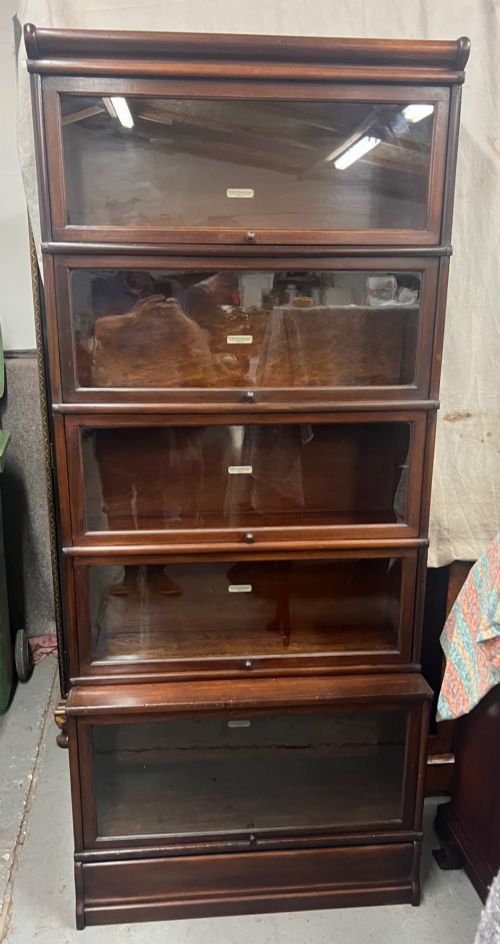
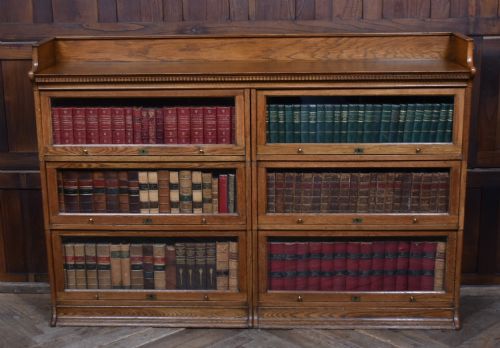


Library Barrister Bookcase
A library barrister bookcase is a modular stacking cabinet designed to protect volumes behind individual glass tiers, combining utility with classic office craft.
Library Barrister Bookcase
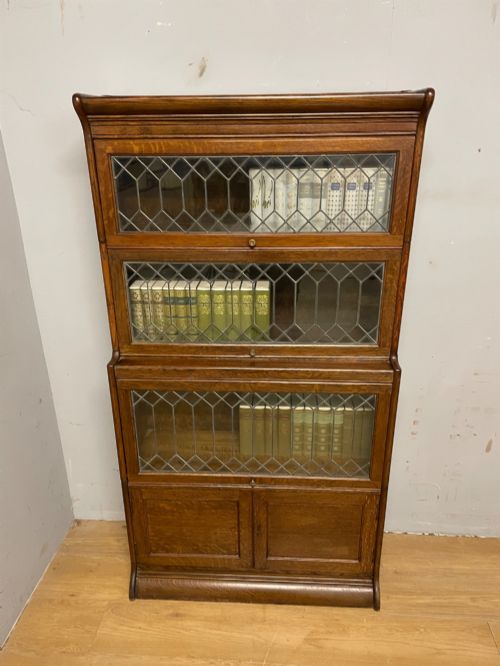
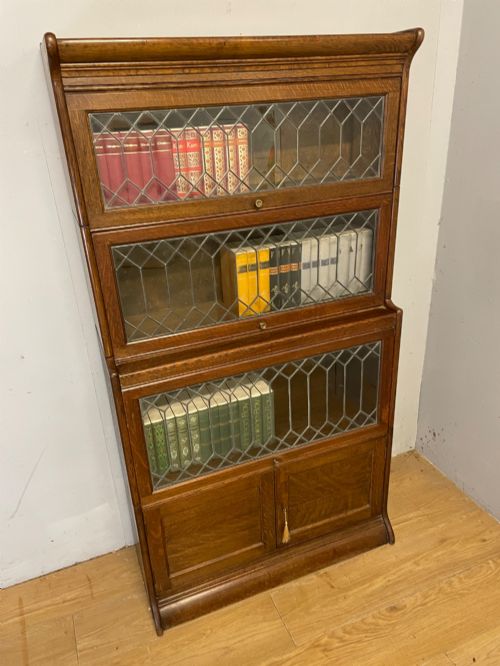
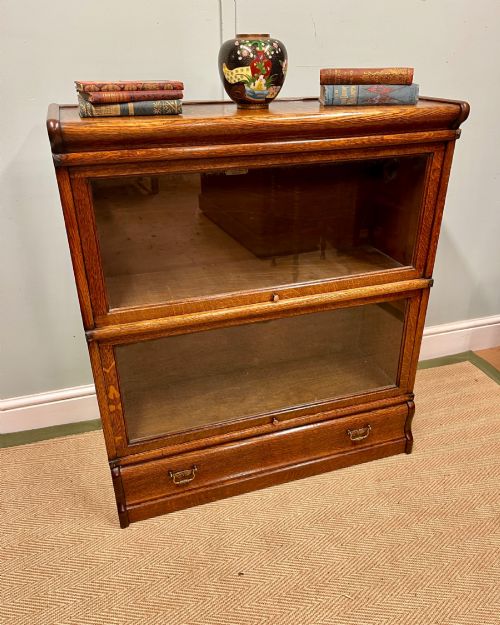
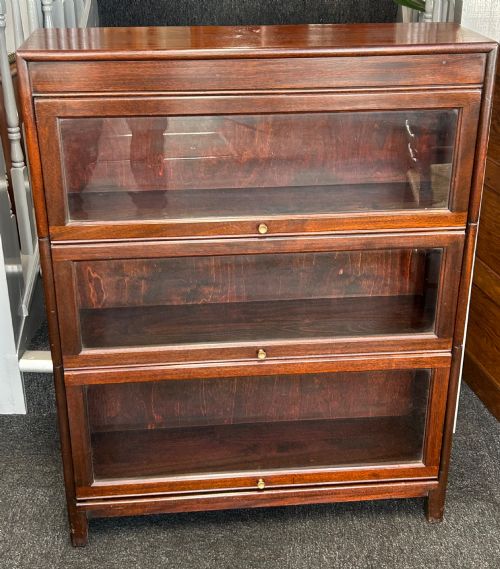
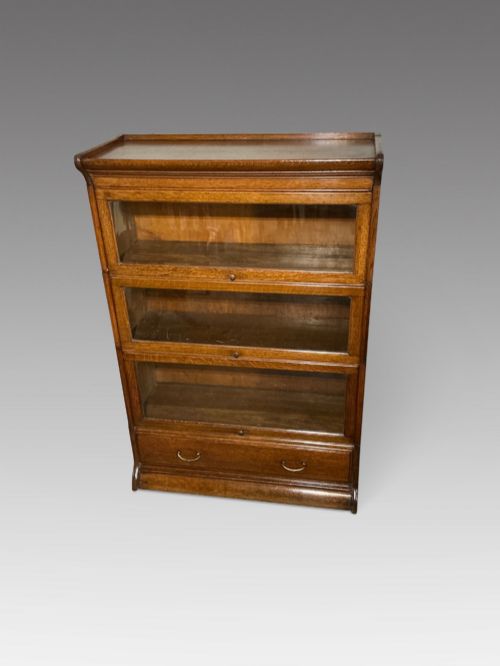
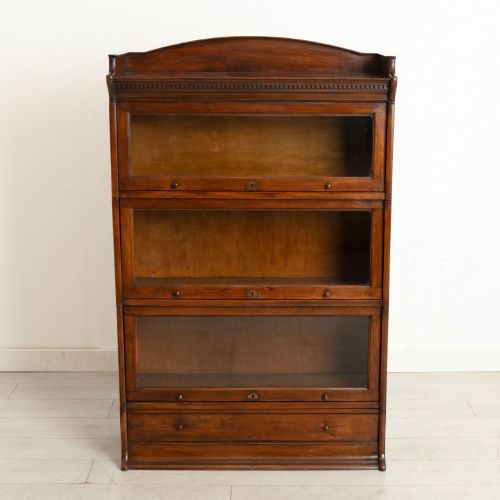
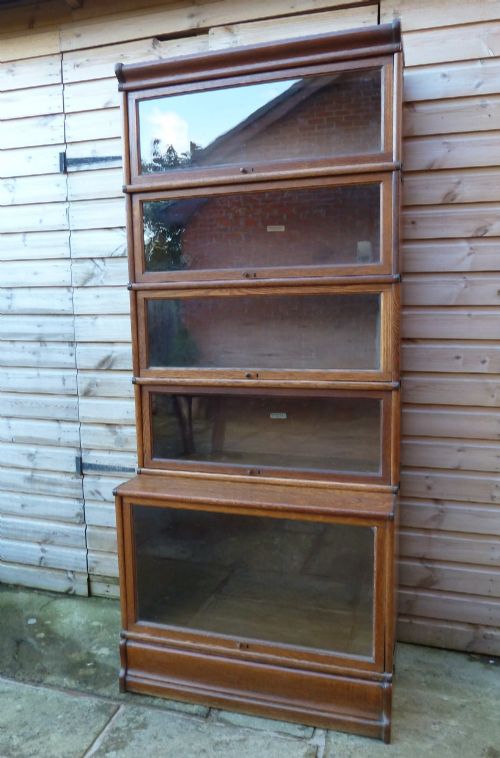
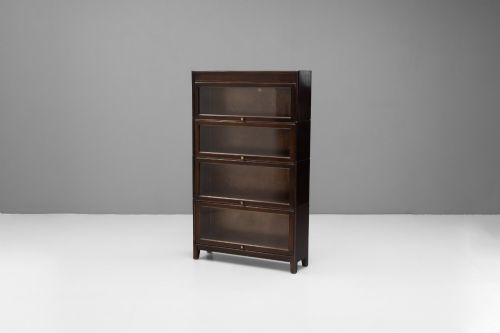
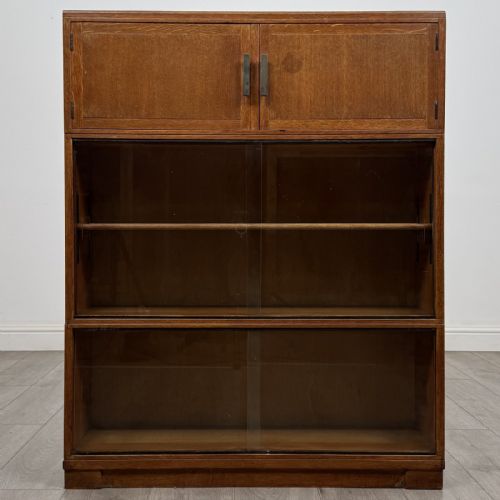
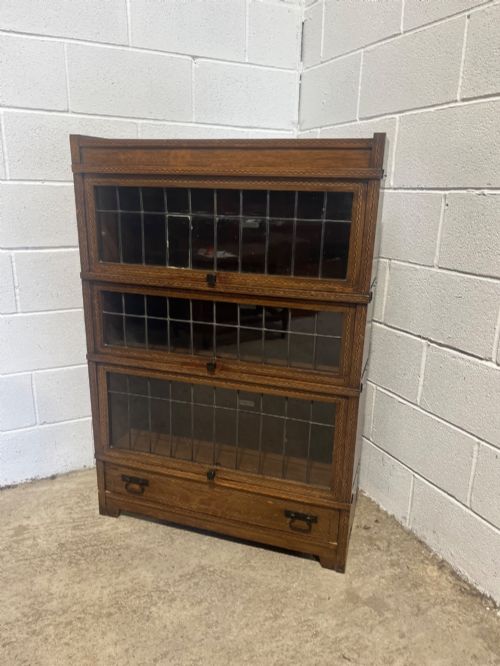
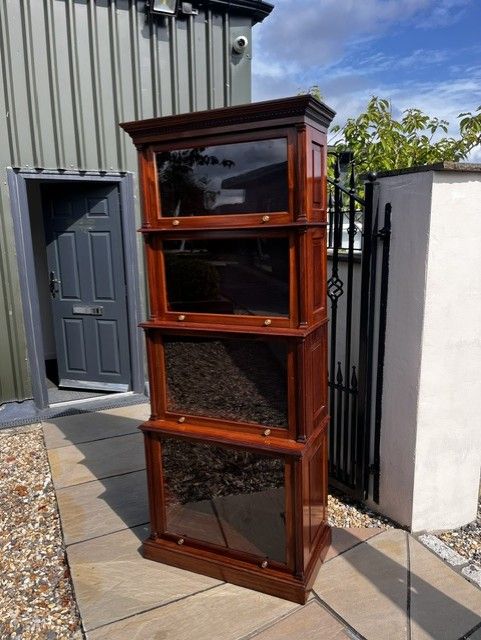
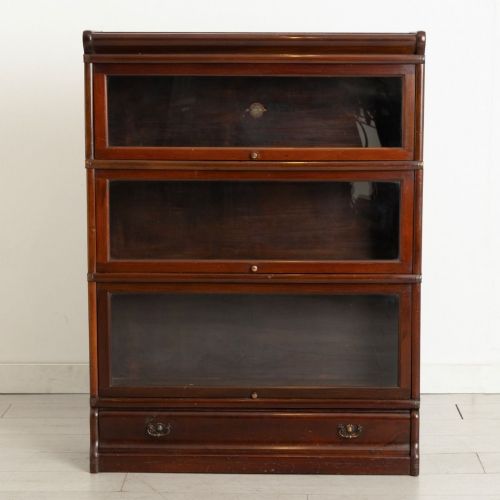
A library barrister bookcase consists of modular, stackable tiers with glazed lifting doors that allow users to access books section by section. These practical cabinets emerged strongly around the Edwardian era and continued through the 1920s and 1930s, reflecting the administrative and domestic needs of the period. Buyers seeking this form will frequently encounter oak and mahogany examples structured in multiple tiers.
The dominant style on this page is the Edwardian stacking cabinet, often associated with prominent makers like Globe Wernicke, Lebus, and Minty of Oxford. Pieces range from four-tier golden oak units to taller mahogany sectional bookcases. These items serve equally well in contemporary studies and traditional libraries for housing collections behind glass.
How they were made
These bookcases rely primarily on solid oak and mahogany, frequently enhanced by wood inlay, brass hardware, and lead components within the glazed doors. Makers constructed the modular tiers to sit independently upon one another, secured by side mechanisms that allowed the entire cabinet to be dismantled or expanded as libraries grew.
The glazing uses glass panes fitted into wooden frames, operated by metal and brass arms that guide each door upwards and inwards into the recess above the books. Timber selection favoured durable hardwoods capable of supporting heavy rows of volumes across multiple tiers without warping.
Library Barrister Bookcase Retail Price Guide 2026
Typical asking prices for library barrister bookcase among the pieces listed under this phrase on Sellingantiques today, from the lower quarter to the upper quarter. They describe what is for sale here now, not the wider market.
Book collectors discovered that barrister bookcases successfully deterred both dust and overly enthusiastic borrowers.
What varies in quality
Quality in these sectional units rests upon the precision of the stacking mechanism and the calibre of the timber utilised in construction. Superior examples exhibit seamless operation of the glass lifting doors alongside carefully matched grain patterns across every tier.
Maker attribution also distinguishes the build, with pieces bearing stamps from established firms showing finer joinery detail and sturdier internal framing than unbranded workshop output. The depth of the colour in the golden oak or mahogany finish further separates standard office utility pieces from finer cabinetwork.
Minty of Oxford·Gunn Furniture·Lebus·Globe Wernicke·AMYL
The Library Barrister Bookcase Glossary
- Sectional bookcase
- A modular storage unit composed of individual stackable tiers that fit together vertically. This design allowed libraries to expand their shelving simply by purchasing additional modular sections.
- Globe Wernicke
- A prominent American and British manufacturer known for pioneering the modular stacking bookcase system. Their trademark design utilised patented roller mechanisms to guide the glazed doors.
- Tier
- An individual stackable compartment within a sectional bookcase, housing its own independent glass door. Tiers vary in height to accommodate different book sizes.
- Wood inlay
- Decorative ornamentation created by inserting small pieces of contrasting timber into the primary wood surface. This technique appears on select Edwardian cabinets.
Library Barrister Bookcase: Frequently Asked Questions
Can these sectional bookcases be separated?
The modular tiers are entirely independent and rest upon one another without permanent fixings. This construction allows owners to rearrange or reduce the height of the unit.
Lifting the top cornice and separating each tier makes relocation straightforward.
What wood types are most common?
Oak is the predominant timber found in these listings, appearing frequently in golden and darker finishes. Mahogany is also well represented among Edwardian and 1920s examples.
Selected pieces incorporate wood inlay and brass hardware to enhance the exterior appearance.
How do I identify an Edwardian piece?
Edwardian units generally display specific characteristics in their timber finish, hardware selection, and maker stamps. Details such as brass manufacturer plaques provide definitive clues to the period.
The integration of Arts and Crafts styling also points toward the early 1900s production window.