
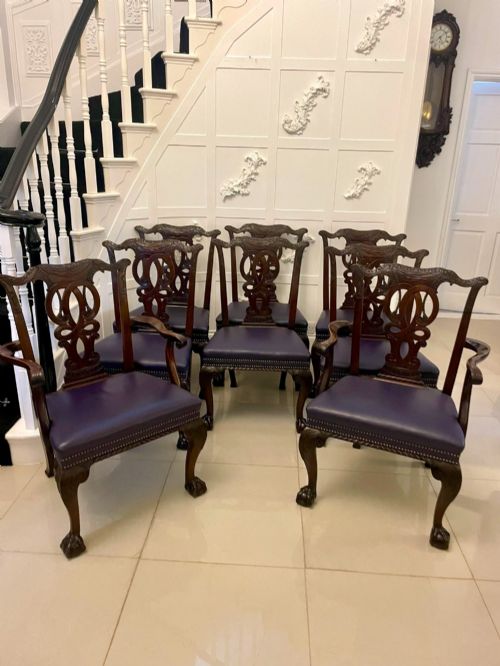
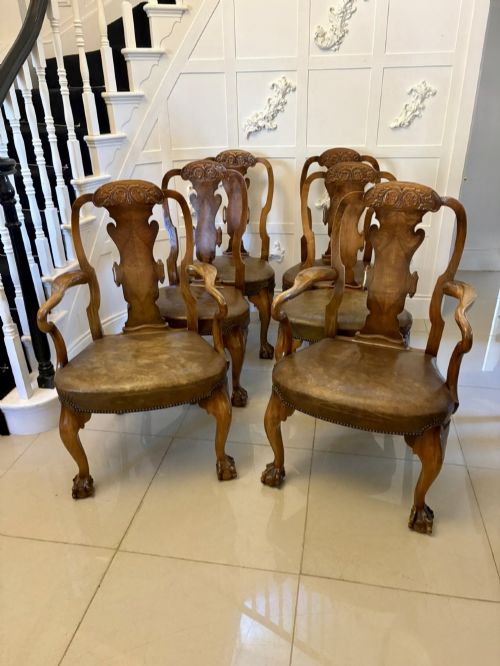
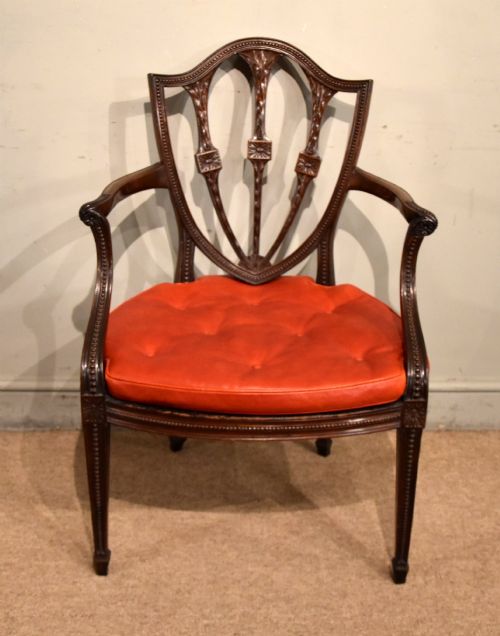
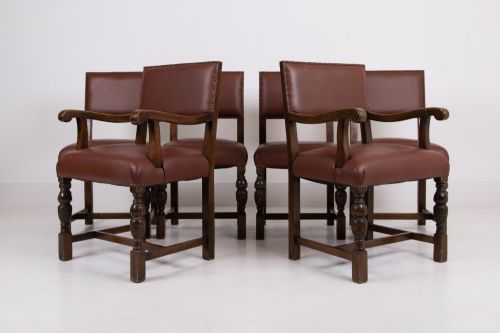
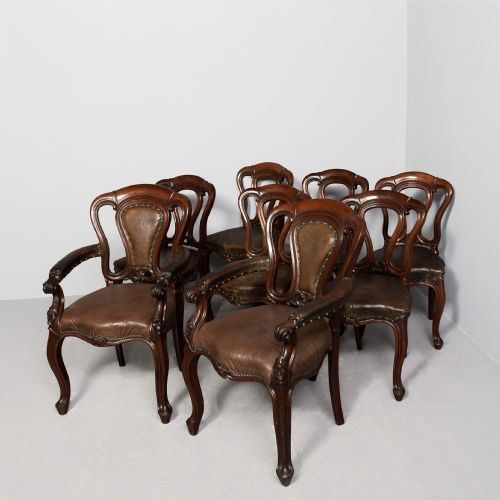


Leather Upholstered Carvers
These leather upholstered carvers bring genuine presence to a room, offering sturdy frames and supportive seats designed for long hours at the table or desk.
Leather Upholstered Carvers
When you search for leather upholstered carvers, you are looking at substantial armchairs and dining chairs designed for practical use and formal presence. These pieces frequently appear within larger dining sets or as matched pairs intended for the heads of a table.
The selections available span multiple eras, with Victorian walnut and mahogany examples alongside 18th century pieces and later 1930s interpretations. You will encounter various forms, ranging from desk chairs and armchairs to full sets of dining chairs incorporating carvers.
Origins stretch across classic British cabinet-making traditions, utilising robust timbers to create supportive seating. Most examples on offer balance decorative carved details with the functional requirement of comfortable upholstered arms.
Materials and construction
Cabinet makers relied heavily on dense hardwoods such as mahogany, walnut, and oak to provide the structural skeleton required for heavy carver chairs. These timbers were often intricately carved along the backsplats, arms, and legs to reflect the prevailing style of the period.
Upholstery forms the primary interface for the user, utilising durable leather secured directly to the seat frames, frequently accented with brass studs. Joinery techniques such as mortise and tenon ensured the arm attachments could withstand daily lateral pressure.
One set carries a distinct political footnote, having once been linked to Winston Churchill at Harry Warren House.
Assessing quality
The division between standard examples and the finest work lies in the crispness of the timber carving and the selection of the primary wood figure. Superior pieces exhibit tight grain patterns in the mahogany or burr walnut, matched with deeply sculpted arm terminals and balanced proportions.
Construction integrity dictates the long-term utility of the chair, separating heavy, rigid frames from those showing looseness in the joints. The integration of the leather upholstery, particularly the neatness of the studwork and the quality of the hide, marks the distinction between workshop output and master craftsmanship.
The Leather Upholstered Carvers Glossary
- Carver
- An armchair, typically designed with arms to sit at the head of a dining table. It matches a set of smaller, armless single chairs.
- Barley twist
- A turned wooden furniture leg or stretcher carved in a spiral resembling a twisted rope. This technique appears frequently on oak furniture from the seventeenth century onwards.
- Chippendale style
- A furniture design style inspired by Thomas Chippendale pattern books, featuring elaborate cabriole legs, ball and claw feet, and pierced ladder backs. It experienced revivals during the Victorian and Edwardian eras.
- Spoon back
- A padded chair back shaped with an oval indentation resembling the bowl of a spoon, designed to fit the human spine. This form is common on Victorian parlour and dining chairs.
- George III
- The period of British furniture design spanning from the mid-eighteenth century to the early nineteenth century, noted for classical proportions and refined mahogany craftsmanship.
Leather Upholstered Carvers: Frequently Asked Questions
What is a carver chair?
A carver chair is an armchair specifically built to match a set of dining chairs, traditionally placed at either end of a dining table.
These pieces feature supportive armrests integrated into the frame, offering a more commanding seat than standard single chairs.
How do I clean leather upholstery?
Leather seats require regular dusting with a dry cloth and occasional treatment with a suitable conditioner to keep the hide supple.
Avoid harsh chemical cleaners or excessive moisture, which can dry out and crack older leather surfaces.
Can I mix carvers with modern tables?
These timber armchairs pair effectively with contemporary dining tables, introducing warmth and historical contrast to a modern interior.
Ensure you check the height of the armrests to confirm they clear the underside of your table top before positioning them.
How do I identify Victorian carvers?
Victorian examples generally utilise dark dense timbers like mahogany or walnut, often featuring rich surface patination and robust turned or carved supports.
Look for traditional joinery methods and heavier framing compared to the lighter proportions found in earlier 18th-century pieces.