


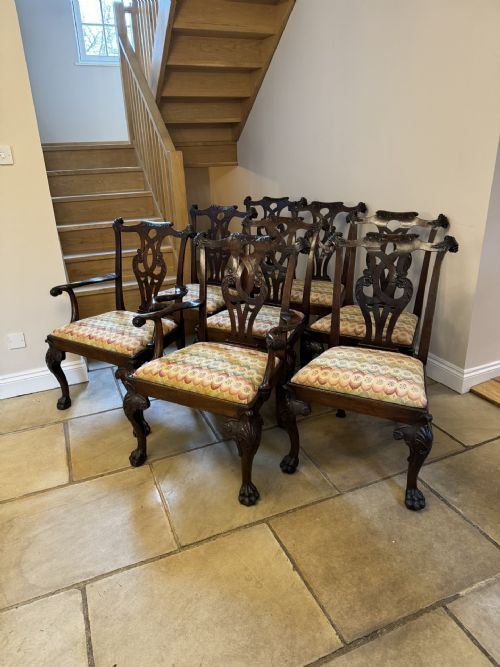


Irish Chippendale Chairs
Irish Chippendale chairs bring robust carving and substantial timber to the dining room, offering serious presence for any traditional interior.
Irish Chippendale Chairs
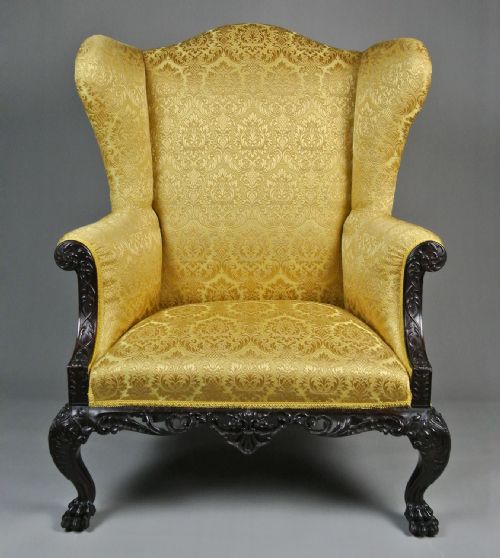
When you search for irish chippendale chairs, you encounter seating that ranges from mid eighteenth century originals to later revival sets produced across the nineteenth and twentieth centuries. These pieces typically manifest as dining chairs, armchairs, and side chairs constructed with heavy proportions and deep relief carving.
The materials recorded in these examples centre on solid mahogany and walnut, often paired with upholstered drop in seats covered in velvet, leather, silk damask, or tapestry. Dining sets appear alongside individual armchairs and side chairs, reflecting both period commissions and later revival interest.
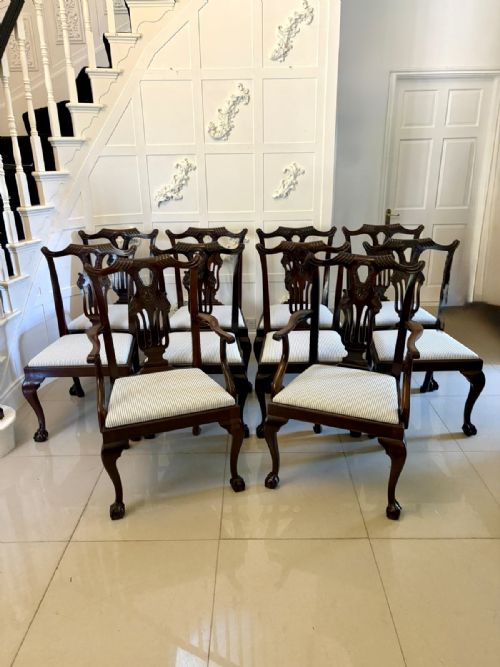
Dating spans from the mid eighteenth century through to Victorian and early twentieth century revivals, including pieces made around seventeen fifty and seventeen seventy alongside nineteen tenth century interpretations. Buyers find both single armchairs and large dining sets of six, eight, ten, or twelve pieces.
How they were made
Construction relies upon dense timbers such as mahogany and walnut, chosen for their ability to hold deep, crisp chisel work. Cabinetmakers shaped structural members to support substantial frames, frequently incorporating brass details where appropriate.
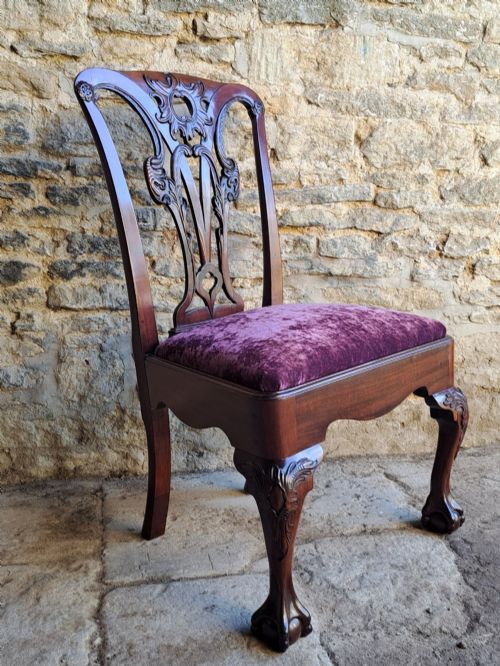
Carving defines the method, utilising deep relief work on knees, rails, and splats to achieve the characteristic vigorous appearance associated with the Irish manner. Ball and claw feet appear frequently, demanding precise hand shaping from the solid wood of the leg rather than applied additions.
Certain dining chairs arrive with nineteenth century replacement copies tucked quietly into the set, proving that even chairs need good stand ins.
What varies in quality
Quality rests in the depth and sharpness of the timber carving, where confident chisel work separates master craftsmanship from routine production. The weight of the timber and the integrity of the frame construction dictate the longevity and solidity of each chair.
Cohesion within a set establishes value, as matched dining groups require uniform timber selection and consistent hand carved details across every chair. The fidelity of revival pieces to eighteenth century prototypes also influences standing, alongside the presence of original components versus later replacement sections.
Robert Strahan Dublin
The Irish Chippendale Chairs Glossary
- Mahogany
- A durable tropical hardwood favoured for its rich reddish brown tone and capacity for intricate carving. It forms the primary structural material for the majority of these chairs.
- Ball and claw
- A foot motif depicting a bird talon grasping a ball, carved directly from the timber of the chair leg. This feature appears frequently on eighteenth century and revival examples.
- Carver
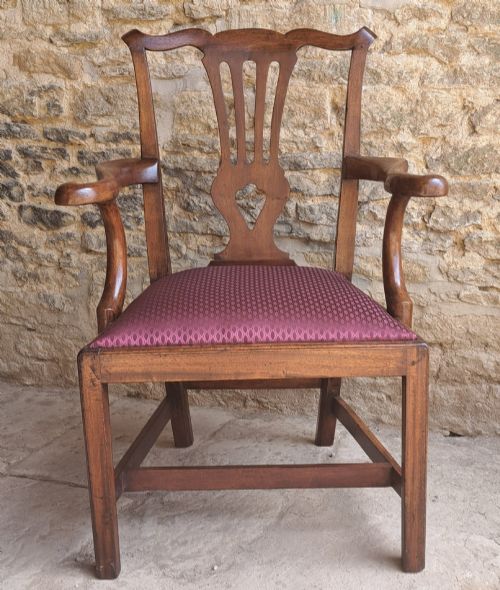
- A traditional term for an armchair, typically designed with open arms to sit at the head of a dining table. These pieces match the smaller side chairs in a set.
- Drop in seat
- A separate wooden frame upholstered in fabric, leather, or tapestry that drops into the rebated seat rail of the chair. This construction method allows for straightforward reupholstery.
- George II style
- An architectural and furniture aesthetic spanning the second quarter of the eighteenth century, characterised by heavy proportions and bold carved ornamentation. Revival versions emulate these traits.
Irish Chippendale Chairs: Frequently Asked Questions
How do I spot a true eighteenth century chair?
Examine the timber construction beneath the seat rails for signs of period joinery methods, tool marks, and natural wood oxidation that modern reproductions lack.
Compare the carving depth and proportion against documented examples from the seventeen fifties and seventies to confirm the period of manufacture.
Can I mix armchairs with standard dining chairs?
Armchairs, often termed carvers, traditionally sat at the heads of the dining table while side chairs filled the sides. Matching the wood type and carving style ensures visual harmony.
Many period sets were originally configured with two armchairs and six or eight matching side chairs for daily use.
What upholstery materials are appropriate?
Historical examples utilise woven textiles including silk damask, tapestry, leather, and velvet secured over drop in seat frames. Selecting traditional coverings respects the original aesthetic of the furniture.
Ensure the upholstery weight complements the substantial wooden frame without overwhelming the carved details of the rails.
How do revival chairs differ from older pieces?
Revival pieces date from the nineteenth and twentieth centuries, reproducing eighteenth century forms using period appropriate timbers and revival techniques. Subtle clues in the timber seasoning and joinery help distinguish them.
Nineteenth and twentieth century sets often survive in larger matched groups, such as sets of eight or ten, which are scarce in original eighteenth century production.