




Leather Swivel Chair
A leather swivel chair brings functional rotation and padded comfort to a workspace, drawing on nineteenth and early twentieth-century design.
Leather Swivel Chair
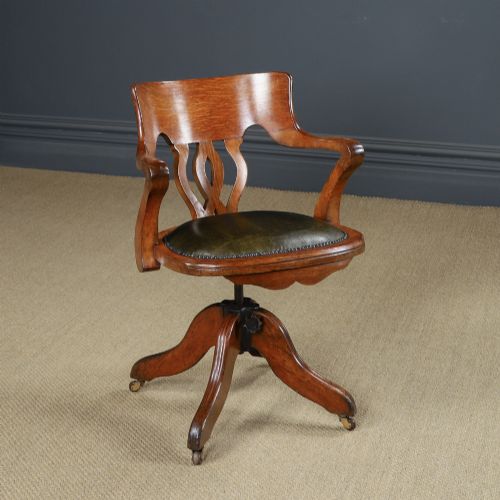
A leather swivel chair principally serves as a practical workspace seat, combining a rotating column with desk-height support. These pieces trace origins through Victorian, Edwardian and early twentieth-century periods.
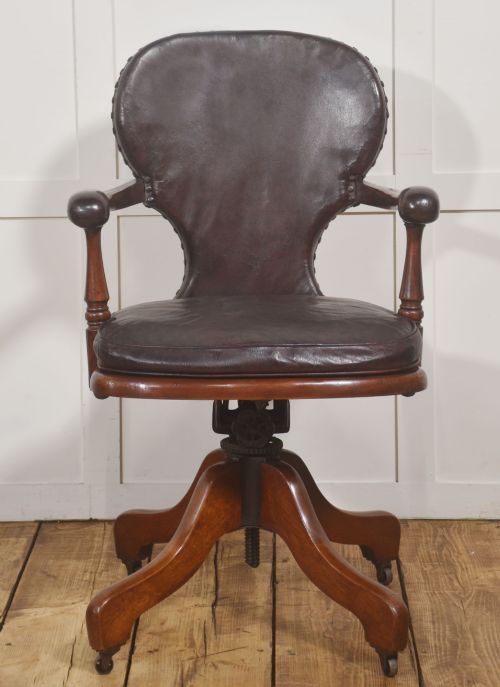
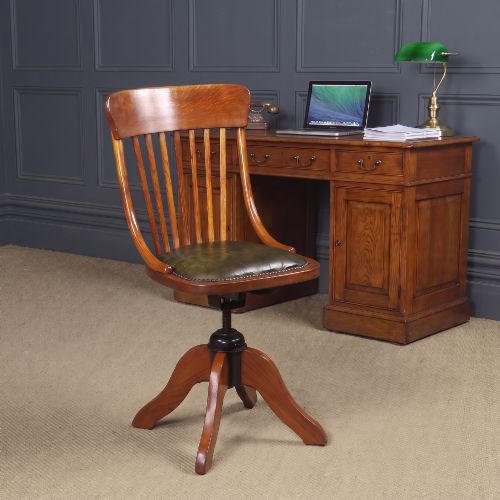
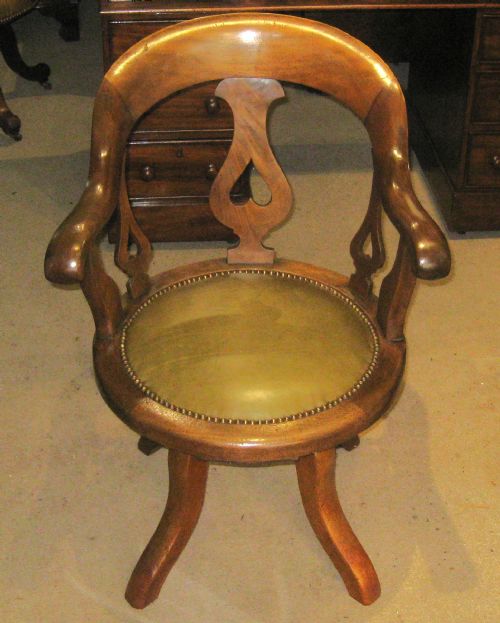
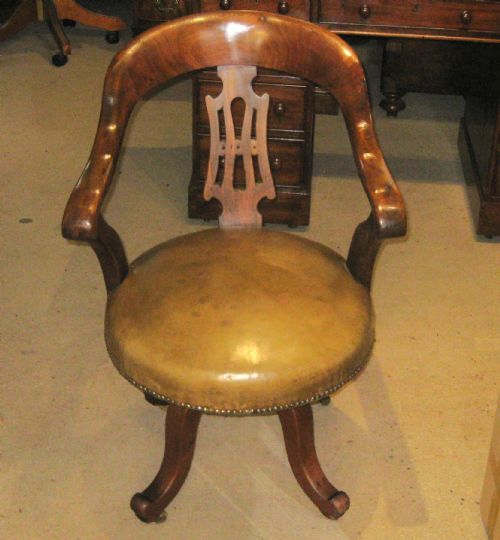
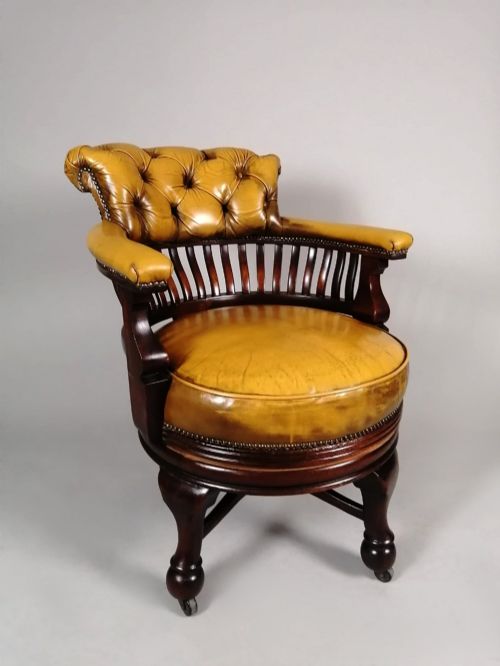
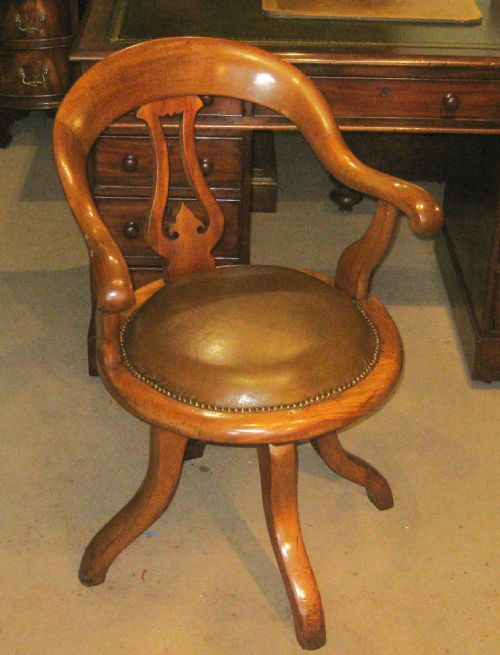
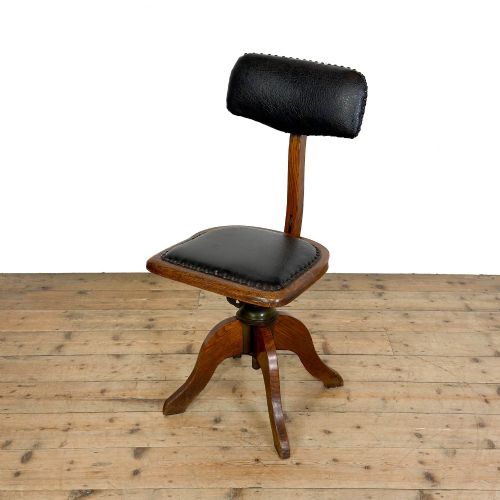
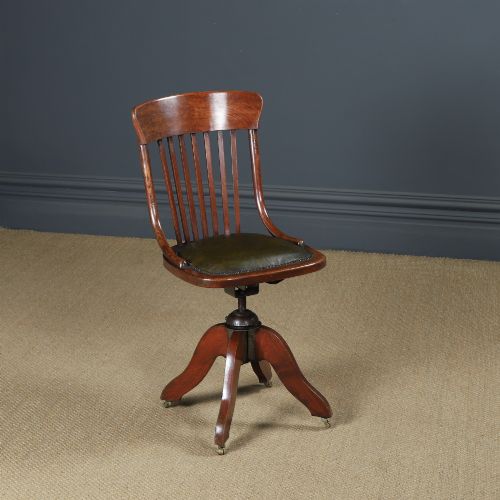
The form appears most frequently on this page as a revolving desk chair or office armchair. Examples range from heavy carved oak frames to mahogany and walnut library seats.
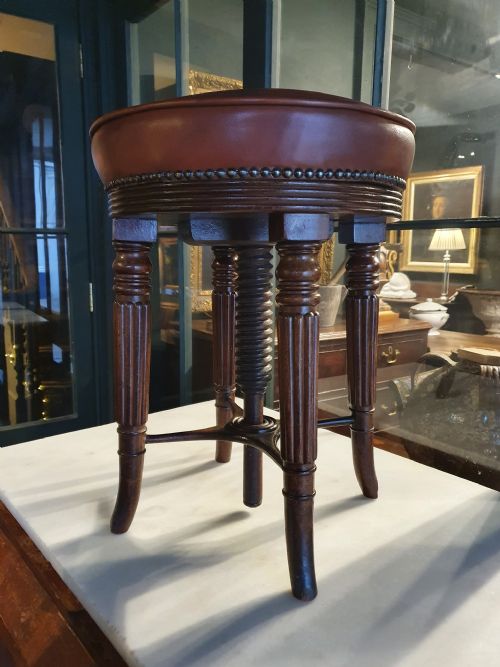
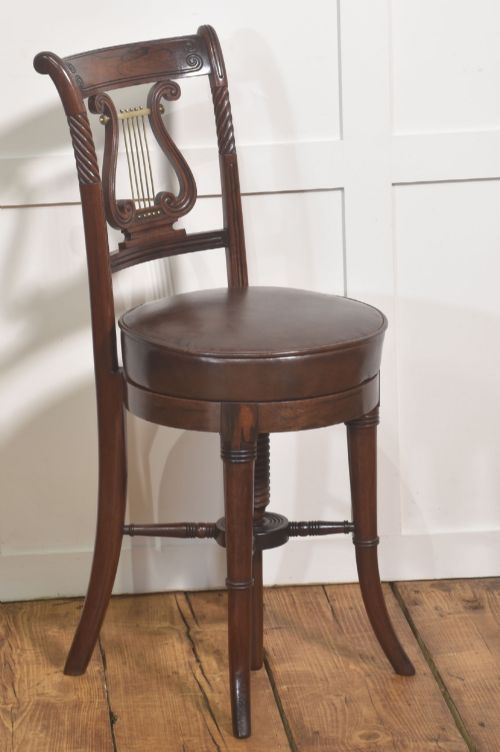
Beyond standard office seating, related revolving variants include piano stools, dressing chairs and ship's chairs. These share the characteristic swivelling mechanism adapted for domestic or maritime use.
How They Were Made
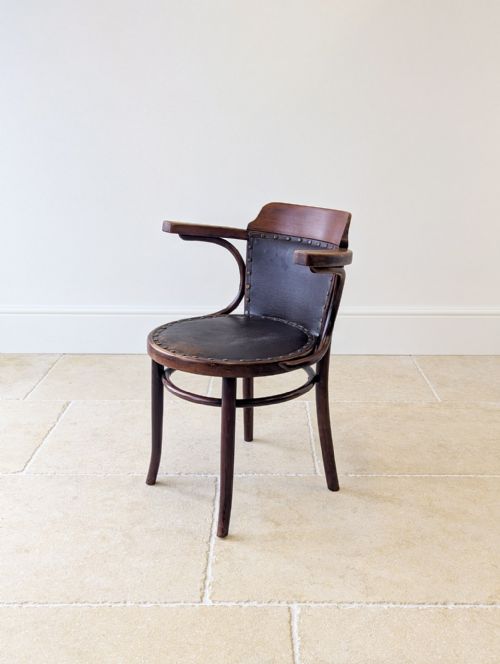
Makers constructed the structural frames of a leather swivel chair from dense hardwoods like oak, mahogany, walnut and beech. Selected pieces incorporate bentwood techniques or cast iron framework to provide mechanical strength.
Upholstery centres on leather seats and buttoned pads, secured with brass tacks or studs. Metal spindles, brass fittings and adjustable height screws enable the signature revolving action.
Leather Swivel Chair Retail Price Guide 2026
Typical asking prices for leather swivel chair among the pieces listed under this phrase on Sellingantiques today, from the lower quarter to the upper quarter. They describe what is for sale here now, not the wider market.
Some heavy oak iterations were originally built for life at sea as ship's chairs, ensuring officers could remain firmly seated during rough swells.
What Varies in Quality
The engineering of the revolving and tilting mechanism dictates the operational smoothness of the chair. Heavier cast iron undercarriages and robust wooden spider bases offer superior stability.
The grade of timber and the depth of the carved detailing distinguish standard office utilities from executive library seating. Supple hide upholstery with intact buttoning indicates finer workshop output.
S&H Jewell·Kendrick & Jefferson·WM Heywood Chair Co·Druce & Co
The Leather Swivel Chair Glossary
- Revolving
- Able to turn around a central axis. This mechanism allows the seated person to pivot between different angles of a desk.
- Bentwood
- Wood steamed and bent into curved structural shapes. This technique creates rounded chair backs and supports.
- Captains Chair
- A sturdy wooden armchair designed for office or library use. Many variants incorporate a low back and a pivoting seat.
- Tilt
- A mechanical adjustment enabling the upper portion of the seat to lean backward. This function provides customisable posture support during long hours at work.
Leather Swivel Chair: Frequently Asked Questions
What is a leather swivel chair used for?
These pieces function primarily as seating for desks, offices and libraries. The rotating mechanism allows users to turn easily between different areas of a workspace.
Historically, they provided comfort and mobility for clerks, executives and professionals during long working hours. Today, they serve a similar practical purpose while adding period character to a room.
How do I date a leather swivel chair?
Dating relies on identifying the timber, hardware and stylistic details present in the frame. Victorian examples often feature rich mahogany or walnut with turned wooden spindles, while Edwardian pieces commonly utilise oak.
Patents on the mechanical swivel and tilt mechanisms also help establish a timeline. Early twentieth-century versions frequently incorporate heavier iron components and simpler lines.
How do I care for the leather?
Maintain the material by applying appropriate leather balms or conditioners to prevent drying and cracking. Keeping the surface clean from dust preserves the natural grain.
Position the chair away from direct sunlight and heat sources to protect the hide and the wooden frame. Regular gentle maintenance ensures the upholstery remains supple over time.
Are all swivel chairs height adjustable?
Many examples feature a threaded central screw mechanism that allows the seat height to be raised or lowered. Twisting the seat rotates it up or down along the central column.
Some simpler forms or specific stool variations feature fixed heights. Examining the undercarriage reveals whether the mechanical adjustment screw is present.