
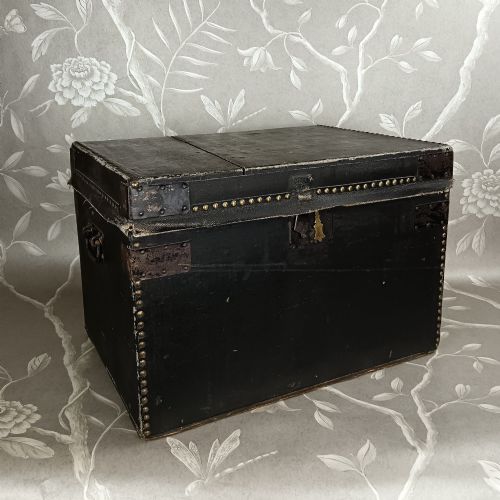
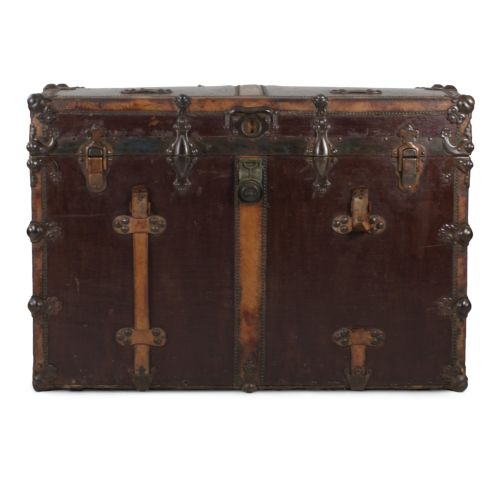
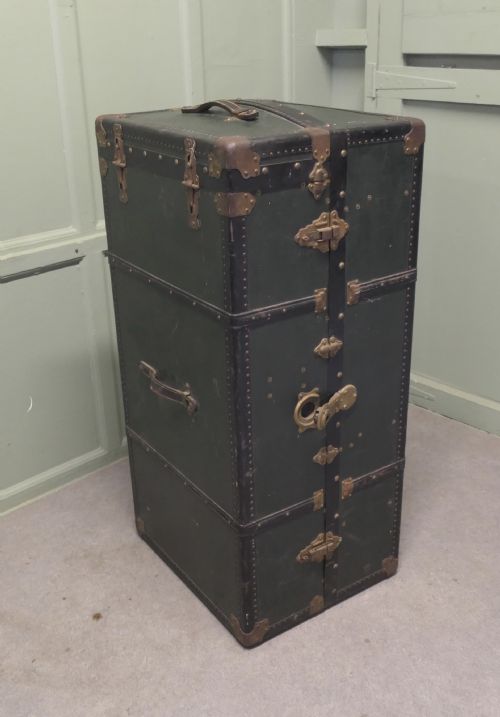
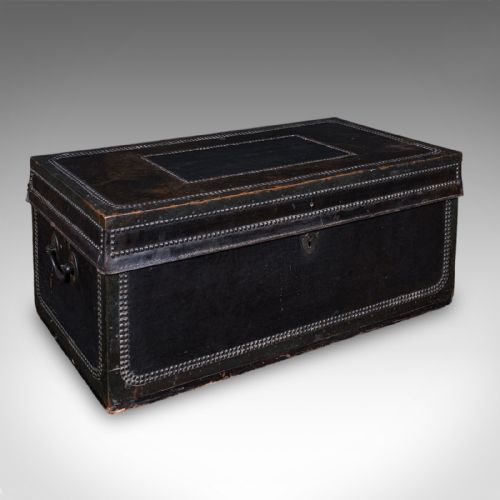


Leather Luggage Chest
A leather luggage chest is a sturdy travelling companion built from hide and timber, offering practical history and enduring storage for the home.
Leather Luggage Chest
A leather luggage chest encompasses a range of travel trunks, storage chests, and portmanteaus designed for movement by coach, train, or ship. Buyers encounter pieces spanning the nineteenth century through the nineteen-thirties, reflecting Victorian, Edwardian, and Art Deco eras.
The most common forms on this page include large travel trunks, dome-topped storage chests, and fitted steamer trunks. English and French workshops dominate the origins, alongside examples from international makers.
These pieces serve as functional storage furniture in modern interiors, functioning as coffee tables or blanket boxes at the foot of a bed. Their travelled surfaces bring character and narrative depth to a room.
Materials and construction methods
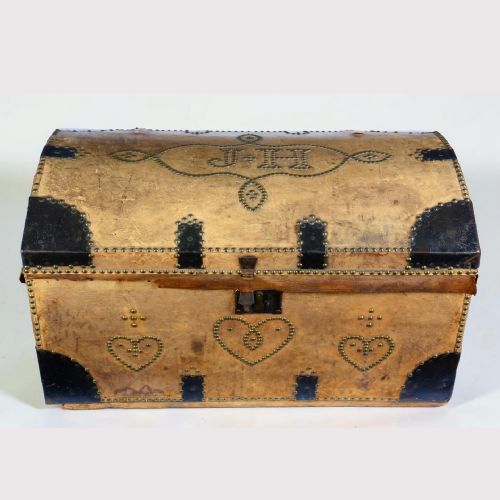
Makers built these chests using a timber framework, often pine, camphorwood, or oak, clad in leather, hide, canvas, or pigskin. This combination provided structural rigidity while protecting contents from the rigours of transit.
Reinforcement came from brass, iron, or metal banding and studwork, securing the corners and edges against heavy impact. Handles, locks, and corner plates utilised cast brass or iron, often stamped with maker details.
Interiors frequently featured linen or paper linings, sometimes with fitted trays, compartments, or wardrobe sections for specific garments like hats and suits.
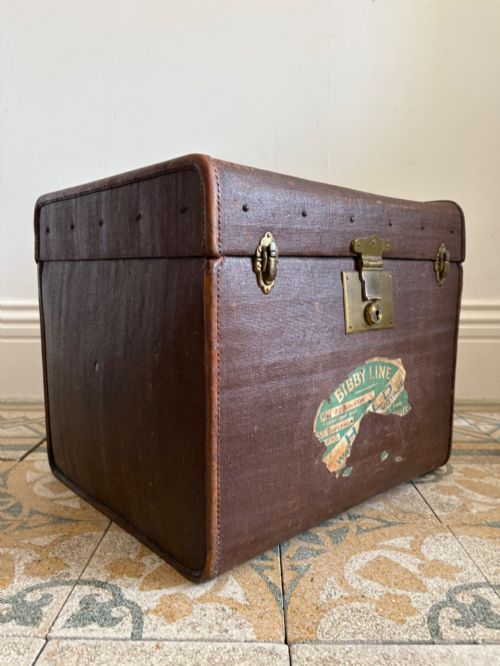
Many trunks carry colourful travel labels and shipping stamps, recording long-forgotten voyages across global railways and steamship lines.
Assessing quality and craftsmanship
Quality rests in the integrity of the internal timber frame and the durability of the exterior hide or leather binding. Superior examples display precise hand-stitching, robust brass studwork, and original working locks with functional keys.
The distinction between standard travel gear and top-tier pieces often lies in the maker's signature and internal complexity. Fitted interiors with original trays, silk linings, and compartmentalised storage elevate a piece significantly.
Provenance and travel history, evidenced by original labels, monograms, and stamps from renowned workshops, separate ordinary containers from exceptional collector items.
Wm. Insall of Bristol·Arthur Wannop·Chapple & Sons·Seabrook of St.Pauls·Drew & Sons·John Pound·Louis Vuitton·Goyard
The Leather Luggage Chest Glossary
- Steamer trunk
- A lower-profile luggage chest designed to fit beneath a cabin berth on ocean liners. These trunks typically feature flat tops for stacking during transit.
- Campaign case
- A portable chest or trunk made for military officers and travellers on the move. They incorporate robust brass corners and recessed handles for durability.
- Portmanteau
- A large travelling bag or trunk that opens into two equal compartments. The term derives from French roots describing a case for carrying cloaks.
- Camphorwood
- An aromatic timber frequently used for chest interiors to repel insects. Its distinct scent helps protect woollens and garments during long storage.
- Studwork
- Decorative or reinforcing metal pins driven into the exterior leather and wood of a trunk. Brass studs often form geometric patterns while securing the hide.
Leather Luggage Chest: Frequently Asked Questions
How do I use a leather luggage chest at home?
These chests work well as coffee tables in a living room, providing hidden storage for blankets and books. They also sit effectively at the foot of a bed for spare linens.
Position them away from direct heat sources to prevent the leather from drying out and cracking over time.
How do I care for antique leather luggage?
Dust the exterior regularly with a soft, dry cloth to remove grit and surface dirt. Apply a suitable leather conditioner sparingly to maintain suppleness.
Avoid commercial cleaning products that contain harsh chemicals or strong solvents, as these can strip the original finish and patination.
Can I travel with a vintage leather trunk?
While these pieces were originally built for transit, modern baggage handling systems can easily damage their historic materials and brass fittings. Use them primarily for static home storage rather than active travel.
If transport is necessary, line the interior and protect the exterior corners with suitable padding.
How do I distinguish Victorian trunks from later periods?
Victorian examples frequently display heavy brass studwork, robust wooden frames, and domestic leather or hide coverings. They often reflect coaching or early rail travel requirements.
Later Edwardian and nineteen-thirties pieces often incorporate canvas, specialised steamer dimensions, and sophisticated internal wardrobe fittings designed for transatlantic liners.