
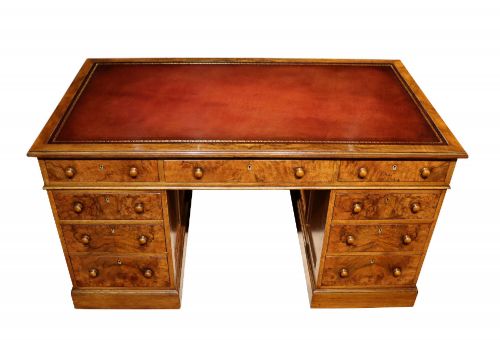


Leather Inset Partner Desk
A leather inset partner desk is a substantial double-sided working table built for two people to face each other across a dedicated hide surface.
Leather Inset Partner Desk
When you search for a leather inset partner desk, you are looking at large, double-sided working furniture designed for two people to sit opposite one another. These pieces typically incorporate twin pedestals of drawers or cupboards beneath a wide top inset with a writing hide surface. The most common examples you will meet on this page date from the Victorian period, alongside earlier Regency and William IV pieces and later Edwardian variations.
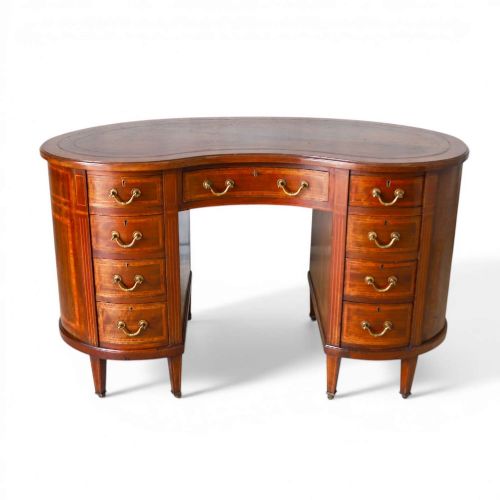
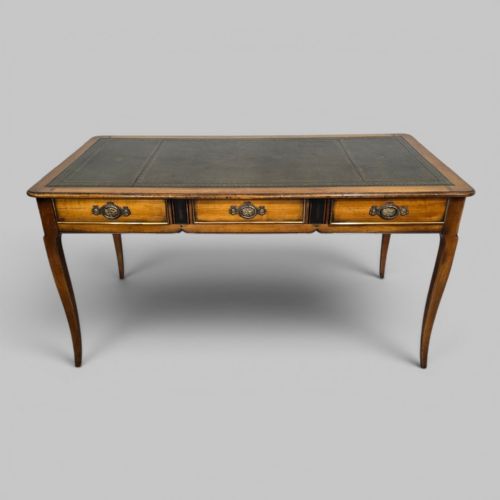
The format usually provides drawers on both long sides, allowing simultaneous use by two individuals without compromise on legroom or storage. Formats range from pedestal writing tables and library tables to circular drum tables and kneehole configurations. They serve as commanding centrepieces in studies and libraries, maintaining functional workspace while offering formal architectural presence.
How they were made
Cabinet makers built these desks using substantial timber carcasses of mahogany, oak, walnut, burr walnut, rosewood, and satinwood, often applied as veneers over sturdy secondary woods. The writing surfaces were inset with panels of leather, frequently edged with gold tooling or blind stamping. Brass handles, escutcheons, and castors finished the hardware details.
Construction involved robust dovetailed drawer boxes and heavy framing to support the double-sided drawer banks and wide timber tops. Woods were selected for grain pattern, particularly in burr walnut and curl mahogany examples, and finished to highlight natural lustre.
The listings show pieces spanning the Regency, William IV, Victorian, and Edwardian periods, constructed in mahogany, oak, walnut, and burr walnut.
What varies in quality
Quality rests in the selection of timbers and the handling of secondary woods, where figured veneers and solid drawer linings separate standard production from superior cabinet work. The crispness of carved details, the weight and finish of brass hardware, and the structural integrity of the twin pedestals dictate the overall standard of the piece.
Proportion and scale also define the hierarchy, with finer examples maintaining balanced drawers on both sides and seamless integration of the inset leather top. Maker attribution, through stamped signatures or established workshop styles, elevates specific items above unsigned commercial equivalents.
Shapland and Petter of Barnstaple·Edwards and Roberts·Gillows of Lancaster·Richardson of Leeds
The Leather Inset Partner Desk Glossary
- Partners desk
- A large double-sided desk designed with drawers or cupboards on opposing faces so two people can work facing each other. They became popular in banks, libraries, and large studies during the nineteenth century.
- Pedestal desk
- A freestanding desk comprising a central writing top supported by two vertical banks of drawers or cupboards. They often feature inset leather writing surfaces and panelled sides.
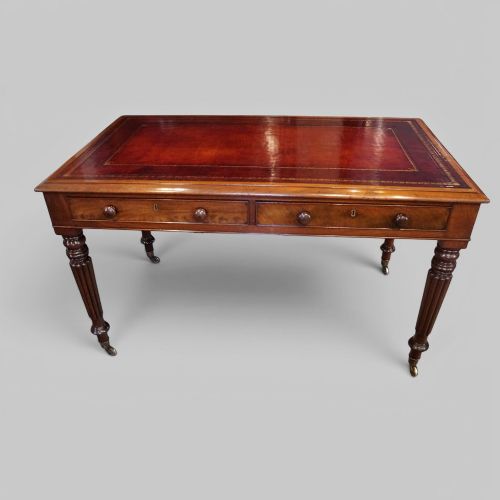
- Library table
- A large rectangular or oval table utilised in studies and libraries for reading and writing, occasionally fitted with frieze drawers. They share proportions with partner desks but generally lack twin pedestal drawer stacks.
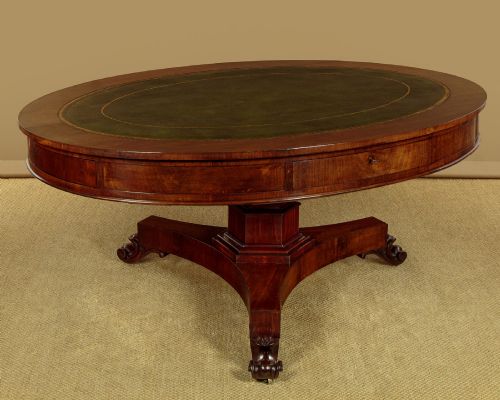
- Drum table
- A circular library table with a rotating or fixed top set above a frieze of alternating real and dummy drawers. They stand on a single central pillar supported by splayed legs.
- Burr walnut
- Timber taken from the warted excrescences of walnut trees, producing highly decorative swirling grain patterns. Cabinet makers prized it for veneering prominent drawer fronts and desk tops.
- Escutcheon
- A protective plate surrounding a keyhole, usually cast in brass or bronze. They protect the surrounding wood from wear and add a decorative accent to drawer faces.
Leather Inset Partner Desk: Frequently Asked Questions
What is a leather inset partner desk?
A leather inset partner desk is a large, double-sided writing table featuring a surface inset with leather and pedestal drawers accessible from both the front and the back.
They were built so that two people could work opposite each other in offices, libraries, or grand homes.
How were partner desks used originally?
They were used by business partners, bankers, lawyers, and scholars who needed shared access to workspace and files within the same piece of furniture.
The double-sided drawer configuration allowed both individuals to store documents and stationery independently.
How do I tell Victorian partner desks apart from earlier periods?
Victorian examples often display heavier mahogany or walnut construction with deep pedestals and machine-tooled leather surfaces. Earlier Georgian and Regency versions tend to feature finer proportions, lighter stringing inlay, and hand-tooled hide tops.
Looking at the secondary woods inside the drawer linings and the style of the brass hardware also helps narrow down the decade.
What timbers are common in these desks?
Mahogany is the most frequent timber found in these pieces, alongside oak, walnut, burr walnut, and occasional exotic woods like rosewood and satinwood.
Cabinet makers often combined solid framing with figured veneers on the drawer fronts and top surfaces.
How do I care for the leather top?
The leather top benefits from occasional gentle cleaning with a slightly damp cloth followed by a neutral leather cream to keep the hide supple.
Avoid harsh chemical cleaners and direct sunlight, which can dry out and crack the leather surface over time.