



Leather Hearth Surround
A leather hearth surround brings sturdy seating directly to the fireplace, combining metal frames with comfortable upholstered tops.
Leather Hearth Surround
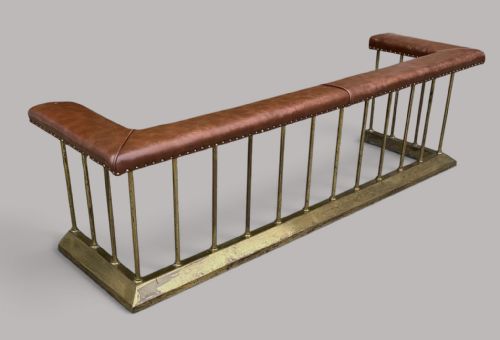
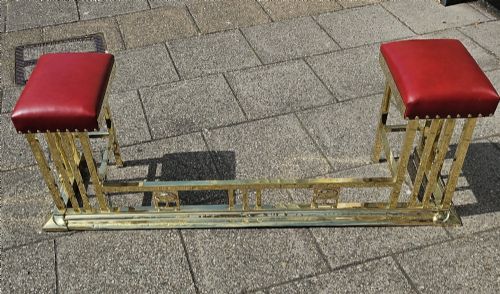
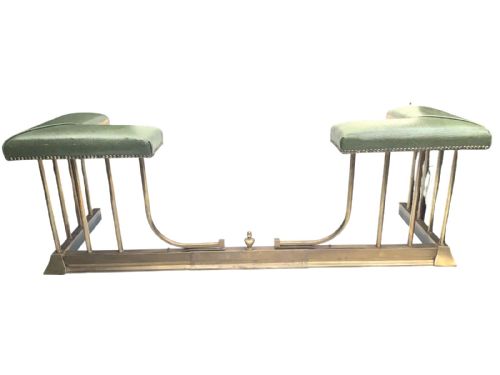
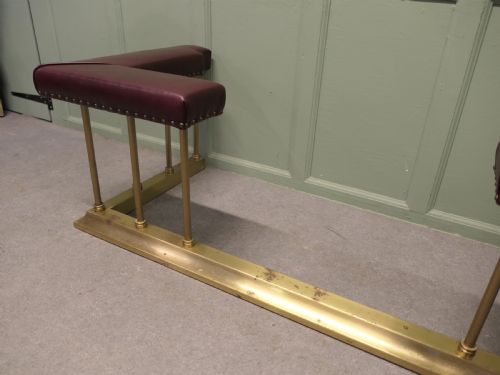
When you search for leather hearth surround, you encounter a selection of club fenders and fireside benches designed to frame an open fire. These low seating structures position padded top rails around the perimeter of the hearth, allowing people to sit close to the warmth.
The versions most commonly met on this page date from the Victorian and Edwardian periods, alongside later twentieth-century interpretations. They combine functional metal bases with upholstered leather seating surfaces in shades of tan, green, and brown.
How they were made
Makers constructed the structural frames of these surrounds using brass, steel, iron, and wrought iron. Metal components were often polished, cast, or worked into traditional club fender shapes to support the weight of sitters.
The top rails feature leather upholstery, frequently styled with Chesterfield buttoning, stretched over padding and secured to the metal base. Copper details occasionally appear alongside the primary brass or steel frameworks.
Leather Hearth Surround Retail Price Guide 2026
Typical asking prices for leather hearth surround among the pieces listed under this phrase on Sellingantiques today, from the lower quarter to the upper quarter. They describe what is for sale here now, not the wider market.
Materials recorded across the inventory include brass, steel, wrought iron, copper, and cast steel paired with leather.
What varies in quality
Quality in these surrounds rests on the substance of the metal framework and the thickness of the hide used for the seat. Substantial brass and cast steel provide structural integrity, while mature leather handles decades of fireside heat and daily sitting.
The precision of the metal assembly and the depth of the upholstery work distinguish simpler iterations from more decorative country house or club examples. Proportion and proportioned corner uprights also influence the overall presence of the piece.
The Leather Hearth Surround Glossary
- Club fender
- A low, padded fireside seat built around a metal frame that encloses the hearth. These pieces originated in gentlemen's clubs to provide close seating to the fire.
- Chesterfield seat
- An upholstered cushion style characterised by deep button tufting. This traditional finish appears frequently on the leather top rails.
- Cast steel
- A strong metal alloy produced by melting blister steel in crucibles. Makers utilised this material for robust, durable fender frames.
- Wrought iron
- Iron that has been heated and worked with tools by a blacksmith. This material yields decorative scrollwork and sturdy structural elements.
Leather Hearth Surround: Frequently Asked Questions
What is a leather hearth surround used for?
These surrounds serve as combined fireplace fenders and low seating benches. They protect the room from stray embers while offering a comfortable place to sit close to the fire.
Historically, they allowed occupants to gather directly around the hearth in large reception rooms and clubs. Today, they function as practical seating additions to traditional fireplaces.
How do I date a brass and leather fender?
Dating relies on examining the construction methods of the metal frame and the style of the upholstery. Victorian and Edwardian examples often feature heavy polished brass and detailed corner supports.
Later twentieth-century versions introduce Art Deco geometric influences or simpler steel structures. Comparing the patina of the leather and the manufacturing marks helps narrow the period.
Are all club fenders made of brass?
Not all examples utilise brass; many frames are constructed from steel, iron, wrought iron, or copper. Metal choice often reflects the prevailing style and the manufacturing date of the piece.
While polished brass remains common in Victorian designs, industrial or later styles frequently employ cast steel or heavy iron.
How do I care for the leather seat?
Maintain the leather by keeping it away from direct, excessive heat sources and applying suitable leather conditioners periodically. This prevents the hide from drying out near the fireplace.
Regular dusting and gentle cleaning preserve the natural finish and mature tan or green tones of the upholstered top rail.