





Leather Fireplace Fender
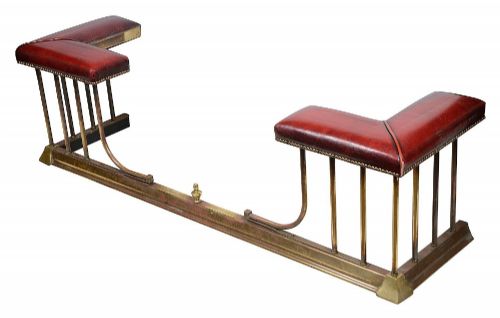
A leather fireplace fender provides robust fireside seating, uniting brass or iron frames with padded hide to anchor a room.
Leather Fireplace Fender
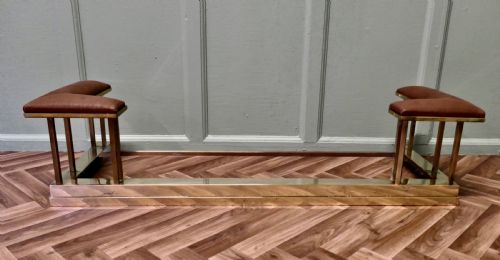
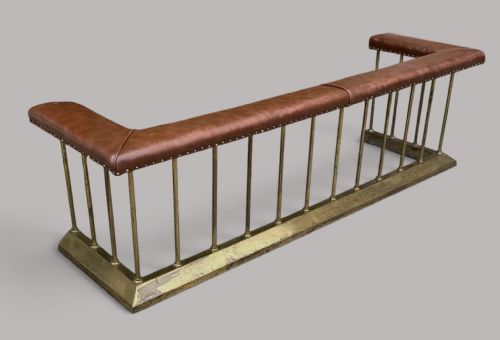
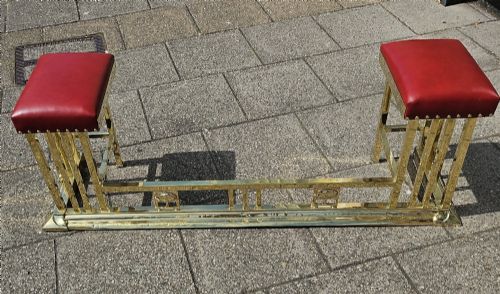
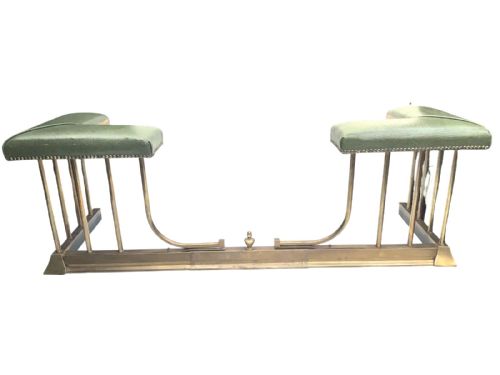
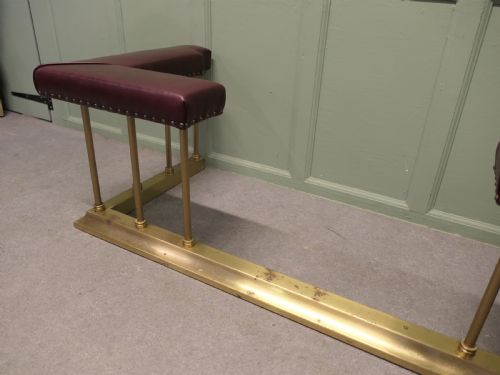
A leather fireplace fender forms a low, padded seat running around the hearth, offering a practical place to sit close to the fire. These pieces emerge across the nineteenth and twentieth centuries in Victorian, Edwardian, and Art Deco styles.
The most common examples encountered on this page combine polished brass or steel frames with buttoned or plain leather upholstery. Club fenders dominate the selection, alongside occasional long foot stools designed for similar fireside use.
Origins stretch from the robust brass frameworks of the Victorian era to the cleaner lines of the 1920s and 1930s. Makers utilised heavy metals and durable hides to withstand daily use in country houses and town residences alike.
How they were made
Workshops built the structural frames using heavy brass, cast steel, wrought iron, or occasionally walnut and oak. These metal or wooden bases often incorporate adjustable extenders to fit varying hearth dimensions.
Upholsterers fitted the top rails with dense stuffing before covering them in mature tan, green, or brown leather. Many feature traditional Chesterfield buttoning, fixed securely with brass studding along the perimeters.
Listings span from the late nineteenth century through the 1940s, featuring brass, steel, iron, walnut, and oak.
What varies in quality
Substantial weight in the metal framework separates standard production from superior pieces built for heavy institutional or domestic service. Heavier gauge brass and solid cast steel indicate a higher grade of manufacture.
The choice and treatment of the hide dictate the finish at the upper end of the range. Mature leather with deep patination and careful hand-stitched detailing elevates the presence of a fireside bench.
William Birch
The Leather Fireplace Fender Glossary
- Club Fender
- A low upholstered seat built around a fireplace hearth. These provide comfortable seating directly in front of the fire.
- Chesterfield Seat
- Deeply buttoned leather upholstery traditionally secured with individual metal studs. This style appears frequently on Edwardian and Victorian examples.
- Extender
- A mechanical section allowing the metal frame to adjust in width. This enabled fenders to fit specific fireplace openings.
- Wrought Iron
- Iron beaten and shaped by hand into decorative structural forms. It provides a dark, matte contrast to polished brass fittings.
Leather Fireplace Fender: Frequently Asked Questions
How do I choose the right size?
Measure the width and depth of your hearth stone before searching. Many examples feature adjustable frames to help achieve a precise fit against the chimney breast.
Account for the clearance needed around the fire box to ensure safe sitting distances.
What metals were used?
Makers primarily used polished brass, cast steel, and wrought iron for the structural frames. Some variations combine brass with copper or incorporate wooden timber bases.
The choice of metal typically reflects the prevailing style of the period, from ornate Victorian brass to streamlined Art Deco iron.
How do I care for the leather?
Maintain the hide by applying appropriate leather balms periodically to keep the material supple. Avoid placing the fender too close to direct, intense heat sources that might dry out the surface.
Regular dusting with a soft cloth prevents grit from settling into the creases and button folds.
Are these seats comfortable?
The upholstered top rails were specifically designed for sitting close to the fire during colder months. Dense stuffing provides a firm bench for extended fireside use.
Height and depth vary depending on whether the piece functions as a standard club fender or a long foot stool.