


Leather Dressing Stool
A leather dressing stool provides a low, upholstered seat for a bedroom dressing table, combining practical function with period cabinet-making.
Leather Dressing Stool
A leather dressing stool occupies a functional space in the bedroom or dressing room, serving as a seat for a dressing table or piano. When searching for a leather dressing stool, you encounter pieces spanning from the Georgian period through the Victorian and Edwardian eras into Art Deco designs of 1930.
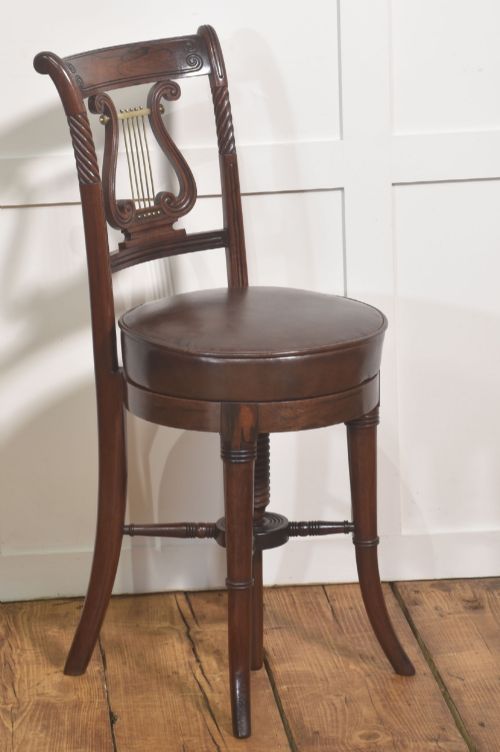
The selection ranges from simple mahogany frames to elaborate walnut examples featuring cabriole legs or X-frame supports. Many incorporate adjustable mechanisms, revolving seats, or hinged lids that transform the low seat into a tidy box for storage.
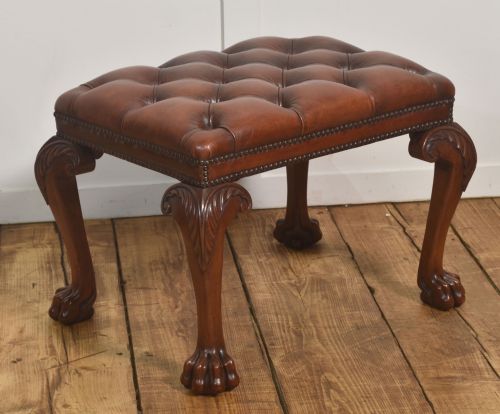
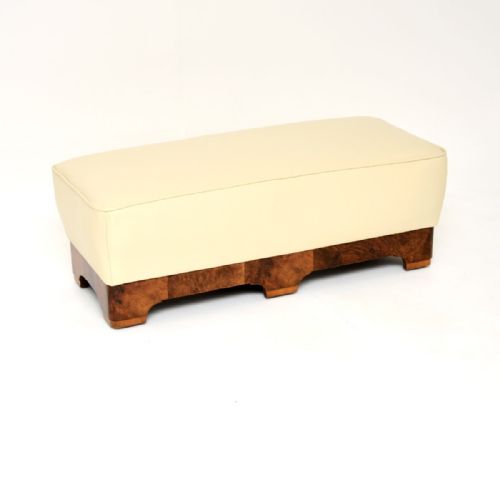
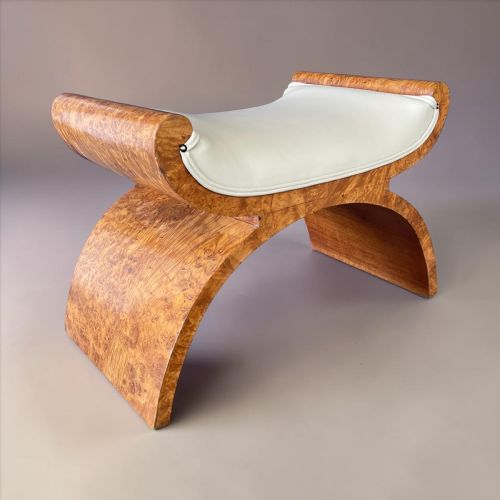
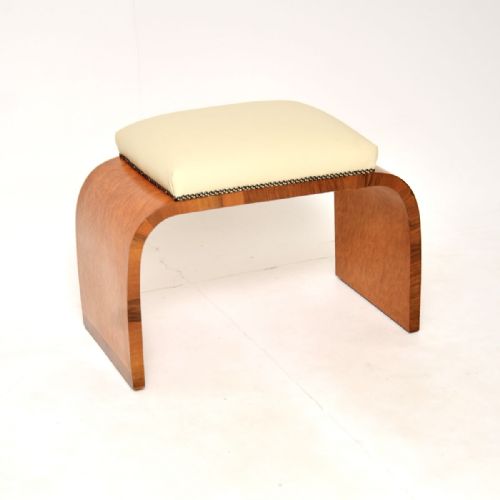
Victorian and Edwardian versions dominate the selection, frequently paired with mahogany or walnut frames and buttoned leather upholstery. Art Deco examples from 1930 introduce striking veneers like burr walnut and birds eye maple alongside clean geometric lines.
Materials and construction methods
Makers built these frames predominantly using dense timbers such as mahogany, walnut, burr walnut, and occasionally oak or rosewood. Metal and brass components frequently appear in the adjustable riser mechanisms, revolving screws, and decorative castors that allow the seat height to change.
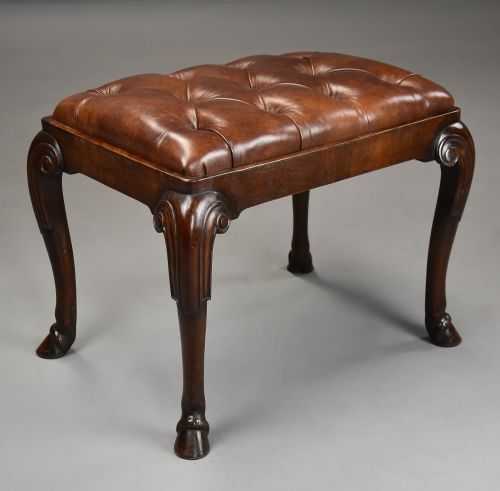
Upholstery relies on durable cattle hide, occasionally simulated in crocodile grain, stretched over padded interiors and sometimes secured with deep buttoning. Timber frames utilise traditional joinery, shaped aprons, and carved cabriole legs to mirror prevailing furniture styles like Chippendale, Queen Anne, and Regency.
Simulated crocodile leather offers a delightfully unexpected reptilian texture to otherwise proper Edwardian dressing seats.
Distinctions in construction and design
The sophistication of the timber frame and the crispness of any carving set the finer examples apart from utility pieces. Richly figured veneers such as burr walnut or birds eye maple elevate the visual weight of an Art Deco piece, while solid mahogany supports demonstrate durable cabinet-making.
Complexity in function distinguishes standard seats from superior examples, particularly smooth-operating screw mechanisms for height adjustment or well-fitted hinged storage boxes. The quality of the leather upholstery and the precision of the buttoning contribute substantially to the finished presence of the stool.
Harry and Lou Epstein·Arthur W Simpson·Trollope & Sons
The Leather Dressing Stool Glossary
- Cabriole leg
- A furniture leg that curves outward at the knee and tapers inward toward the ankle, ending in a pad or foot. This stylistic element appears frequently on Victorian and Queen Anne revival walnut frames.
- Burr walnut
- A figured wood veneer harvested from the knotty growths of walnut trees. It displays swirling, organic patterns popular on Art Deco pieces from 1930.
- X-frame stool
- A seat supported by intersecting diagonal legs forming an X shape from the side view. This architectural form provides stable low seating.
- Revolving piano stool
- A seat designed with a threaded central screw mechanism allowing the top to spin and adjust in height. These pieces double easily as dressing table seats.
- Buttoned leather
- Upholstery secured by deep indentations formed by sewn-in buttons pulling the leather tight against the padding. This technique creates a diamond pattern on Victorian seats.
Leather Dressing Stool: Frequently Asked Questions
What is the difference between a dressing stool and a piano stool?
While both serve as low, seat-height furniture pieces for a seated task, piano stools frequently incorporate mechanical risers or revolving tops to accommodate musicians of varying heights. Dressing stools tend to prioritise decorative upholstery and matching bedroom aesthetics, though many antique examples perform both functions interchangeably.
Makers often built revolving or adjustable models that moved easily between the music room and the dressing table. Examining the presence of a winding screw or storage compartment helps clarify the intended utility of any particular antique.
How do I identify a Victorian leather dressing stool?
Victorian examples rely heavily on dense solid mahogany or walnut frames, often featuring carved cabriole legs and buttoned leather upholstery. Cabinet-makers of this era favoured deep, dark wood tones and robust construction methods designed for daily use.
Many Victorian pieces also include hinged box seats or mechanical height adjustment screws beneath the leather top. These functional additions distinguish mid-nineteenth-century seating from simpler twentieth-century forms.
Are Art Deco leather dressing stools different in style?
Art Deco pieces from around 1930 shift away from dark carved timber toward striking decorative veneers like burr walnut and birds eye maple. The silhouettes become cleaner and more streamlined, reflecting modern design movements of the interwar period.
These stools often feature simpler geometric frames while retaining high-quality leather upholstery. They provide a distinct visual contrast to the ornate curves of earlier Victorian and Regency revivals.
How do adjustable dressing stools work?
Adjustable dressing stools typically utilise a threaded metal screw shaft hidden beneath the seat pad, allowing the user to twist the top upward or downward. This mechanism alters the height of the leather surface to suit different table levels.
Other models rely on scissor actions or wooden risers operated by side levers or internal ratchets. These mechanical elements require gentle handling to preserve their original working order.