
Leather Dining Carvers
These leather dining carvers bring solid timber frames and aged hides together for formal seating.
Leather Dining Carvers
When searching for leather dining carvers, a buyer looks at open-armed seating designed to sit at the head of a dining table or to match larger sets of chairs. These pieces appear most frequently in mahogany or oak across the Victorian, Edwardian and Georgian periods.
How they were made
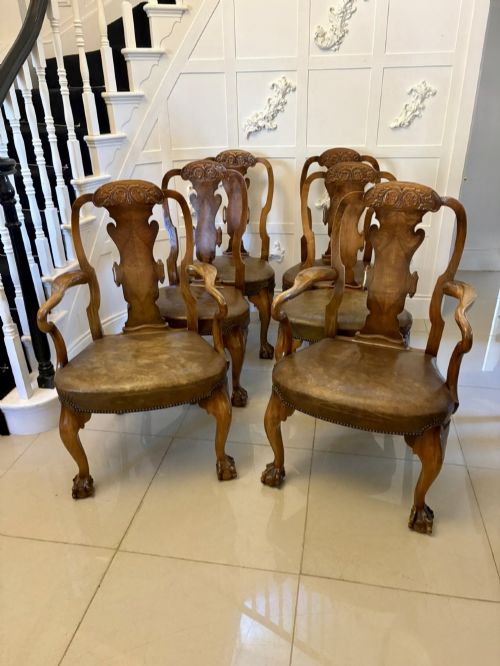
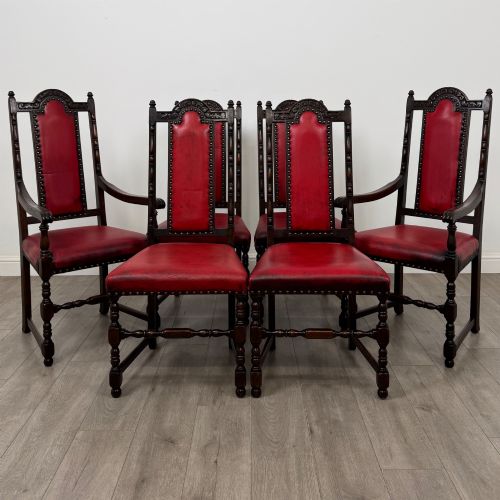
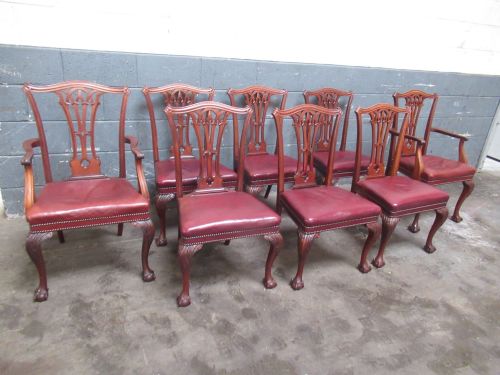
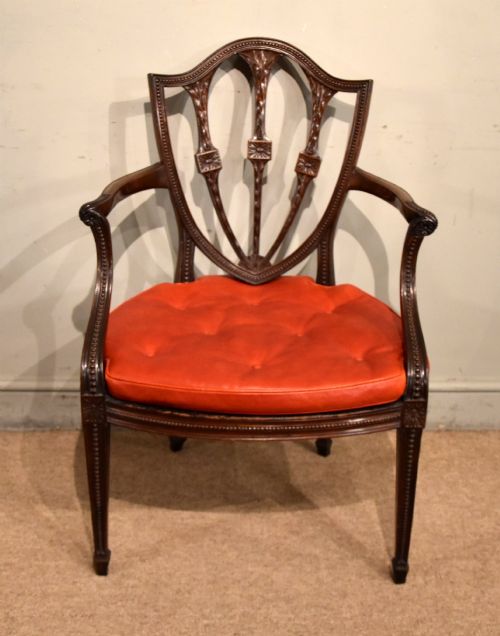
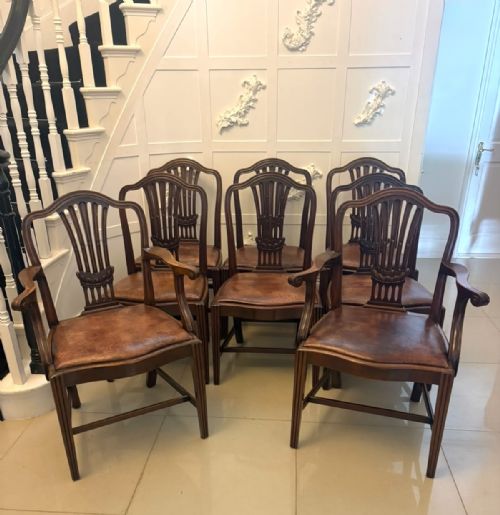
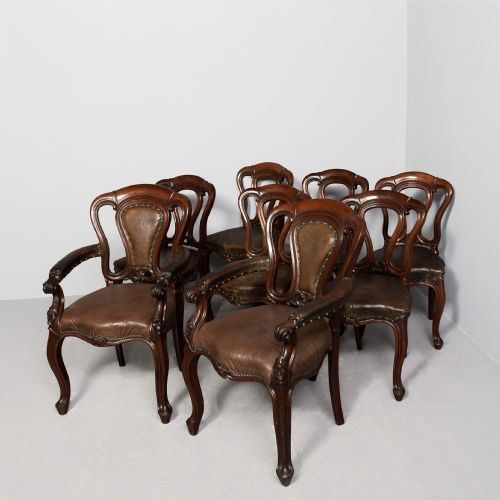
Frames are constructed primarily from solid mahogany and oak, occasionally utilising walnut or burr walnut for decorative grain. Woodwork relies on traditional joinery, frequently finished with hand-carved details such as shield backs or interlaced splats.
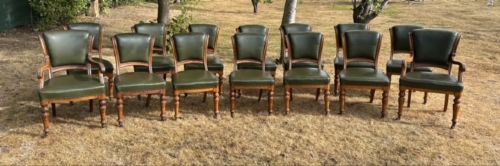
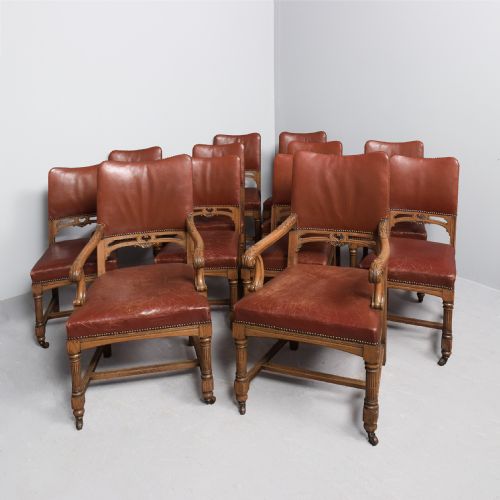
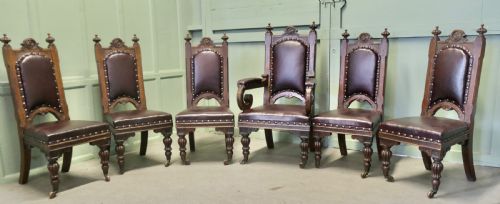
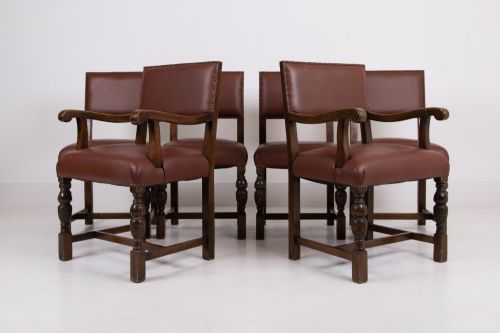
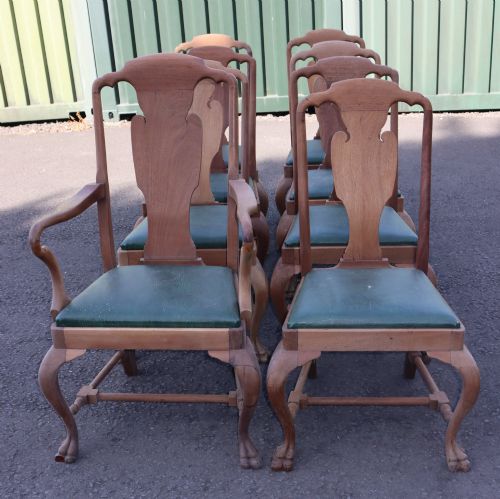
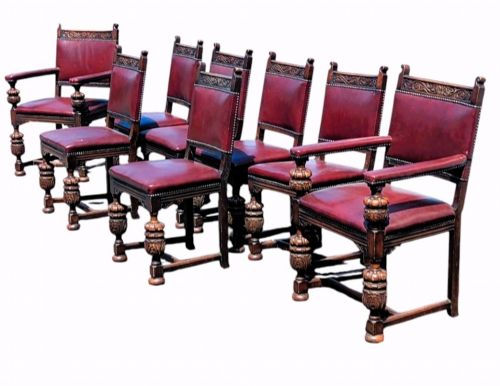
Upholstery involves stretched leather secured to seats or backs, often edged with brass studs. Hides are left in natural tones or hand-dyed in shades like tan, red, green and black.
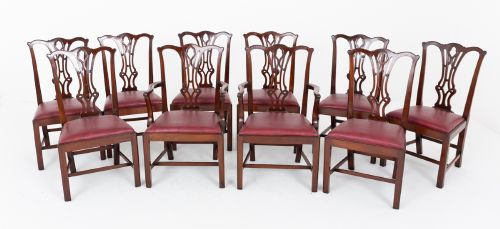
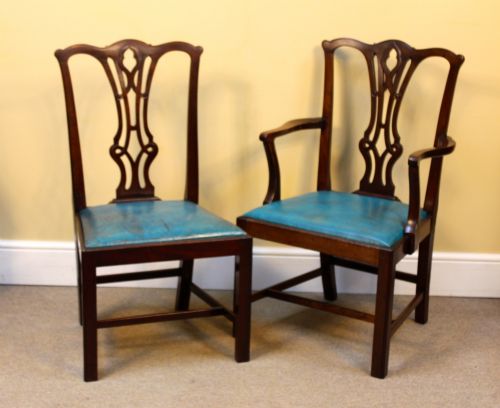
Several sets include precisely two carvers to command the head positions while the faithful matching chairs line the flanks.
What varies in quality
The division between ordinary and exceptional examples rests on the depth of the timber carving and the harmony of the proportions. Crisp detailing on arm terminals and back splats distinguishes better workshops from standard production.
The selection and treatment of the leather also set pieces apart, where supple, hand-dyed hides with appropriate patination elevate the finish above heavy or flat modern replacements.
Lamb Of Manchester·William Walker & Sons·Epstein
The Leather Dining Carvers Glossary
- Carver
- An armchair designed specifically for use at a dining table, typically featuring open arms to accommodate wide clothing. These chairs often accompanied larger sets of matching single chairs.
- Chippendale style
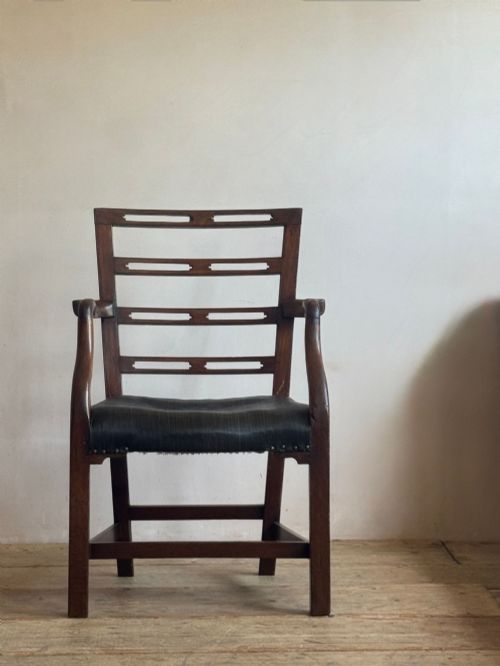
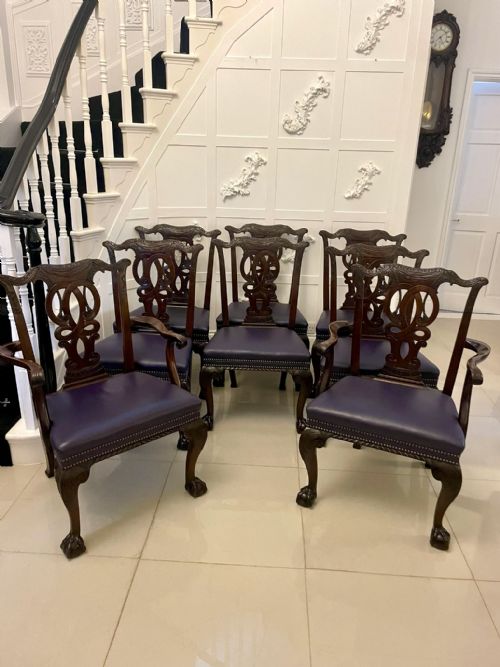
- A furniture design inspired by the 18th-century cabinetmaker Thomas Chippendale, characterised by carved ribbon-back or ladder-back motifs and cabriole legs. Revival versions appeared in abundance during the 19th and early 20th centuries.
- Shield back
- A chair back shaped like a heraldic shield, popularised during the late 18th century by designers such as George Hepplewhite. This silhouette is frequently paired with tapered legs and upholstered leather drop-in seats.
- Scroll arm
- An armchair arm that curves outward and downward in a tight spiral scroll. This feature appears on Regency and Victorian mahogany carvers.
- Studded
- Finished with decorative metal tacks or brass nails securing the edge of the leather upholstery to the wooden frame. This method provides both a neat visual border and structural fastening.
Leather Dining Carvers: Frequently Asked Questions
What is a carver chair?
A carver chair is an armchair intended to sit at the head and foot of a dining table. They feature open arms so a person can sit comfortably without obstruction.
These chairs usually match a larger set of armless dining chairs. They provide a more commanding presence in a dining room.
How do I clean leather seats?
Leather seats require gentle cleaning with a soft, damp cloth and specialised leather conditioner to maintain moisture. Avoid harsh chemical cleaners that strip natural oils.
Allow the leather to dry naturally away from direct heat sources. Regular conditioning preserves the supple texture of aged hide.
Are these chairs comfortable?
Dining carvers from the eighteenth and nineteenth centuries prioritise upright posture over deep cushioning. Their supportive wooden backs and padded leather seats suit formal dining.
Armrests provide additional support for long dinner parties. The ergonomic design reflects the seating habits of past eras.
Can I mix styles at a table?
Mixing carvers with different dining chairs is a traditional way to assemble a set. Pairing chairs of a similar wood tone, such as mahogany or oak, creates visual harmony.
Matching the period or revival style ensures the grouping looks intentional. Eclectic dining sets often benefit from a unifying material like leather.