



Leather Club Couch
A leather club couch brings deep, buttoned seating and robust nineteenth and twentieth-century framing into a room.
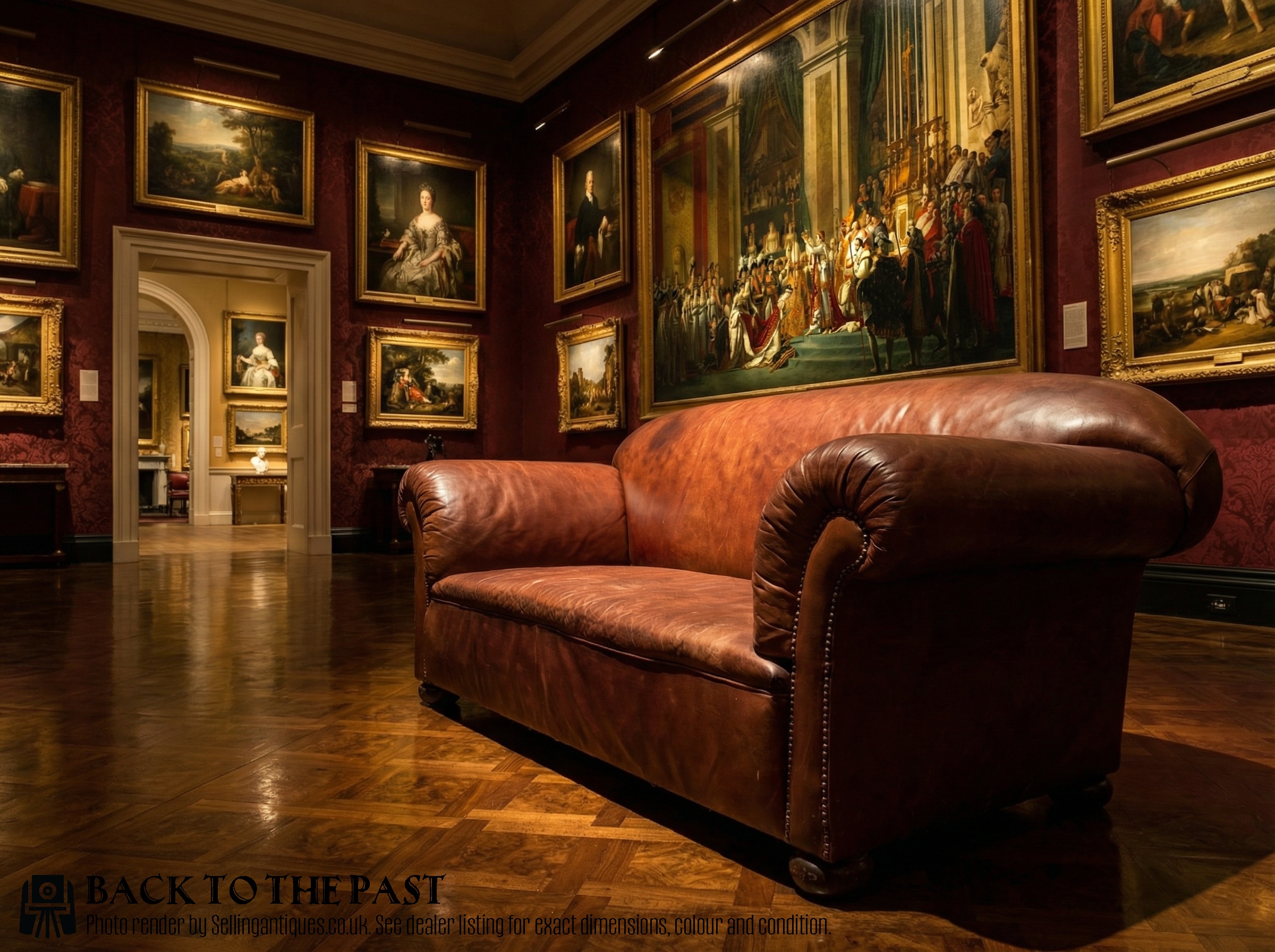
Leather Club Couch
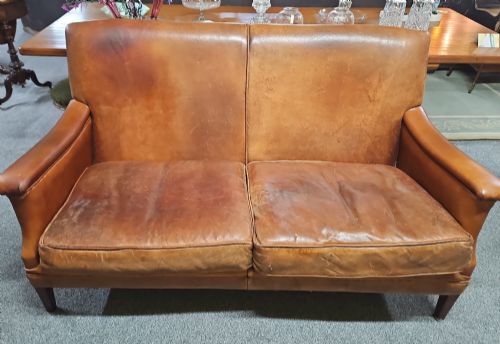
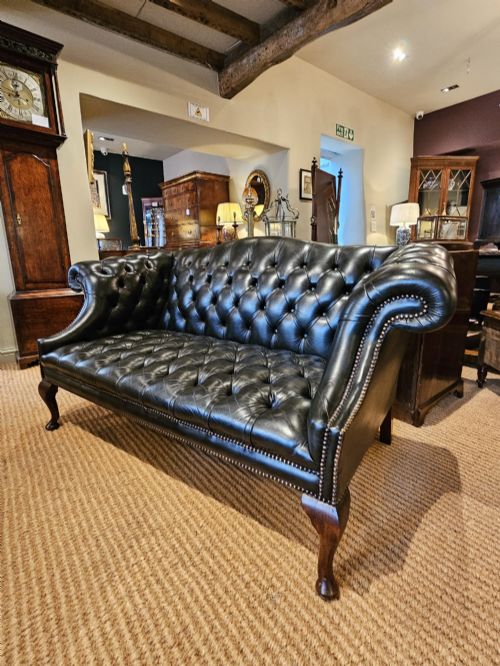
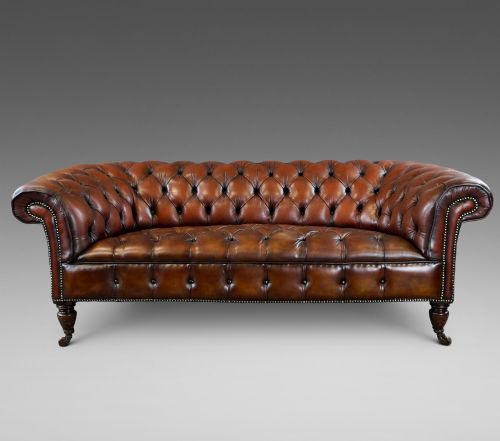
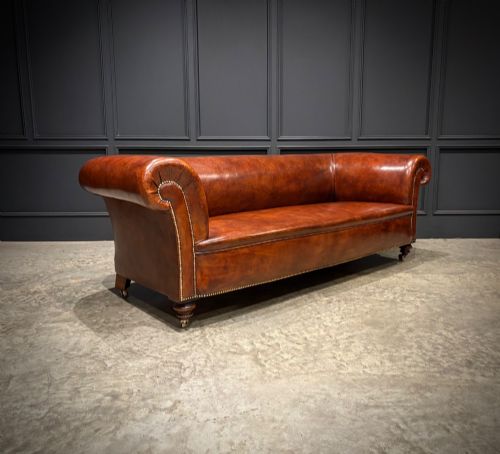
A leather club couch is a substantial seat designed for heavy use, most commonly appearing on this page as a Victorian or Edwardian Chesterfield alongside 1930s Art Deco suites. These pieces take the form of large three-seaters, compact two-seaters, and serpentine or corner sofas intended for comfortable lounging.
The materials and silhouettes reflect traditional English manufacturing, utilising hardwood frames combined with deep buttoning and hand-dyed finishes in shades of whiskey brown, bottle green, and aubergine. Buyers searching for a leather club couch encounter examples ranging from un-touched original finishes to fully restored pieces with horsehair fills.
Construction and materials
Frames rely on sturdy timbers such as mahogany, walnut, and general hardwood to support the considerable weight of deep upholstery and interior horsehair stuffing. Structural rigidity is reinforced with metal and brass elements where applicable.
The exterior relies on durable leather hides, frequently hand-dyed in whisky, brown, or green tones, then secured with deep buttoning techniques across backs and arms. Hand-carved floral details occasionally accent the wooden components on specific Victorian models.
The listings span from the 1850s Victorian era through Edwardian times to 1930s Art Deco and mid-century designs.
Judging the standard
Quality rests on the integrity of the underlying hardwood frame and the authenticity of the leather treatment, whether preserved in an un-touched original state or skillfully hand-dyed during restoration. The depth and precision of the buttoning work indicate the skill of the upholsterer.
Makers known for exceptional cabinetmaking and upholstery standards, such as Hampton and Sons or Howard and Sons, command greater recognition for their proportions and structural longevity compared to anonymous workshop output.
Hampton and Sons of Pall Mall·Howard and Sons·Maple and Co
The Leather Club Couch Glossary
- Chesterfield
- A traditional style of sofa characterised by rolled arms and a back of the same height, heavily upholstered with deep buttoning. This form dominates the selection of couches available.
- Horsehair fill
- A traditional padding material packed inside the upholstery to provide firm, resilient support before synthetic foams became common. It maintains the shape of the couch over decades of use.
- Deep buttoned
- An upholstery technique where leather is pulled back and secured with buttons in a grid pattern to create distinct tufted indentations. This provides both structural tension and a textured surface.
- Drop arm
- A mechanical or hinged side of a couch that can be lowered to transform the seating into a daybed or chaise lounge. It adds versatility to traditional framing.
- Serpentine front
- A gently undulating, curved front rail on a sofa base that breaks the linear severity of standard upholstery. It requires precise woodworking to match the leather profile.
Leather Club Couch: Frequently Asked Questions
What is a leather club couch?
A leather club couch is a heavy-duty upholstered seat, typically built in the Victorian or Edwardian periods, featuring deep buttoning and rolled arms.
These pieces were originally designed for private men's clubs and grand domestic libraries, prioritising deep seating comfort and durability.
How do I care for antique leather?
Antique leather benefits from regular dusting and occasional treatment with specialist leather balms to prevent the hide from drying out.
Keep these couches away from direct sunlight and heat sources to preserve the natural hand-dyed finish and prevent cracking.
Are these couches comfortable for daily use?
Victorian and 1930s couches utilise traditional horsehair fillings and robust hardwood frames designed to support sustained daily sitting.
The deep proportions and supportive buttoned backs make them well-suited for relaxed lounging in modern living spaces.
How do I date a leather club couch?
Dating relies on observing structural clues such as mahogany or walnut framing, the style of the feet, and the specific method of leather tanning.
Victorian pieces often feature hand-carved wooden details, whilst 1930s examples lean towards streamlined Art Deco silhouettes or smoother hand-dyed finishes.