
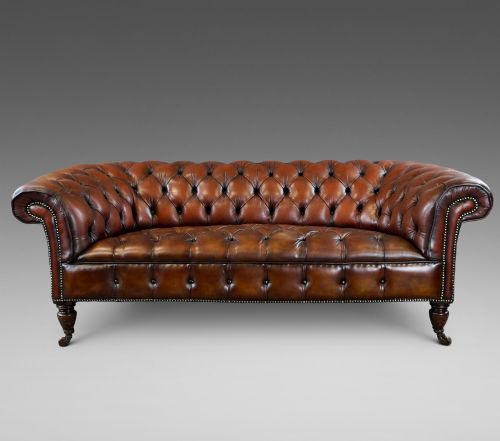
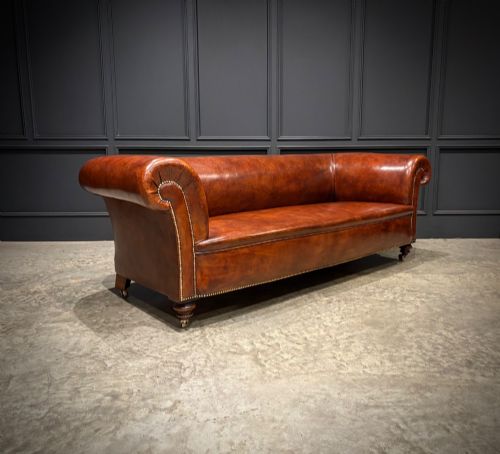


Club Arm Sofa
These club arm sofa examples combine deep leather upholstery with generous proportions, offering the heavy comfort every traditional library requires.
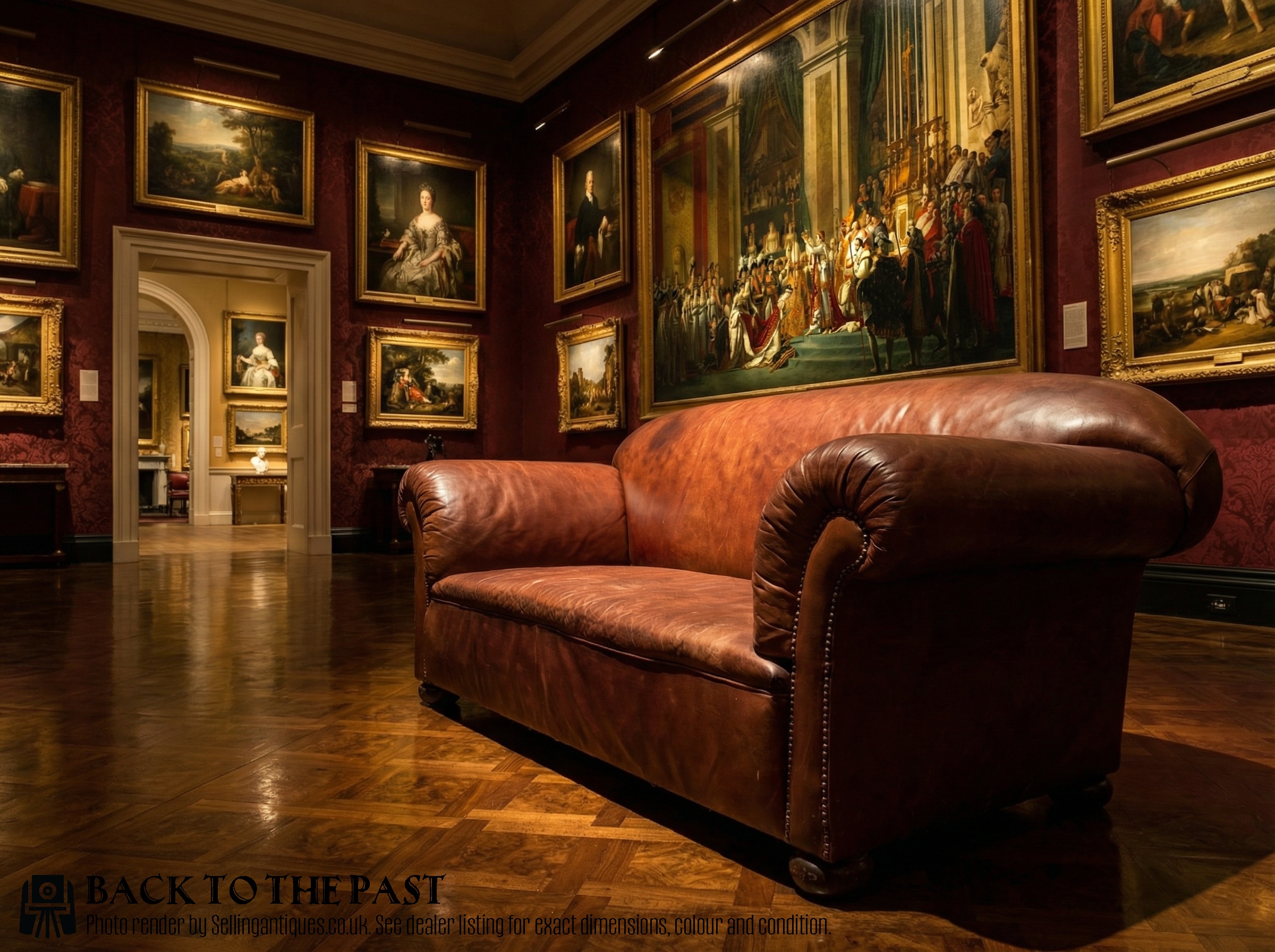
Club Arm Sofa
A club arm sofa represents the heavier end of traditional seating, taking many forms across Victorian, Edwardian, and Art Deco periods. Buyers searching for a club arm sofa commonly encounter heavy leather Chesterfields, drop arm designs, and gentleman's club moustache back pieces.
The pieces listed on this page span the mid nineteenth century through to the mid twentieth century, showing substantial wooden frames beneath hand-dyed or un-restored leathers. Sofas and settees dominate the selection, bringing substantial scale and deep buttoned comfort to a room.
How they were made
Makers built these frames using timber, mahogany, and hardwood to support heavy internal horse hair fills and deep buttoned upholstery. Leather forms the primary surface material, complemented by brass details and wooden legs.
Traditional construction methods relied on hand-dyed leathers and sturdy internal framing, creating dense pieces designed to withstand decades of heavy use. Re-upholstered examples occasionally incorporate specialist automotive leathers while retaining traditional sprung foundations.
Listings feature Victorian, Edwardian, and 1930s Art Deco periods, utilising leather, mahogany, hardwood, and horse hair fill.
What varies in quality
The distinction between ordinary and exceptional pieces lies in the integrity of the original frame and the depth of character in the leather. Untouched original leathers with natural patination command greater interest than heavily modernised surfaces.
Maker attribution alters the standing of a piece significantly, with workshop provenance from firms such as Howard and Sons or Hampton and Sons indicating superior cabinetwork and traditional stuffing techniques.
Hampton and Sons of Pall Mall·Howard and Sons·Maple and Co
The Club Arm Sofa Glossary
- Chesterfield
- A large upholstered sofa distinguished by arms and back of the same height, traditionally featuring deep buttoning. This form remains the cornerstone of antique leather seating.
- Drop arm
- A mechanical or hinged arm mechanism that lowers on one or both sides to create a daybed or lounging surface. This feature appears on specific nineteenth and early twentieth century club models.
- Horse hair fill
- A traditional stuffing material derived from equine manes and tails, valued for its resilience and breathability. It provides the firm yet yielding support found in period upholstery.
- Moustache back
- A distinctive curved wooden or upholstered top rail shape resembling a nineteenth century moustache. This decorative flourish is characteristic of gentleman's club seating.
- Patina
- The surface sheen and softening developed through decades of handling, exposure, and polishing. Collectors look for a rich, warm tone on aged leather.
Club Arm Sofa: Frequently Asked Questions
What is a club arm sofa?
A club arm sofa is a heavy, deep-seated piece of upholstered furniture traditionally finished in leather and built for a study or library. These sofas prioritise generous proportions and padded arms for sustained comfort.
Most examples seen in this tradition date from the Victorian era up to the Art Deco period, utilising sturdy hardwood frames and traditional horse hair stuffing.
How do I care for antique leather?
Antique leather requires regular dusting with a dry cloth and occasional treatment with appropriate conservation balms to prevent the hide from drying out. Keeping the leather away from direct heat sources preserves the natural oils.
Avoid modern chemical cleaners, as older hand-dyed leathers can react unpredictably to harsh solvents and commercial detergents.
Are these sofas comfortable for daily use?
These sofas offer firm, supportive seating due to traditional spring and horse hair construction methods. The deep seats and padded arms are designed for relaxed lounging.
While firmer than modern foam-filled furniture, period leather sofas adapt to regular use while maintaining their structural support.
How do I identify a Victorian chesterfield?
Victorian chesterfields are identified by substantial hardwood frames, heavy brass castors, and hand-stitched deep buttoning through the back and arms. The leathers on these pieces display a distinct natural grain and depth of colour.
Maker stamps on the wooden frame or brass hardware often confirm the exact period and workshop origin of the piece.