

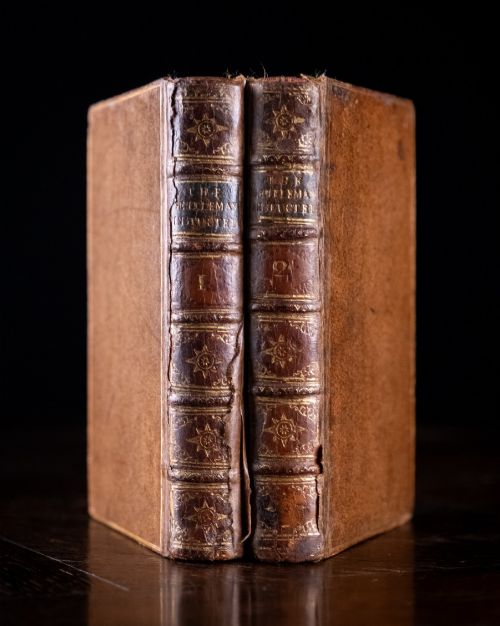
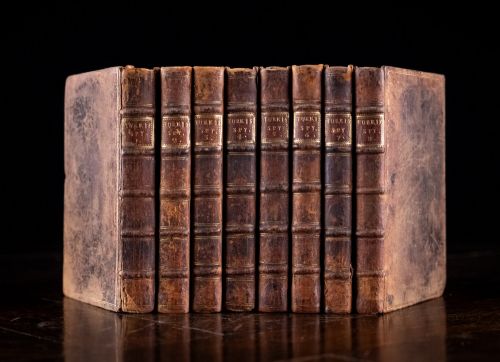
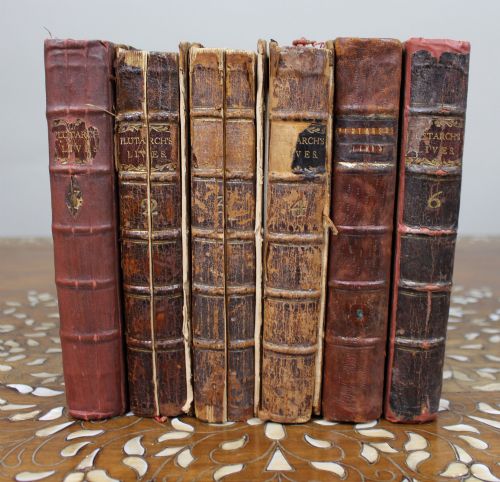
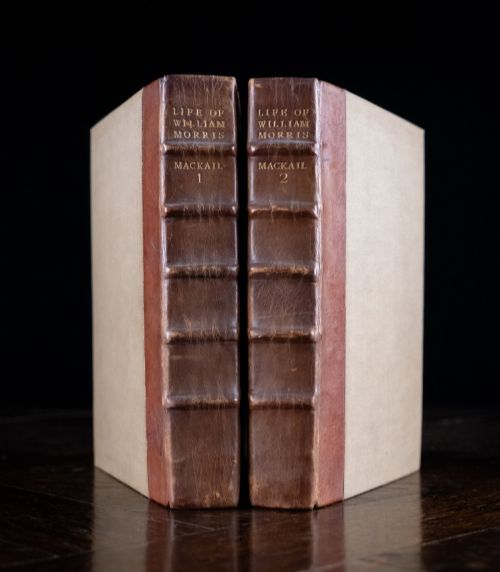



Leather Bound Library Books
Leather bound library books bring historical weight and tangible literature into a room through aged paper, tactile covers and structural presence.
Leather Bound Library Books
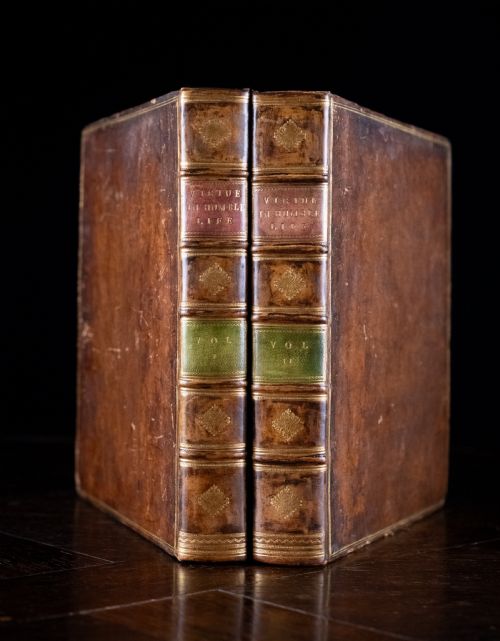
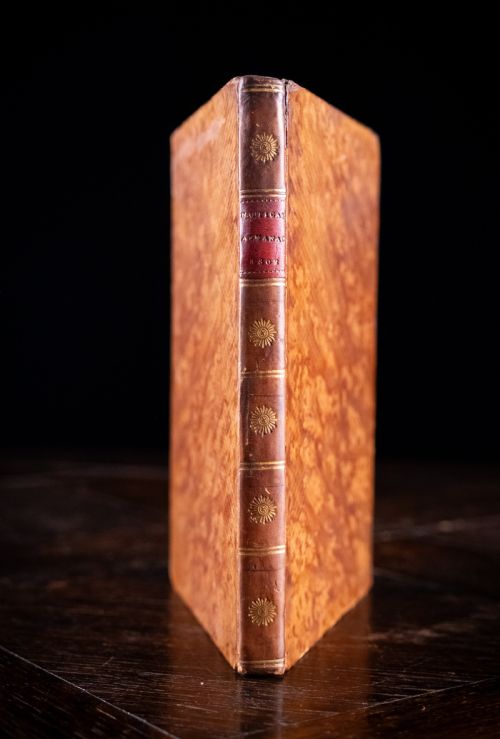
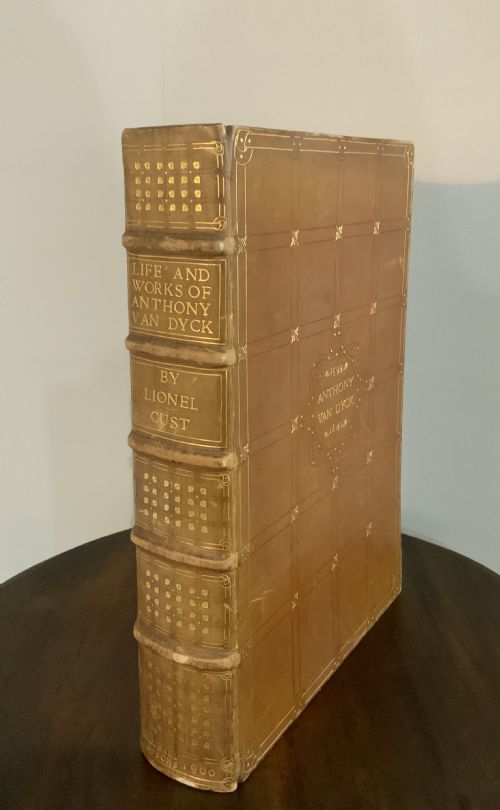
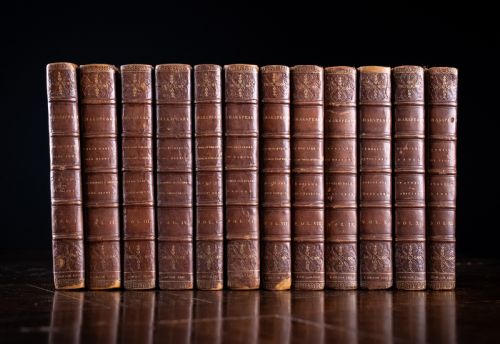
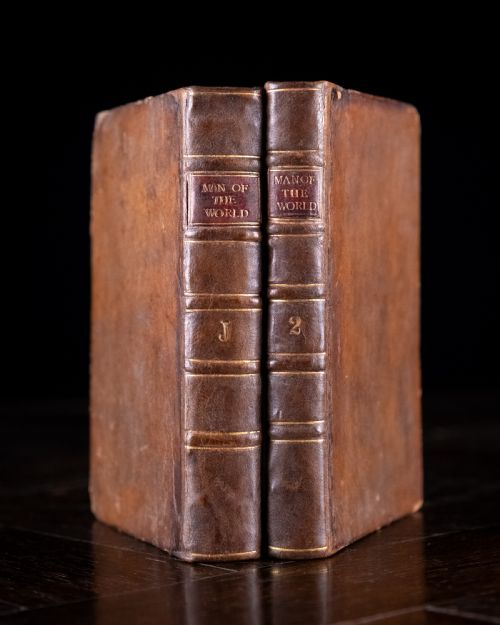
When searching for leather bound library books, a buyer encounters multi-volume sets of historic literature, single antiquarian volumes and decorative bound editions spanning the eighteenth, nineteenth and early twentieth centuries. The selection ranges from substantial runs of historical works and complete plays by Shakespeare to miniature volumes housed in dedicated bookcases.
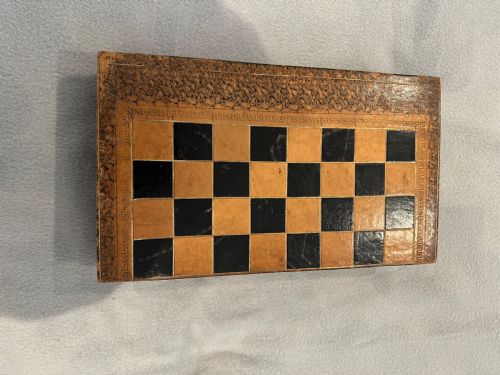
Beyond traditional reading matter, the category encompasses related functional objects inspired by the library aesthetic, including games boards designed to mimic faux books, table lamps and book tables utilising early twentieth-century French tooled leather.
The volumes originate predominantly from the Georgian, Victorian and Edwardian eras, reflecting both contemporary publishing practices and later custom rebinding by established binders.
Materials and construction
The bindings utilise durable natural hides such as calfskin and vellum, complemented by paper pages, cloth elements and wooden structures within associated items like games boards and tables.
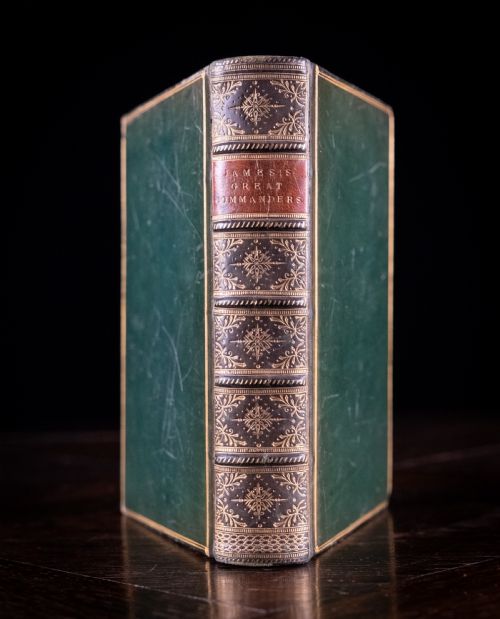
Decoration relies heavily on gold leaf and gilt tooling applied to the spines and covers to highlight titles, author names and ornamental borders, sometimes accompanied by bronze medals or illustrative plates.
Listings feature eighteenth and nineteenth-century editions bound in full leather, vellum and cloth, alongside decorative items like leather book lamps.
Separating the range
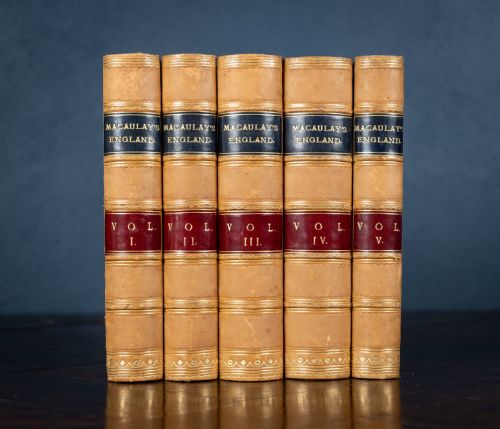
Quality in these volumes rests upon the uniformity of the bindings across a multi-volume set and the precision of the gold tooling applied to the leather. Matching sets bound by recognised practitioners demonstrate a higher level of workshop execution than mismatched single volumes assembled later.
The grade of the leather, the preservation of the paper internals and the integrity of the structural joints dictate the longevity and visual impact of the pieces on a shelf.
J. & R. Tonson·J. Wheble·Henry Young & Son
The Leather Bound Library Books Glossary
- Vellum
- A fine parchment prepared from the skin of a calf or other animal, frequently used for durable and pale book bindings. It provides a smooth surface that yellows gracefully with age.
- Calfskin
- A soft, supple leather derived from the skin of a calf, chosen historically for fine bookbindings because it takes tooling and decorative treatments exceptionally well.
- Gilt
- A thin layer of gold applied to the edges of pages or tooled directly onto leather bindings to create reflective lettering and decorative ornamentation.
- Antiquarian
- Pertaining to books, manuscripts and related objects valued for their age, rarity and historical significance rather than purely for modern reading utility.
Leather Bound Library Books: Frequently Asked Questions
How do I care for leather bound library books?
Keep the volumes away from direct sunlight and fluctuating humidity to prevent the leather from drying out and cracking over time. Dust the tops of the text blocks regularly with a soft brush while keeping the bindings upright and supported on the shelf.
Avoid applying modern chemical cleaners or oils to historic hides unless specifically formulated for antique book conservation. Allow natural air circulation around your library shelves to protect the paper and leather from dampness.
Are multi-volume sets usually complete?
Many surviving sets retain their original number of volumes, such as twelve-part Shakespeare collections or extensive runs of nineteenth-century novels. Checking the publication details against the stated volume count ensures completeness.
Some historical publications were issued progressively over several years, meaning uniform bindings often indicate a dedicated library commissioning rather than a single purchase date.
What is the difference between calfskin and vellum bindings?
Calfskin is a soft animal leather that accepts detailed gold tooling and darkens into rich browns and tans over centuries of handling. It offers a tactile, flexible cover suited to traditional library collections.
Vellum is a smoother, stiffer material prepared from un-split skins, retaining a pale, creamy tone that resists wear differently than tanned leather. Both materials denote quality production across Georgian and Victorian publishing.
Can I read antique leather bound books?
Most antique volumes remain structurally sound enough for careful reading, provided the internal paper pages and sewing cords are handled gently. Opening the books flat on a supported surface relieves tension on the spine hinges.
Fragile or heavily gilt-tooled historic editions are often appreciated as much for their visual contribution to a room as for active reading, preserving the delicate bindings for future years.