

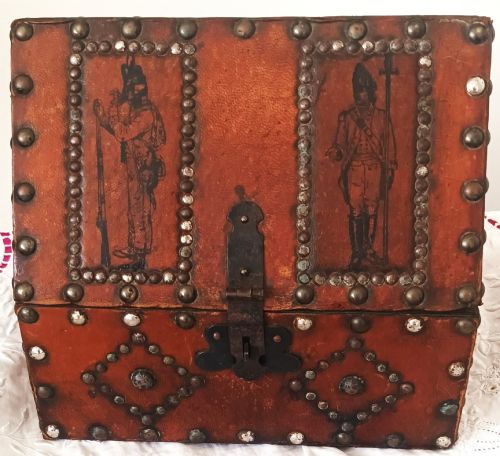


Leather Bound Coffer
When you handle a leather bound coffer, you hold a piece designed for travel, storage and display across centuries.
Leather Bound Coffer
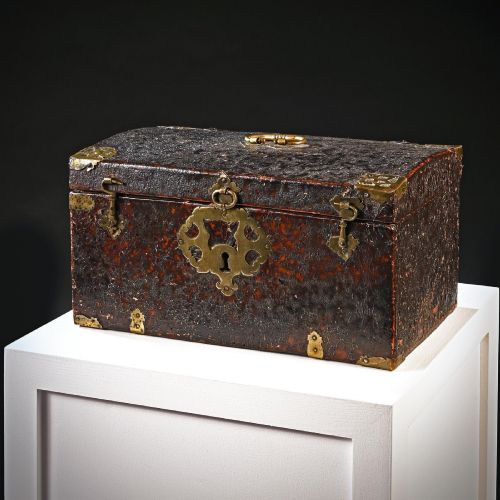
A leather bound coffer serves as a durable receptacle for travel, personal valuables and household storage, spanning forms from travelling chests to compact caskets. You encounter these storage pieces across the seventeenth, eighteenth and nineteenth centuries, including Regency, Georgian and Victorian periods.
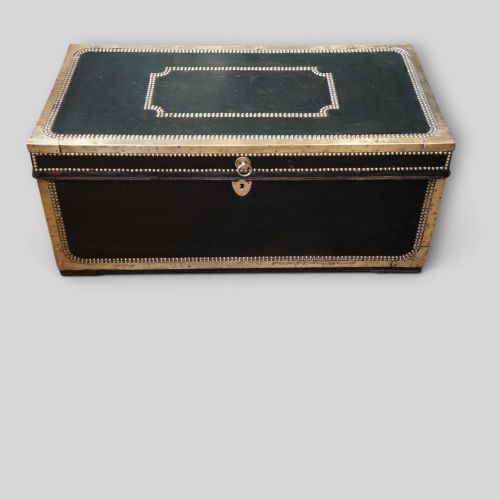
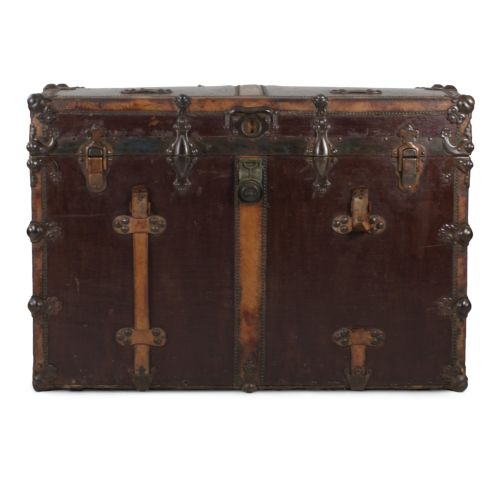
The most common examples on this page take the form of trunks, chests and travelling cases, frequently reinforced with metal or brass. Makers construct these vessels from wood, camphor wood or pine, then cover the exterior in leather, hide or canvas.
Origin points range from British workshops to Dutch, French, Chinese Export and Moroccan makers. Pieces such as dome top trunks, campaign cases and writing boxes demonstrate the varied scale and purpose found within this category.
Materials and Construction Techniques
Craftsmen build the core structure of wood, pine or camphor wood, providing a rigid frame for storage and travel. They cover this wooden base in leather, hide, canvas or Moroccan leather.
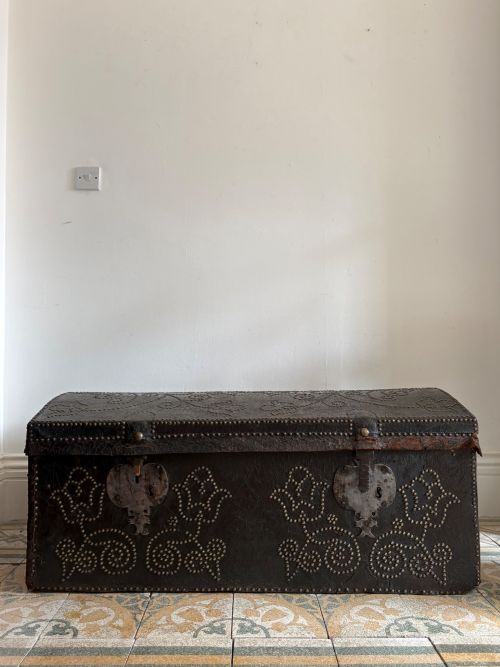
Makers reinforce the exterior using brass, iron and metal bands, studs and mounting plates to protect corners and edges from heavy transit. Specialised hardware such as carry handles and locks complete the construction of these trunks and chests.
Several travel trunks retain their original family initials, carrying the quiet mystery of nineteenth-century voyages across distant seas.
Evaluating Quality and Execution
Quality rests upon the integrity of the core wooden structure, the resilience of the leather or hide covering, and the secure fixing of brass and metal mounts. Superior pieces display precise studwork, robust handles and intact original linings.
The skill of the maker dictates the refinement of the piece, whether produced by established firms or specialised trade workshops. Surviving labels, maker marks and original fitted interiors elevate the standing of a trunk or chest.
Samuel Pratt·Chapple & Sons·Seabrook of St.Pauls·W Insall·Louis Vuitton
The Leather Bound Coffer Glossary
- Coffer
- A heavy chest or box used for storing valuables, money or precious items. These containers often feature secure lids and reinforced construction.
- Campaign case
- A portable trunk or chest designed for military officers and travellers on the move. Such pieces typically incorporate sturdy carrying handles and robust metal reinforcements.
- Dome top
- A curved lid design that sheds water and maximises internal storage volume. This profile appears frequently on seventeenth and eighteenth-century trunks.
- Camphor wood
- An aromatic timber utilised in overseas trade trunks to protect contents from insects and moisture. It forms the primary material for many Chinese Export pieces.
- Hide
- Animal skin prepared for use as a tough exterior covering on chests and luggage. It provides durability against the rigours of travel.
Leather Bound Coffer: Frequently Asked Questions
How do I date a leather bound coffer?
Dating relies on examining the construction methods, the style of the brass hardware, and the framing woods beneath the leather. Periods range from seventeenth-century travelling boxes to nineteenth-century campaign luggage.
Examining maker labels, lock mechanisms and regional characteristics further helps establish the era of manufacture.
Were these coffers meant for travel?
Many examples function specifically as travelling trunks, coaching chests or campaign cases designed to endure long journeys. Robust metal binding, sturdy carry handles and protective hide or leather exterior layers protect the contents during transit.
Other smaller forms, such as writing boxes and caskets, serve stationary desktop storage needs rather than rough transport.
What woods are found beneath the leather?
Framing materials include pine, oak and fragrant camphor wood, selected for their stability and weight. Camphor wood appears frequently in Chinese Export pieces intended for maritime trade.
The underlying wood provides the rigid structural support necessary to sustain heavy leather coverings and metal mounts.
How should I care for historic leather?
Keep the leather conditioned with appropriate museum-grade products to prevent drying and cracking over time. Avoid placing these pieces in direct sunlight or near heat sources.
Dust them gently with a soft cloth to protect both the leather exterior and the metal studs or brass fittings.