

Leather and Wood Chair
A leather and wood chair brings together structural timber and supple hides, offering enduring support for desks, dining rooms and libraries.
Leather and Wood Chair
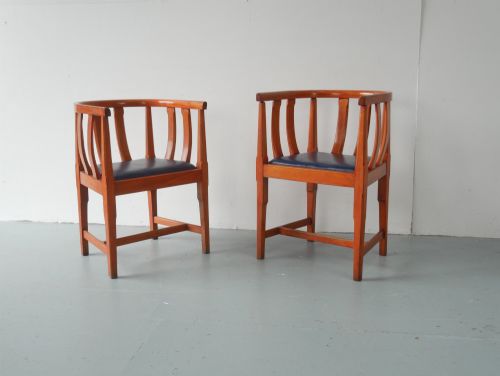
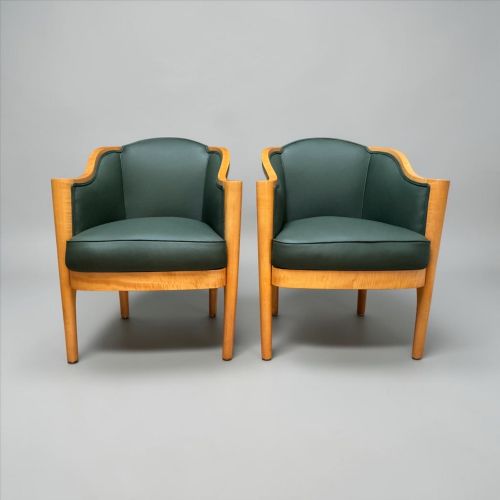
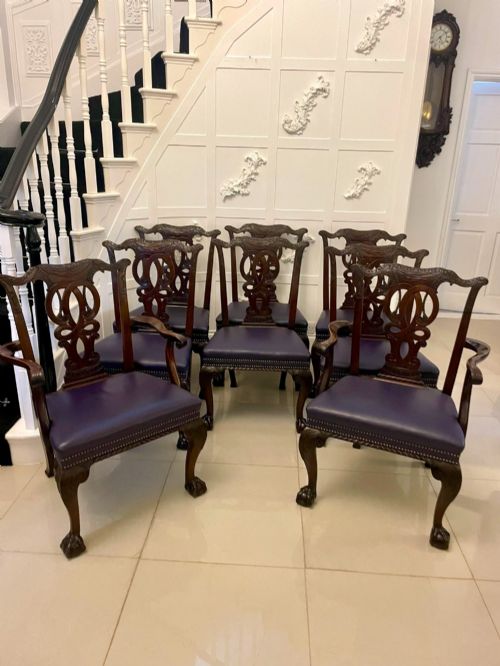
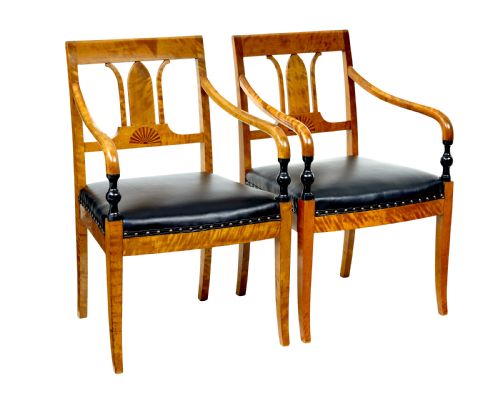
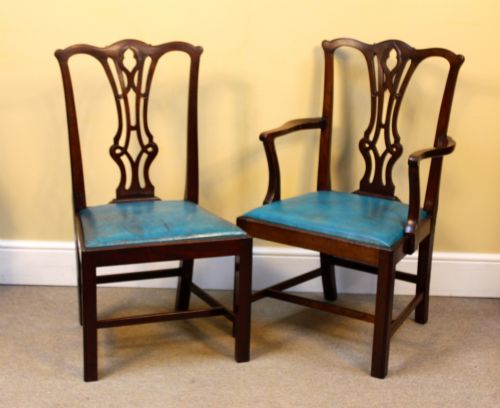
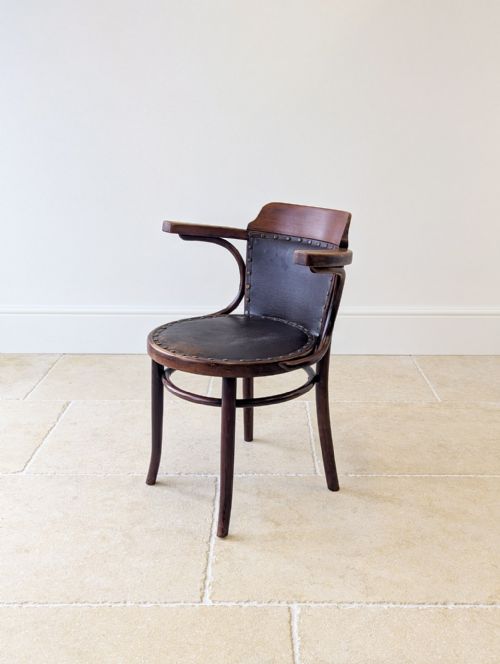
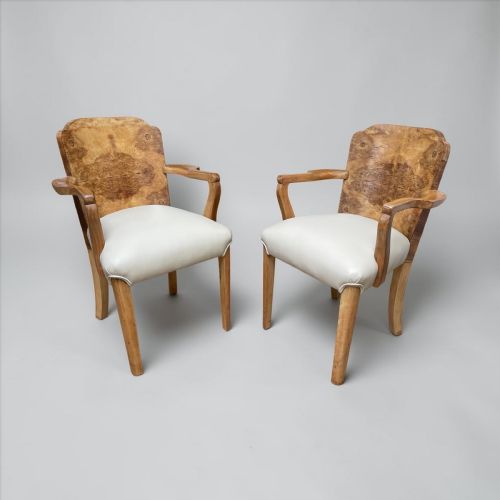
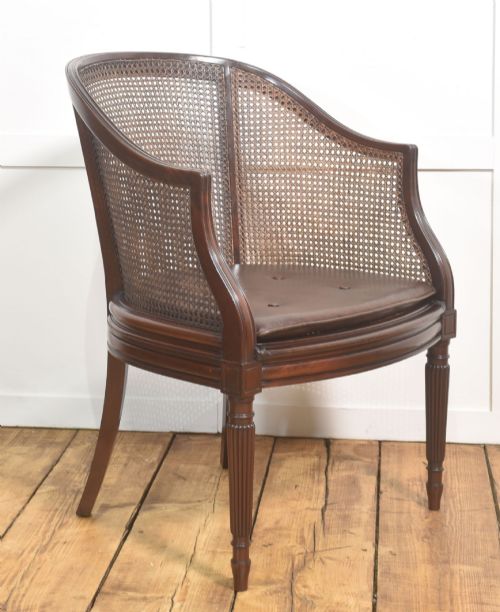
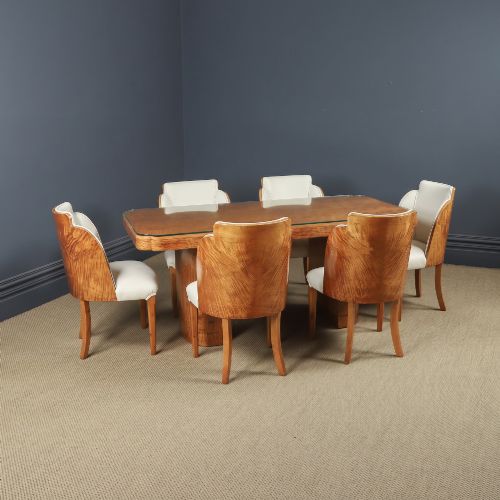
A leather and wood chair encompasses diverse seating forms, ranging from sturdy desk chairs and dining suites to occasional armchairs and revolving piano stools. The pieces span multiple eras, including Georgian, Victorian, Edwardian and Art Deco periods, alongside revival styles.
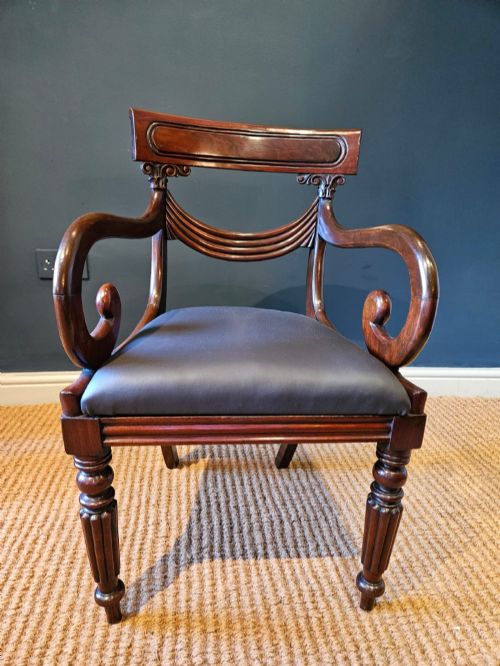
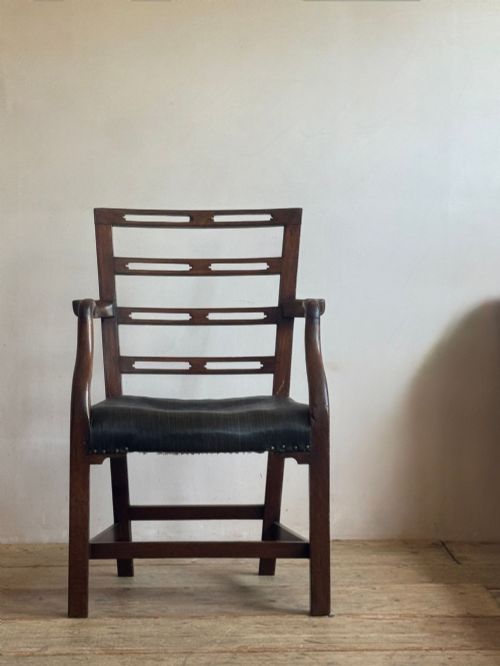
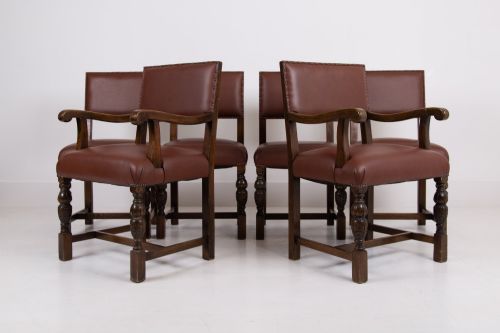
Dining chairs and desk chairs appear frequently, often constructed from solid timber with upholstered or fitted leather pads. Buyers encounter both single statement seats and matched sets intended for formal dining rooms.
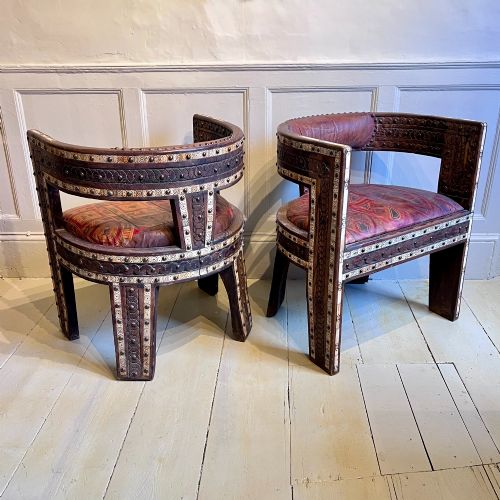
Origins vary widely, taking in English workshops, continental European makers and North African or Anglo-Indian variants. This breadth allows collectors to match seating to specific historical interiors or modern rooms.
Materials and construction
Makers relied primarily on hardwoods such as mahogany, oak, walnut, birch and satinwood for the structural frames, utilising brass fittings and carved details for added ornamentation. Timber components were shaped through traditional joinery, turning and bentwood techniques.
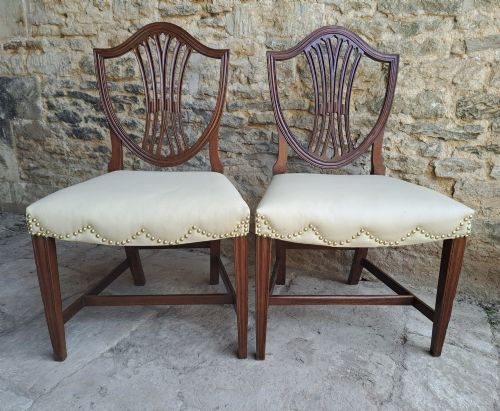
Hides were stretched over frames or drop-in seats, frequently secured with brass tacks or borders. The combination of dense timber and durable leather provided the resilience required for daily use in offices and dining spaces.
Leather and Wood Chair Retail Price Guide 2026
Typical asking prices for leather and wood chair among the pieces listed under this phrase on Sellingantiques today, from the lower quarter to the upper quarter. They describe what is for sale here now, not the wider market.
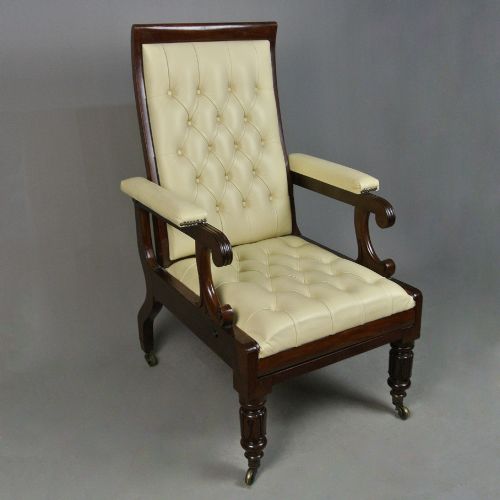
Some chairs hid patent reclining mechanisms inside mahogany frames so gentlemen could nap discreetly after heavy Georgian dinners.
Judgments of craftsmanship
The calibre of a piece rests upon the crispness of the timber carving, the selection of figured veneers and the integrity of the joinery. Superior examples maintain rigid frames and balanced proportions without relying on heavy modern reinforcement.
The treatment of the leather surface also marks out finer items, where natural tanning and patination display depth rather than flat uniformity. Design ambition, such as complex revival styling or patented reclining mechanisms, separates standard utility seating from masterwork commissions.
Maurice Adams·Thonet·Liberty and Co·Hary and Lou Epstein
The Leather and Wood Chair Glossary
- Chippendale style
- A design framework drawing on the 18th-century pattern books of Thomas Chippendale, often characterised by carved mahogany frames and interlaced ribbon backs.
- Bentwood
- A technique of steaming timber until pliable, allowing makers to bend wood into smooth curves for chairs like those produced by Thonet.
- Occasional chair
- A light, movable seat designed for intermittent use in sitting rooms or bedrooms rather than constant formal seating.
- Chaise longue
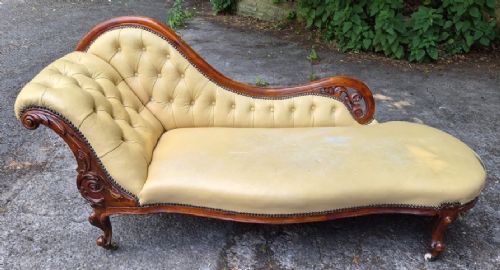
- An elongated upholstered seat intended for reclining, combining timber framing with extended support.
- Biedermeier
- A Central European style from the 19th century prioritising clean lines, utilitarian comfort and native woods over excessive ornamentation.
Leather and Wood Chair: Frequently Asked Questions
How do I care for antique leather?
Antique leather benefits from occasional light conditioning to prevent the hide from drying and cracking over time. Keeping the chair away from direct heat sources preserves the natural supple quality of the material.
Dusting the wooden frame regularly with a dry cloth maintains the finish without introducing moisture that could harm aged joints or veneers.
Can I use these chairs daily?
Most of these pieces were built for functional use in dining rooms, offices and libraries, meaning sturdy frames tolerate regular sitting. Checking that the joints remain firm ensures safe use for everyday routines.
Softer woods or delicate occasional chairs require a gentler touch compared to heavy oak or mahogany dining suites designed for heavy traffic.
How do I date a wooden frame?
Dating relies on observing tool marks, timber choices and construction methods consistent with periods like the Georgian era or the 1930s Art Deco movement. Stylistic cues such as turned legs or carved splats offer reliable clues to the decade of manufacture.
Matching the wood type to documented manufacturing trends helps narrow down the origin when maker marks are absent.
Are desk chairs adjustable?
Certain desk chairs incorporate swivel mechanisms or revolving seats, particularly those originating from the Victorian period or later. These functional additions allowed workers to turn easily between different surfaces.
Fixed-leg models offer stable writing support but lack the mobility found in swivel variants.