

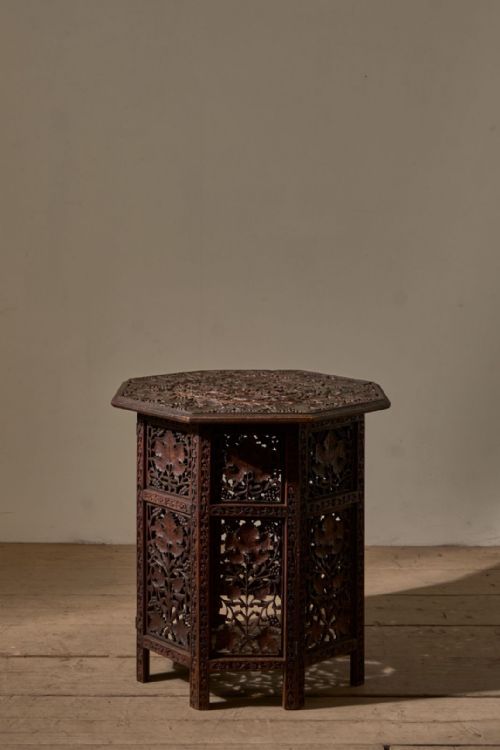
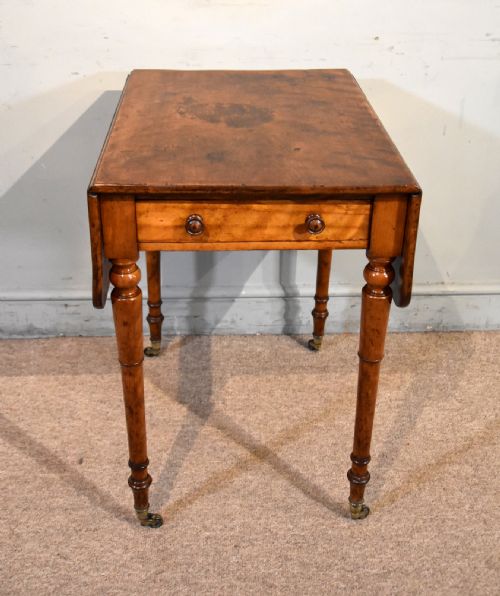


Leaf Carved Tea Table
A leaf carved tea table brings functional elegance to a room, offering adaptable surfaces through drop leaves and folding mechanisms.
Leaf Carved Tea Table
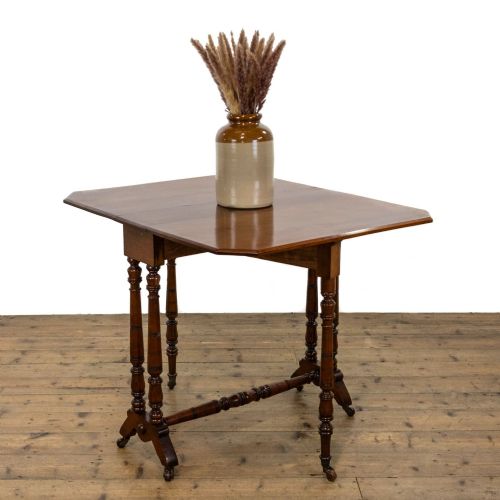
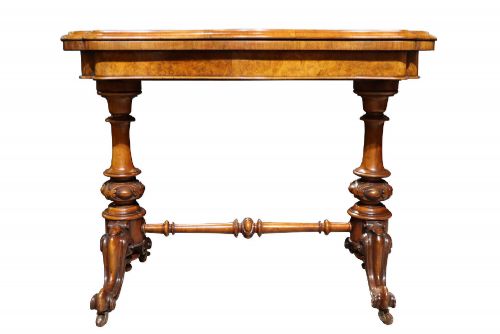
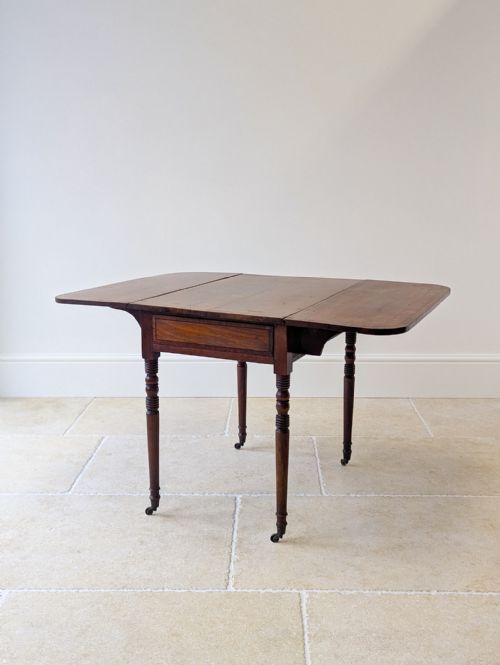
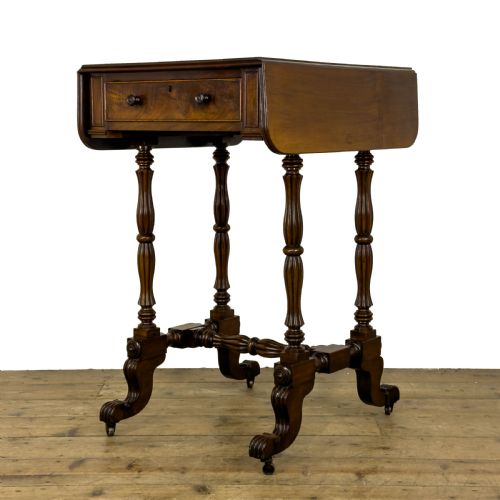
A leaf carved tea table spans several distinct periods, with Victorian, Regency, and Georgian examples appearing frequently alongside Edwardian and 19th-century pieces. These items take many forms, including Sutherland tables, Pembroke tables, card tables, and occasional side tables.
The defining characteristic across these varied forms is the presence of drop leaves or folding actions, often paired with carved wooden supports, acanthus leaf feet, or specific leaf motifs. Buyers encounter walnut, mahogany, and burr walnut most often, supplemented by rosewood, teak, and padauk.
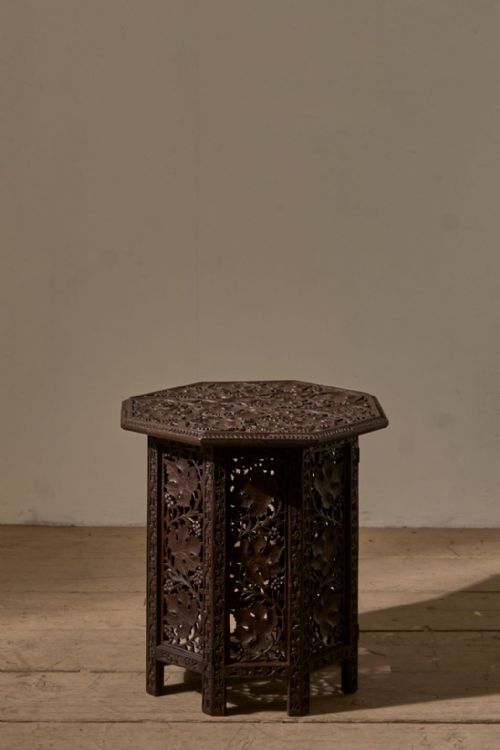
Origin and regional style vary widely within this category, stretching from English workshops to Anglo-Indian colonial production and continental revival styles. Tables range from compact baby Sutherland models to larger occasional pieces designed for flexible use in domestic interiors.
Materials and construction methods
Cabinetmakers utilised dense hardwoods such as mahogany, walnut, and burr walnut for their stability and grain pattern, occasionally employing exotic timbers like padauk and rosewood. These woods formed the primary structure of the top, legs, and drop leaves.
Carving was executed directly into the solid timber or onto applied mouldings, bringing naturalistic leaf motifs to table supports, legs, and feet. Mechanics such as scissor actions, swivel tops, and folding hinges allowed leaves to drop and rise smoothly.
Leaf Carved Tea Table Retail Price Guide 2026
Typical asking prices for leaf carved tea table among the pieces listed under this phrase on Sellingantiques today, from the lower quarter to the upper quarter. They describe what is for sale here now, not the wider market.
The listings show walnut as the dominant material for these tables, closely followed by mahogany and burr walnut across the 19th century.
Distinguishing quality in craftsmanship
The distinction between standard examples and superior pieces rests in the crispness of the woodcarving and the selection of timber veneers. Finely figured burr walnut and carefully matched mahogany grains indicate higher workshop standards.
Structural integrity of moving parts defines everyday utility, as robust hinge mechanisms and smoothly operating drop-leaf supports separate enduring tables from those prone to wear. The precision of joinery around the folding actions and drawer fittings dictates overall execution.
Johnstone and Jeanes
The Leaf Carved Tea Table Glossary
- Sutherland table
- A narrow drop-leaf table with exceptionally wide leaves that fold down almost vertically, supported by swinging gate legs. This design maximises floor space when closed.
- Pembroke table
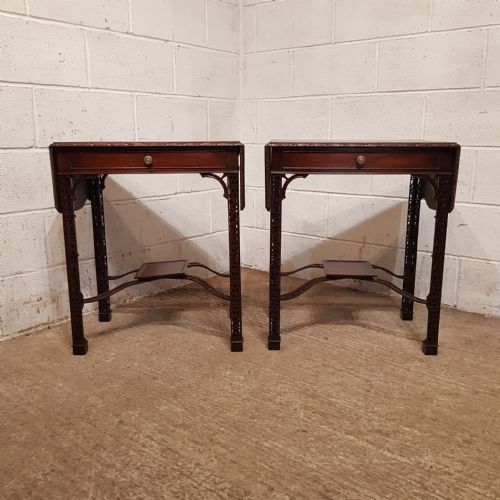
- A small rectangular table featuring two hinged drop leaves on opposite sides and frequently incorporating one or two drawers. It emerged in the 18th century as a versatile breakfast or writing surface.
- Card table
- A folding table designed for gaming, featuring a top that opens out to reveal a baize-lined surface. Many examples include a pivoting or swivel mechanism to support the opened leaf.
- Padauk
- A dense tropical hardwood displaying a reddish hue, utilised extensively in Anglo-Indian furniture production. It accepts intricate hand carving exceptionally well.
- Acanthus leaf
- A classical ornament modelled on the foliage of the Mediterranean plant, frequently carved onto furniture feet, knees, and table supports during the Georgian and Victorian eras.
Leaf Carved Tea Table: Frequently Asked Questions
What is a Sutherland table?
A Sutherland table is a form of drop-leaf table characterised by its very narrow central fixed top and exceptionally wide leaves. When lowered, the leaves hang almost vertically, making the table exceptionally compact.
Gate legs swing out from beneath the frame to support the leaves when raised. This clever mechanism allowed Victorian households to deploy a full-sized dining or tea surface in a small space.
How do I use one in a modern room?
These tables function well as versatile accent pieces against a wall with their leaves dropped, or pulled into the centre of a room for entertaining. Their folding designs allow owners to expand the surface area instantly.
Placing a lamp, books, or decorative objects on the fixed centre section preserves usable space on the leaves. The varied woods and carvings complement both traditional and contemporary interiors.
How do I tell Victorian from Georgian?
Georgian tables, produced during the 18th century, typically display rectilinear proportions, denser mahogany timbers, and restrained classical carving. Their construction focuses on structural simplicity and elegant plain surfaces.
Victorian and later 19th-century pieces often embrace more elaborate mechanics like scissor actions and swivel tops, utilising burr walnut veneers and heavy foliate carving. The variety of wood species expands significantly in this later period.
What distinguishes an Anglo-Indian table?
Anglo-Indian tables reflect the crossover between British furniture forms and traditional Indian craftsmanship, often constructed from padauk or rosewood. They frequently feature dense, deep-relief leaf and floral motifs carved across the entire surface.
These pieces were produced in colonial workshops during the 19th century for export or British residents abroad. Their distinct timber choice and ornamental density set them apart from standard domestic English production.