








Leaded Glass Door
A leaded glass door brings architectural character into a room, joining small panes of glass with metal cames to let in light while creating privacy.
Leaded Glass Door
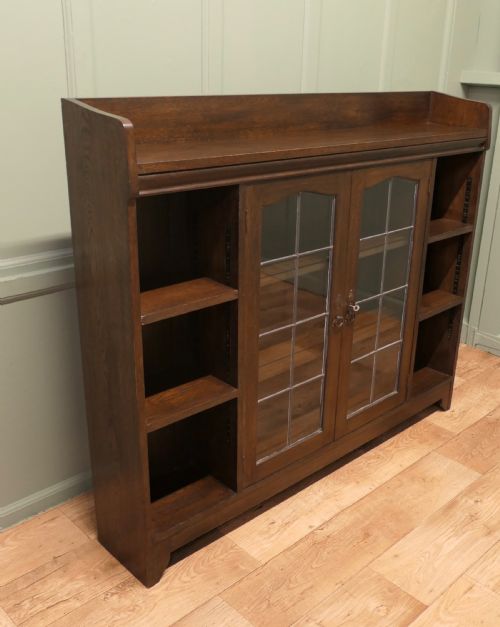
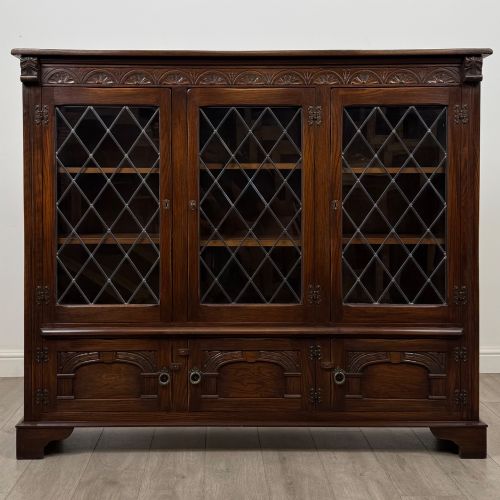
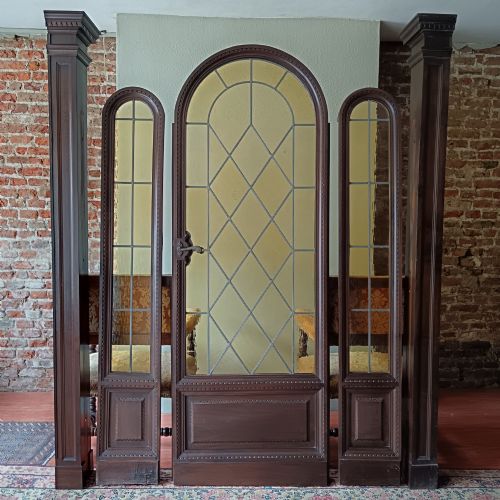
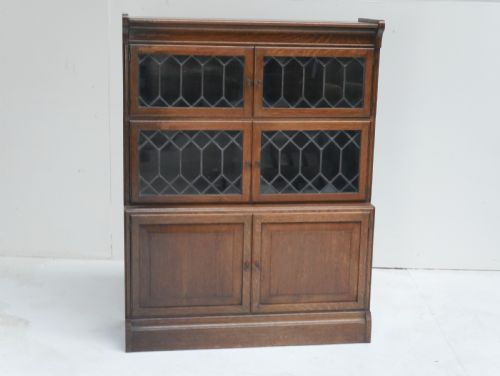
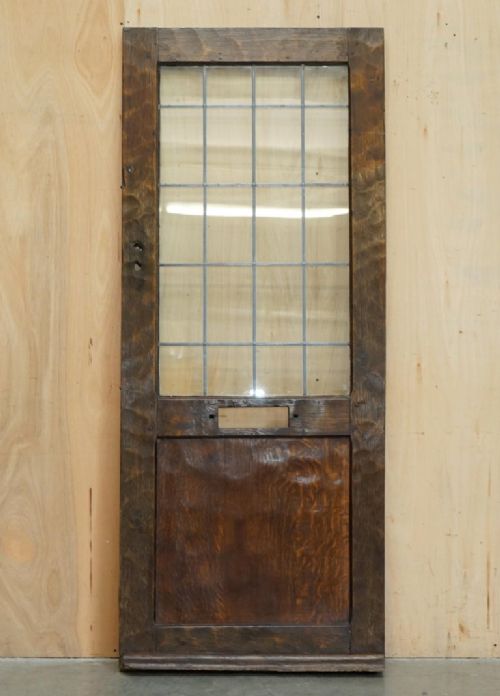
When you search for a leaded glass door, you find architectural fittings and cabinetry that incorporate soldered metal joints holding individual glass panes. The selection ranges from architectural salvage doors intended for interior or exterior openings to glazed bookcases and display cabinets featuring similar joinery.
The pieces span the late nineteenth century through to the 1930s, encompassing Edwardian, Arts and Crafts, Art Nouveau, and Jacobean Revival styles. You are most likely to encounter oak or pine constructions housing clear, stained, or hand-painted glass panels.
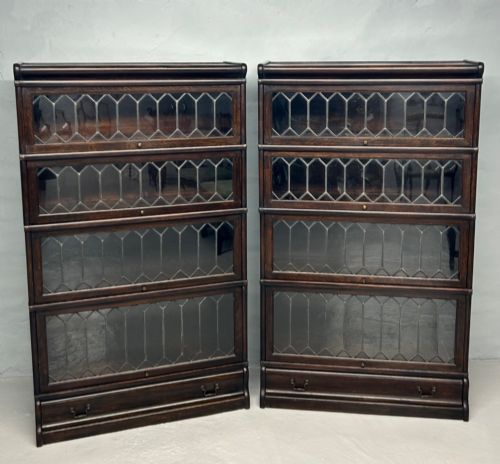
Bookcases and sectional barrister cabinets share the same material language as the architectural doors, utilising framed glass panels to protect books whilst maintaining visibility. Many items display floral motifs, rose designs, or geometric leading typical of the early twentieth century.
How they were made
Craftsmen built these pieces using solid timbers such as oak, mahogany, walnut, and pine for the main frames and cabinetry. Iron and brass hardware provided structural support and functional operation for doors and cabinet fronts.
The characteristic glazing relied on lead cames, which are narrow strips of lead shaped in profile to hold individual pieces of glass securely together. Artisans soldered the joints of the lead network before cementing the panels to ensure rigidity and weather resistance in architectural settings.
Listings feature oak, pine, mahogany, and walnut timbers paired with lead, brass, and iron hardware across multiple decades.
What varies in quality
The standard of a leaded glass door rests upon the complexity of its design and the integrity of its construction. Pieces featuring hand-painted scenes, bevelled sections, or intricate floral rose designs represent a more demanding level of craftsmanship than plain geometric leading.
The choice of timber and the weight of the framing timber also dictate the caliber of the piece. Substantial oak and mahogany frames with tight joinery distinguish finer furniture and architectural salvage from simpler pine utility cupboards.
Globe Wernicke·Minty·Robert Mouseman Thompson·Lambs of Manchester
The Leaded Glass Door Glossary
- Came
- A slender, grooved strip of lead used to hold together individual pieces of glass in a window or door. These channels form the structural grid supporting the entire design.
- Barrister bookcase
- A sectional wooden bookcase featuring glazed doors that swing upward and inward on pivoting metal arms. These modular units were designed for easy stacking and office utility.
- Arts and Crafts
- A design movement emphasising handcraftsmanship, simple forms, and natural materials. Pieces from this tradition often feature honest timber construction and stylized plant motifs.
- Stained glass
- Glass coloured by the addition of metallic oxides during its manufacture or painted and fired on the surface. It appears frequently in domestic doors and windows from the Edwardian period.
Leaded Glass Door: Frequently Asked Questions
How do I date a leaded door?
Dating relies on timber choice, hardware style, and the artistic movement evident in the leading. Edwardian and Art Nouveau examples often feature organic floral motifs, whereas 1930s pieces lean towards simpler geometric arrangements.
Examination of the underlying wood and construction joints helps confirm the era. Oak and mahogany frequently indicate earlier nineteenth-century or Arts and Crafts origins, while lighter pine builds often align with interwar domestic architecture.
Can these doors be used outside?
Many items originating as exterior front or back doors are built to withstand weathering. However, internal doors and cabinet panels require careful assessment before exterior installation.
Architectural salvage pieces meant for internal vestibules or room dividers may lack the thickness or weatherproofing required for exposed outdoor environments.
How are barrister bookcases constructed?
Barrister bookcases consist of stacked modular wooden sections with individual glazed doors. Each shelf tier operates independently with a mechanism allowing the door to slide up into the recess above the books.
This stacking design enabled offices and libraries to expand their shelving vertically without purchasing entirely new cabinetry.
What is the difference between cames and glazing bars?
Glazing bars are wooden or metal strips that divide a large window frame into smaller sash compartments. Cames are soft lead channels used specifically to join smaller pieces of art or plain glass together.
Leaded glass relies on soldered lead cames rather than timber muntins to create intricate patterns and figurative scenes.