



Leaded Glass Bird Panel
A leaded glass bird panel brings shifting daylight and avian motifs into a room.
Leaded Glass Bird Panel
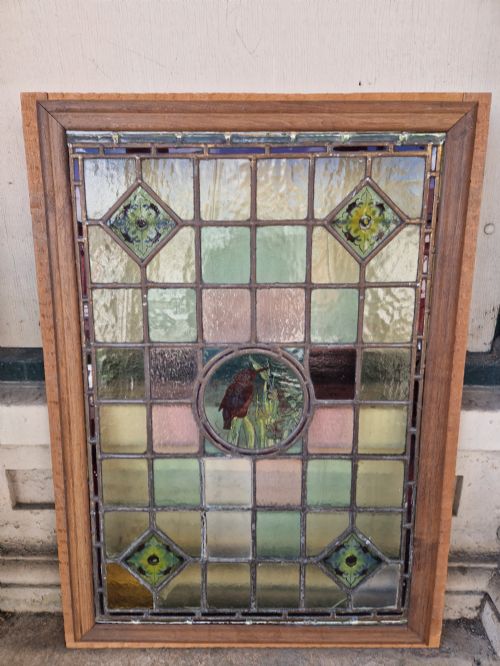
A leaded glass bird panel forms an architectural feature or standalone window depicting avian subjects in coloured and clear panes. These works appear across the Victorian, Edwardian, and Arts and Crafts periods, showing birds on branches, in flight, or within scenic compositions.
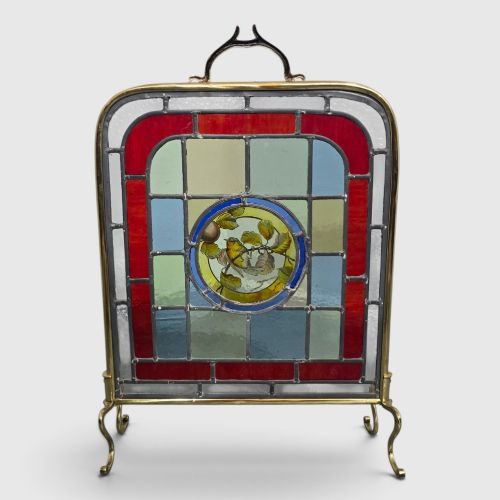
Buyers encounter these works configured as stained glass windows, fire screens, and architectural salvage pieces. Common variants incorporate amber bullseyes alongside the leadwork to accent the primary bird design.
Origins stretch from the late nineteenth century through to nineteen-ten, capturing the decorative shifts from elaborate Victorian ornamentation to the cleaner lines of the Arts and Crafts movement.
How they were made
The cut pieces were held together within channels of flexible lead cames, soldered at the joints to form a rigid matrix. Wooden frames constructed from pine, softwood, or brass structural surrounds provided stability for mounting or freestanding use.
Leaded Glass Bird Panel Retail Price Guide 2026
Typical asking prices for leaded glass bird panel among the pieces listed under this phrase on Sellingantiques today, from the lower quarter to the upper quarter. They describe what is for sale here now, not the wider market.
Several windows feature amber bullseyes placed strategically to act as glowing suns behind the branches where the birds sit.
What varies in quality
Quality rests in the complexity of the avian depiction and the harmony of the surrounding glass selection. Panels featuring detailed hand-painted elements or textured amber bullseyes demonstrate greater ambition than purely geometric or plain compositions.
The integrity of the structural metalwork and the surrounding framing materials, whether sturdy brass or solid pine wood, dictate the overall durability and visual finish of the piece.
The Leaded Glass Bird Panel Glossary
- Came
- A slender strip of lead, cast with an H-shaped profile, used to hold together adjacent pieces of glass in a panel. These channels provide the flexible skeleton that defines the entire pictorial design.
- Bullseye
- A small, circular piece of glass featuring a central concentric thickening, formed during the traditional glassblowing process. These are frequently incorporated into period windows to create textural contrast.
- Stained glass
- Glass that has been coloured by the addition of metallic salts during its manufacture, rather than painted on the surface. This material forms the durable foundation of traditional decorative panels.
- Architectural salvage
- Building elements rescued from older structures prior to demolition for decorative reuse. These items retain their original mounting hardware and period patina.
- Fire screen
- A portable domestic screen placed in front of a fireplace grate when not in use. They frequently utilise decorative glass panels within brass or wooden frames to provide an aesthetic room divider.
Leaded Glass Bird Panel: Frequently Asked Questions
How do I hang a heavy glass panel safely?
Secure the piece using structural fixings attached directly to the surrounding timber or metal frame rather than relying on the lead cames alone. Ensure the weight is evenly distributed across multiple points to prevent bowing.
For window installations, professional reglazing into an existing window opening guarantees structural support against wind pressure and daily handling.
Can these panels be used as interior room dividers?
These works function effectively as internal dividers when mounted securely within custom timber or metal partitions. They allow light to pass between spaces while displaying the avian motif from both rooms.
Protect the lead matrix from physical knocks by positioning them away from high-traffic zones or busy doorways.
How do I clean antique stained glass without damage?
Wipe the surface gently with a soft, lint-free cloth dampened with warm water and mild dish soap. Avoid harsh chemical cleaners or abrasive pads that can strip hand-painted details or discolour the lead cames.
Dry the metal joints thoroughly after cleaning to prevent moisture retention and subsequent corrosion of the solder.
What is the difference between Victorian and Edwardian styles here?
Victorian panels often lean towards ornate compositions and rich, densely packed colour palettes. They reflect the heavy ornamentation popular during the nineteenth century.
Edwardian and Arts and Crafts examples generally favour simpler motifs, lighter backgrounds, and naturalistic bird scenes that celebrate craftsmanship and material honesty.