


Lead Glass Carafe
A lead glass carafe brings weight and sparkle to the table, and collectors prize these heavy vessels for their brilliant clarity and period craftsmanship.
Lead Glass Carafe
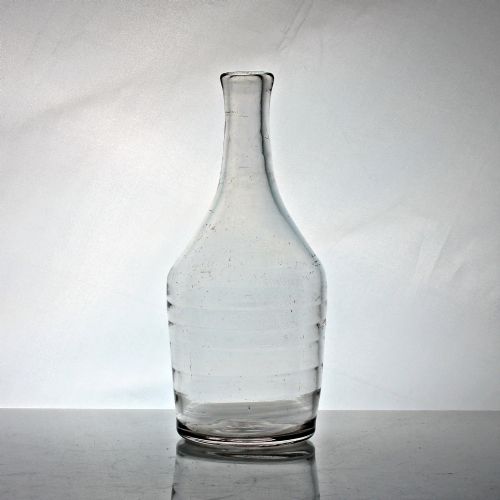
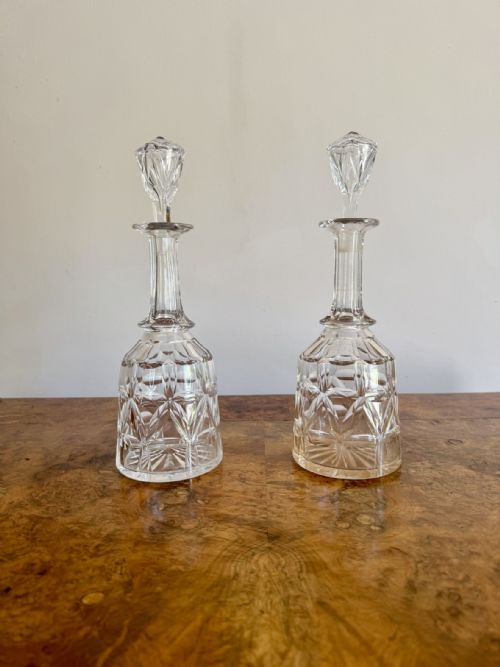
When you search for a lead glass carafe, you encounter heavy functional vessels designed to hold water, wine, or spirits on the dining table. These pieces span centuries of British manufacture, appearing across Georgian, Regency, Victorian, and Edwardian periods.
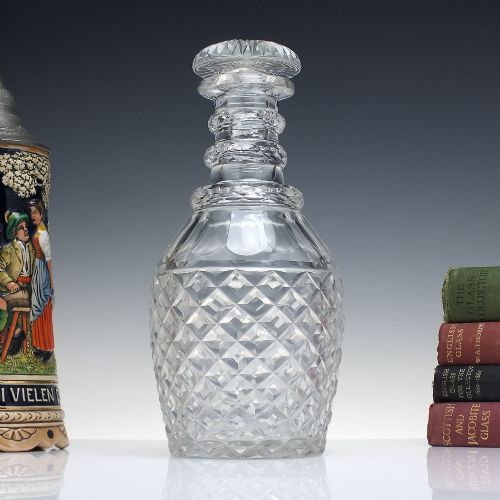
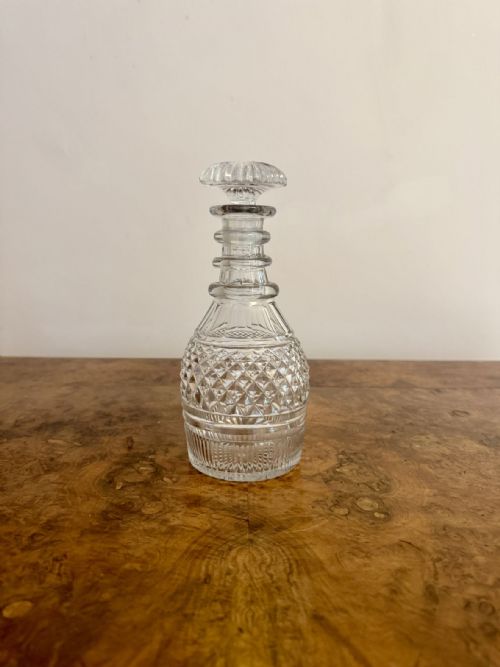
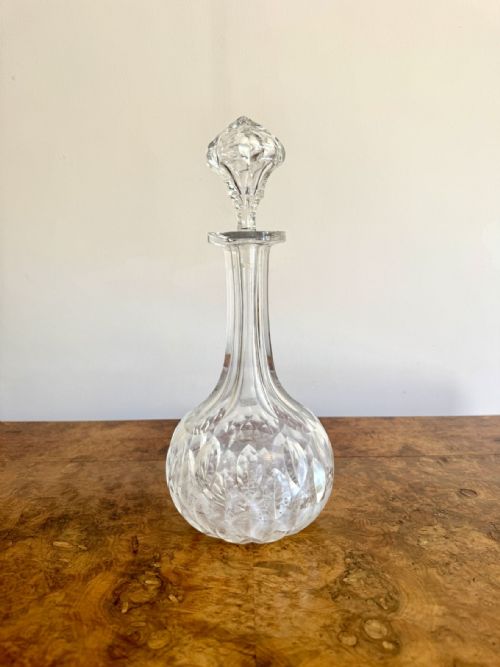
The most common forms on this page include decanters and ewers shaped with shoulders, rings, or pillar cuts. Pieces range from early shoulder shapes with Lynn rings to later Edwardian spirit sets.
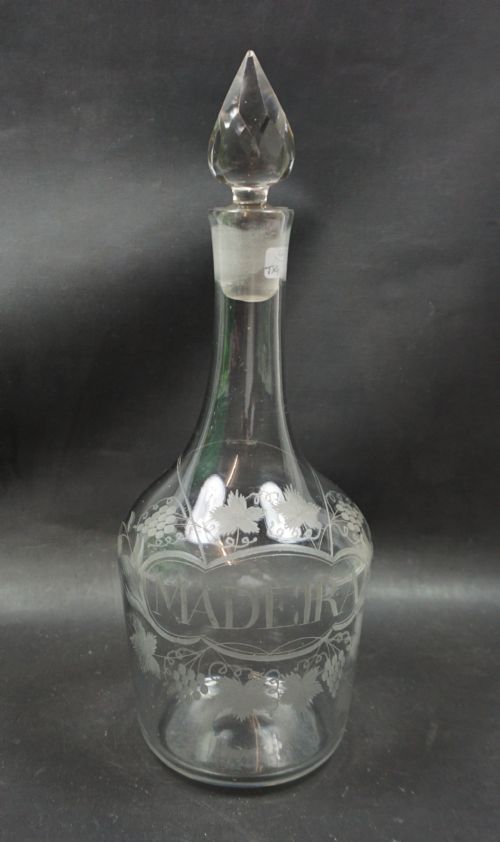
Examples appear in clear lead crystal, cut glass, and occasionally coloured glass such as amethyst. Many retain original engraving denoting contents like Madeira, brandy, or whisky.
How they were made
Maker workshops utilised heavy lead glass and crystal batches that allowed deep wheel-cutting and optical blowing. Glassblowers formed the basic vessel shape by free-blowing or moulding before applying collars, rings, or handles while hot.
Craftsmen then finished the surfaces through extensive facet cutting, pillar cuts, and prism cutting to catch the light. Engravers added wheel-cut labels and decorative motifs by hand.
Some nineteenth-century spirit decanters arrived with built-in personality, boldly demanding brandy or whisky from their engraved glass labels.
What varies in quality
Quality rests upon the weight of the metal, the crispness of the facet cutting, and the overall balance of the form. Superior pieces exhibit sharp, clean-cut prisms and rings that feel substantial in the hand.
James Powell
The Lead Glass Carafe Glossary
- Lynn ring
- A horizontal encircling rib on the neck of an 18th-century decanter, often rounded or sharp in profile.
- Pillar cut
- A series of wide, flat vertical facets ground into the body of a vessel to create heavy reflective panels.
- Mell decanter
- A mallet-shaped bottle form with a wide base and tapering body popular in Georgian periods.
- Shoulder carafe
- A vessel featuring a sharply angled shoulder below a narrow neck, typical of earlier serving bottles.
- Optically blown
- A technique where molten glass is blown into a ribbed mould to impart a patterned internal fluting.
Lead Glass Carafe: Frequently Asked Questions
How do I date a glass carafe?
Dating relies on observing the silhouette, neck rings, and cutting styles. Earlier pieces from the 18th century often feature mallet or shoulder shapes with applied neck rings.
Later Victorian and Edwardian examples tend to display heavier overall pillar or diamond cutting, alongside machine-polished facets.
What is the difference between a carafe and a decanter?
Historically, carafes served water or table beverages directly, whereas decanters held wine and spirits for pouring. Decanters frequently include fitted stoppers, while carafes often remain open-necked or paired with jugs.
In modern antique terminology, the terms frequently overlap depending on the maker's original function.
Why are some decanters engraved with names?
Engraved labels such as Madeira, brandy, or whisky identified the specific contents intended for the vessel on the dining table. Workshops applied these wheel-engraved titles to assist servants during formal dinners.
Such inscriptions help collectors confirm the original domestic use of the piece.