


Late Victorian Work Table
A late victorian work table is a practical sewing and writing piece, offering clever compartments beneath the top for threads and tools.
Late Victorian Work Table
When you search for a late victorian work table, you encounter nineteenth-century occasional pieces designed primarily for sewing, writing, and small crafts. These items frequently combine compartments with folding tops or fitted interiors, serving multiple domestic purposes in one compact form.
The pieces on this page span the 1880s, 1890s, and 1900, reflecting the later decades of the Victorian era. Alongside traditional sewing tables, the evidence includes related side tables, occasional tables, and writing tables from this period.
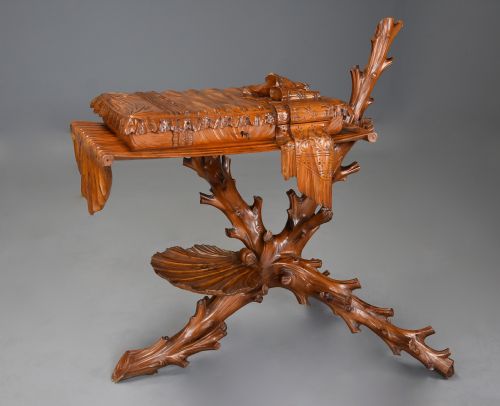
Makers and makers' workshops utilised various woods during this era, producing tables in rosewood, mahogany, walnut, birch, and pine. Some examples incorporate marquetry inlay, hand painting, or poker work, showing diverse stylistic influences from Sheraton Revival to Italian Grotto.
How they were made
Cabinet makers constructed these tables using solid hardwoods and decorative veneers such as rosewood, walnut, and mahogany over pine or secondary woods. Marquetry inlay, hand painting, and poker work provided the primary surface decoration.
Interior compartments required careful joinery to house sewing equipment, threads, and writing implements securely beneath the lid. Turning and shaping created slender legs and supports suited to domestic withdrawing rooms and boudoirs.
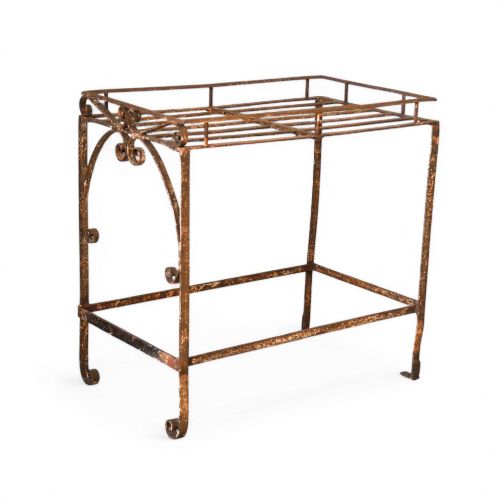
Listings demonstrate materials including brass, pine, wrought iron, rosewood, marble, satinwood, walnut, and wood across nineteenth-century pieces.
What varies in quality
The refinement of the timber and the precision of the inlay separate standard production from finer work. Tables featuring detailed marquetry, hand-painted panels, or complex burr walnut veneers demonstrate superior craftsmanship.
Structural integrity of the internal compartments and the condition of the folding mechanisms indicate the standard of construction. Pieces with original fitted interiors and well-preserved surface finishes retain greater integrity.
William Comyns·Morris and Co
The Late Victorian Work Table Glossary
- Work table
- A small domestic table fitted with drawers, bags, or compartments for sewing, needlework, and writing. These pieces became essential household items during the nineteenth century.
- Marquetry
- The art of applying pieces of veneer to a structure to form decorative patterns and pictures. Makers used contrasting timbers to achieve pictorial depth.
- Burr walnut
- A figured wood grain obtained from walnut tree growths, prized for its swirling patterns. Cabinet makers utilised this timber for decorative table tops.
- Poker work
- A method of decorating wood by burning designs into the surface with a heated tool. This technique appears on specific occasional and book tables from the period.
Late Victorian Work Table: Frequently Asked Questions
What is a late victorian work table used for?
These tables served as domestic furniture for sewing, needlework, and light writing tasks. The top surfaces often lifted or opened to reveal fitted compartments for storing threads, needles, and small tools.
In period rooms, they functioned as versatile occasional tables placed beside chairs or sofas. Their compact dimensions allowed them to be moved easily around the parlour or boudoir.
How do you date a late victorian work table?
Dating relies on stylistic clues, construction methods, and materials recorded across the nineteenth century. Pieces from this era often display characteristics of the 1880s, 1890s, or around 1900.
Evidence shows a preference for rosewood, walnut, and mahogany, alongside revival styles like Sheraton Revival and Italian Grotto. Examining the interior compartments and secondary woods also helps establish the timeframe.
Are these tables suitable for modern rooms?
Their modest proportions make these tables practical for contemporary living spaces as side tables or lamp tables. The enclosed compartments offer discreet storage for small household items.
Placing them in a study, hallway, or sitting room allows you to utilise the surface and storage without occupying excessive floor space.
What materials are typical for these pieces?
Makers used a range of woods including rosewood, walnut, mahogany, birch, and pine. Decorative techniques such as marquetry inlay, hand painting, and poker work frequently enhanced the exterior surfaces.
Internal fittings often utilised secondary timbers, while occasional examples incorporated brass hardware or metal elements to support the overall design.