
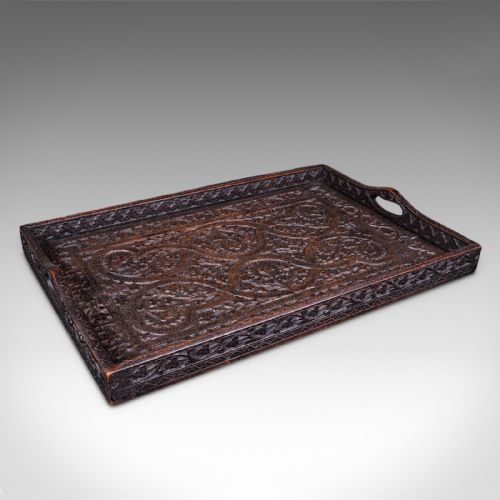


Late Victorian Wooden Tray
A late victorian wooden tray brings utility and character to a room, offering a solid surface shaped from timber by late nineteenth-century makers.
Late Victorian Wooden Tray
When you search for a late victorian wooden tray, you encounter pieces designed for practical service and display during the Victorian era and around 1900. These items span serving trays, butler's tray tables, rotating lazy susans, ink stands, and occasional tables with wooden frames.
The selection on this page shows forms shaped by various design movements of the late nineteenth century, including Aesthetic Movement, Arts and Crafts, Anglo-Indian, and Sorrento Ware styles. Makers utilised oak, mahogany, walnut, pitch pine, and hardwood to construct these domestic objects.
Alongside standard serving pieces, the evidence includes larger furniture items and desk accessories that incorporate timber trays, such as tray tables and ink stands. These domestic wares reflect the craftsmanship of the period through carved details and marquetry.
How they were made
Makers constructed these trays and tables using dense timbers such as oak, mahogany, walnut, and pitch pine. Carpenters joined structural elements with traditional methods suitable for everyday domestic service.
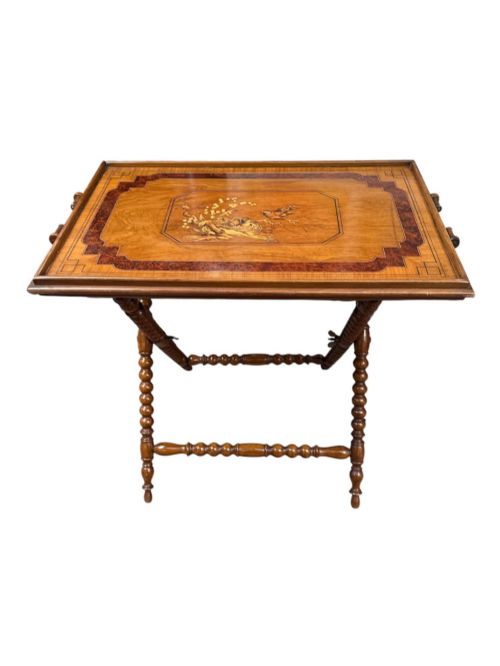
Surface decoration frequently involves intricate marquetry, carving, and inlaid metals such as brass and copper. Sorrento Ware pieces display detailed wood inlay, while Anglo-Indian items often feature elaborate carving and inset metal tops.
Some trays rotate smoothly on built-in mechanisms, ready to pass the butter without awkward reaching.
What varies in quality
Quality in these pieces depends upon the selection of timber and the precision of the joinery. Finer examples display carefully matched grain, robust construction, and well-executed decorative details rather than hurried assembly.
The level of ornamentation separates standard utility items from finer decorative pieces. Superior items feature crisp carving, precise marquetry inlay, or integrated metalwork that remains securely fitted to the wooden base.
Shoolbred
The Late Victorian Wooden Tray Glossary
- Marquetry
- Decorative veneer applied to a wooden structure to form geometric or pictorial patterns. This technique appears frequently in Sorrento Ware items.
- Butler's Tray
- A portable wooden tray designed to sit upon a folding wooden stand. These pieces functioned for serving refreshments in domestic interiors.
- Aesthetic Movement
- A late nineteenth-century design style emphasising visual beauty over narrative subject matter. Objects from this movement often display simplified forms and careful attention to materials.
- Sorrento Ware
- Woodwork featuring micro-mosaic marquetry originating from the Italian town of Sorrento. It was popular for decorative trays and small furniture during the nineteenth century.
Late Victorian Wooden Tray: Frequently Asked Questions
What is a late victorian wooden tray used for?
These pieces served practical domestic functions such as carrying afternoon tea, displaying items on a surface, or holding correspondence on a desk. Butler's trays provided a removable surface raised on a folding stand.
Today, buyers utilise them for similar display and serving purposes, placing them on coffee tables or side tables to organise objects within a room.
How do I care for a wooden tray?
Protect the timber surface from excessive moisture and direct heat sources to prevent warping or cracking of the wood. Regular dusting with a dry cloth maintains the finish.
Apply suitable beeswax periodically to nourish the hardwood or veneer without damaging any integrated brass or copper elements.
What styles are common in these trays?
The inventory shows influences from the Aesthetic Movement, Arts and Crafts design, and Sorrento Ware marquetry. Anglo-Indian pieces also appear with detailed carving and metal inlays.
These diverse styles reflect the eclectic taste of the late nineteenth century, ranging from plain country house oak to intricate inlaid walnut.
Are these pieces made of solid wood?
Construction methods vary between solid timbers such as oak, mahogany, and walnut, and pieces that incorporate veneers. Marquetry trays often utilise a stable base wood beneath decorative veneer layers.
Makers selected appropriate timbers based on the intended function and decorative style of each individual tray or table.