
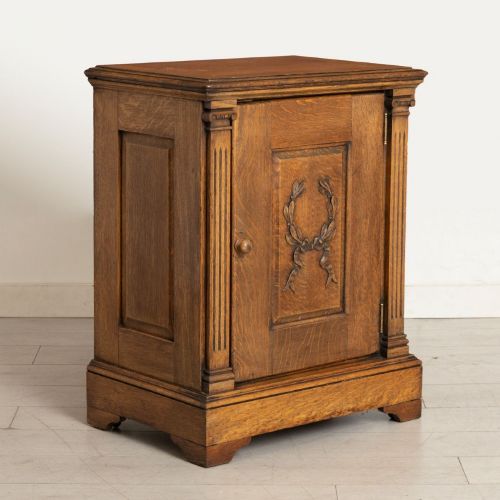
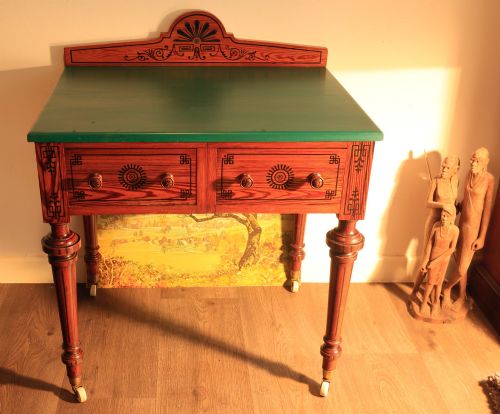


Late Victorian Washstand
Late victorian washstands bring solid utility and decorative stone to the bedroom, offering sturdy surfaces built for daily hygiene.
Late Victorian Washstand
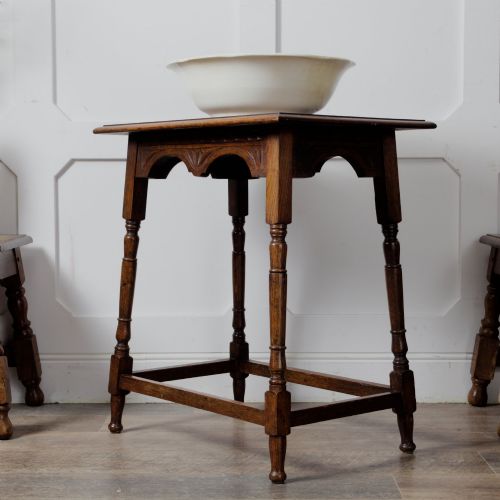
A late victorian washstand is a functional bedroom piece designed to hold a basin and jug, frequently paired with a protective marble top and tile back.
These items appear in various timbers including oak, mahogany, walnut, ash, satinbirch, and pine, alongside painted or ebonised finishes.
Buyers encounter forms ranging from standard tables to pieces with cabinets, cupboards, and ships washstand configurations.
How They Were Made
Carpenters utilised hardwoods like mahogany, oak, walnut, and ash to build a sturdy frame capable of supporting heavy stone.
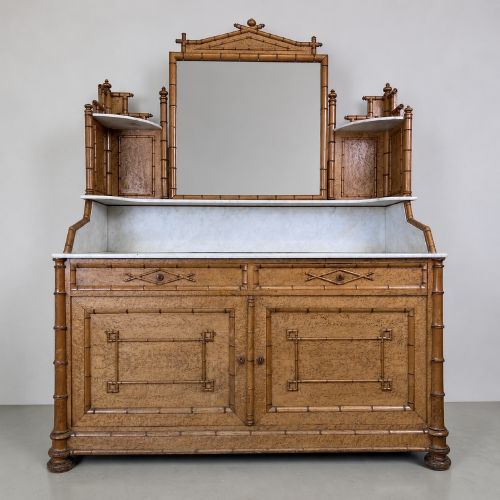
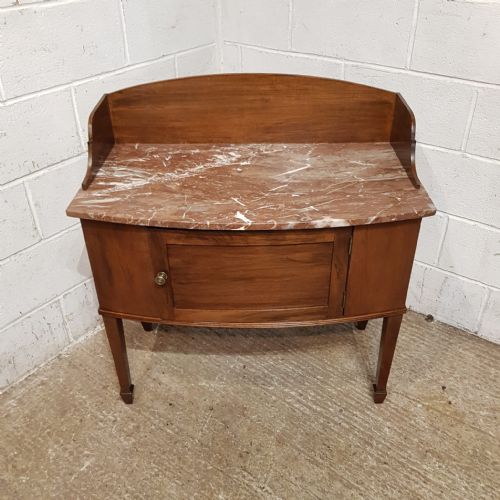
Slabs of marble or rouge marble were fitted to the top surface to resist water splashes, often complemented by ceramic tiles at the rear.
Listings feature oak, mahogany, walnut, ash, satinbirch, and pine alongside brass hardware and glass elements.
What Varies in Quality
The choice of primary timber and the selection of marble or decorative ceramic tiles dictate the visual impact of the piece.
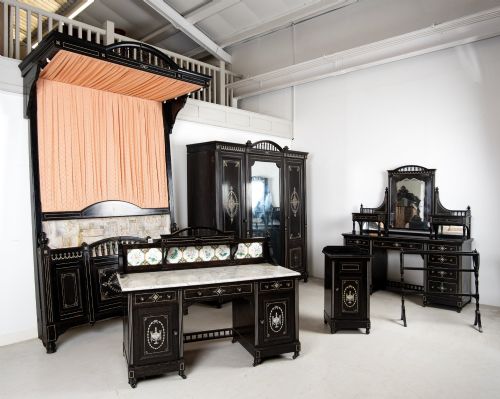
Carved details, inlay work, and stylistic influences such as aesthetic movement or gothic revival separate standard examples from finer commissions.
Maple and Co·Doulton Burslem
The Late Victorian Washstand Glossary
- Washstand
- A piece of furniture designed to hold washing equipment in a bedroom. These often feature water-resistant surfaces like marble.
- Aesthetic Movement
- A late nineteenth-century design style focusing on visual beauty over narrative subject matter. Pieces in this style often employ ebonised finishes or stylised ornamentation.
- Marble top
- A stone surface fitted to furniture to prevent water damage during washing. This material provides a cool, hardwearing counter.
Late Victorian Washstand: Frequently Asked Questions
What is a late victorian washstand?
A late victorian washstand is a bedroom furnishing built to support a water basin and jug before plumbing became standard. These pieces date from the final decades of the nineteenth century.
They combine wooden frames with durable surfaces, frequently incorporating marble tops and tile splashbacks to protect the surrounding wall from water.
How do I use one today?
Many people repurpose these items as bathroom vanities or hallway console tables. The stone surfaces remain practical for modern daily use.
Their lower shelves and cupboards provide convenient storage space for towels or toiletries in contemporary settings.
What woods were commonly used?
Cabinet makers employed a wide variety of timbers depending on the desired finish and cost. Common materials include oak, mahogany, walnut, ash, and satinbirch.
Some examples also feature painted finishes, faux bamboo turnings, or ebonised details reflecting aesthetic movement tastes.
Are marble tops original?
Most marble tops and tile backs found on these pieces are original to the construction, designed specifically to handle water splashes.
Different types of stone appear across the range, including standard white marble and rouge marble.