

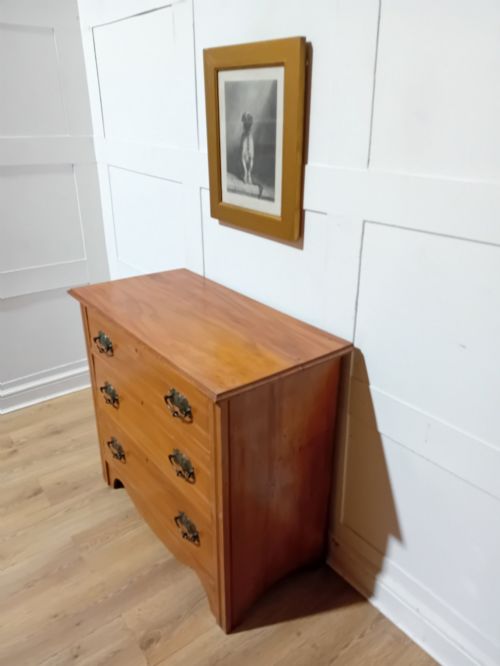
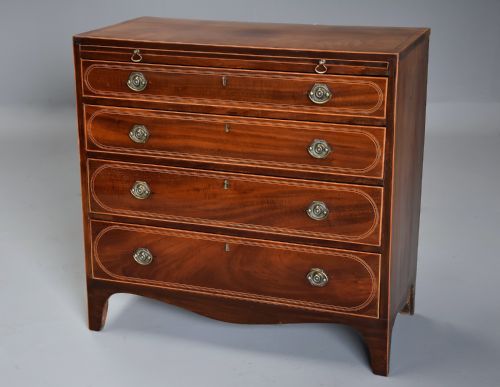
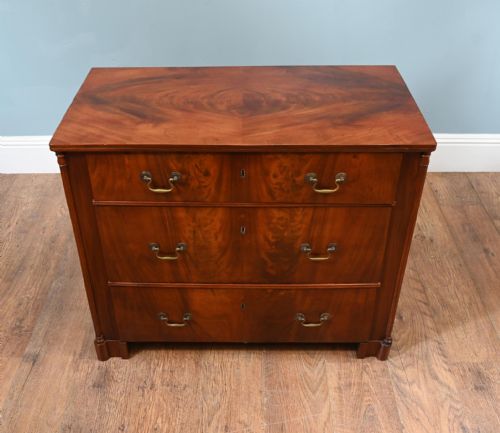
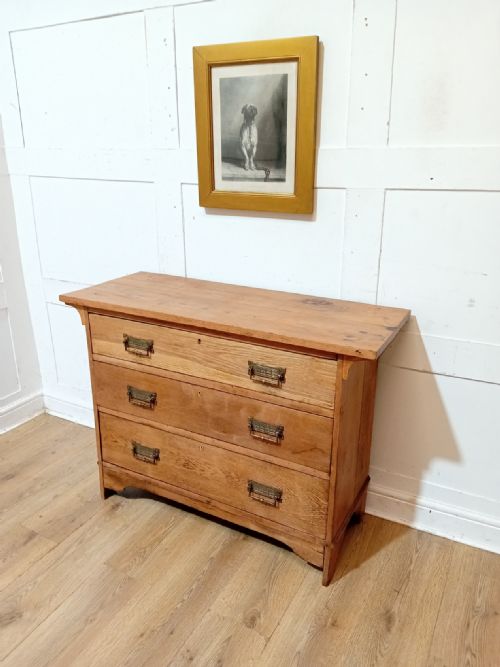
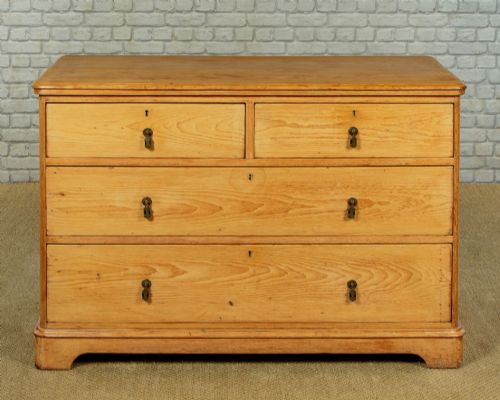
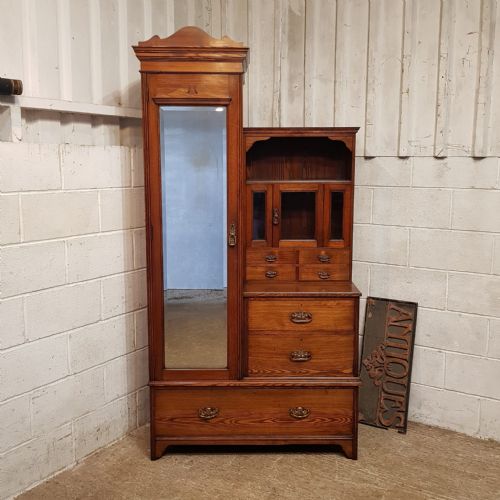


Late Victorian Tallboy Chest
A late victorian tallboy chest brings vertical storage and rich timber grain to a bedroom, combining practical drawer space with period presence.
Late Victorian Tallboy Chest
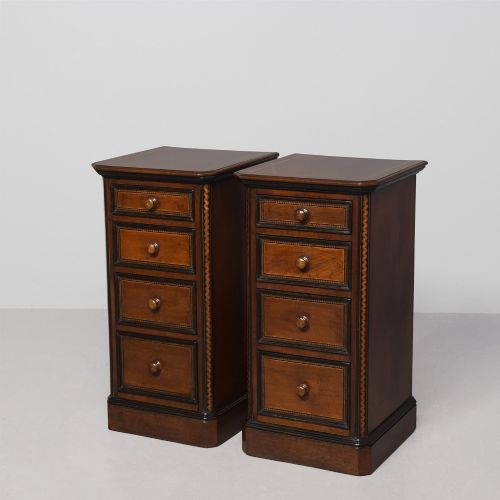
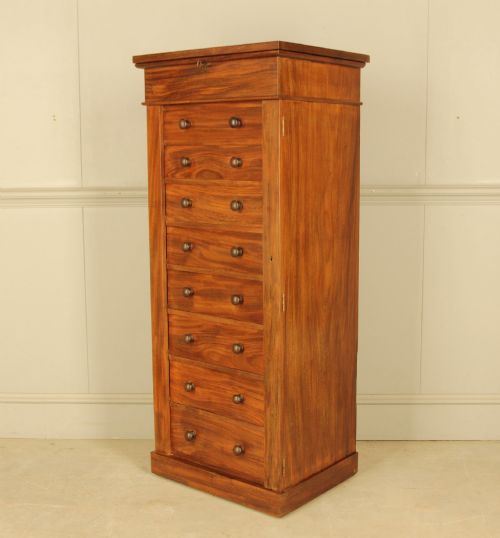
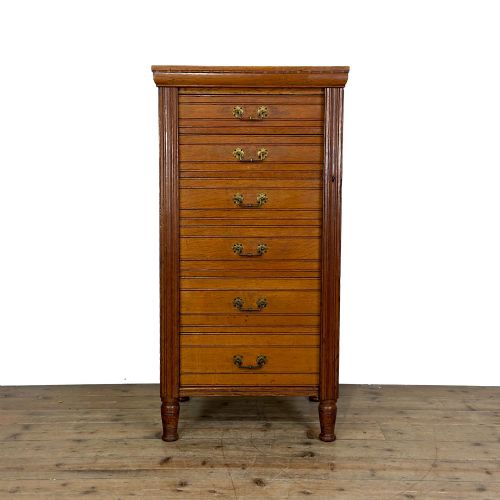
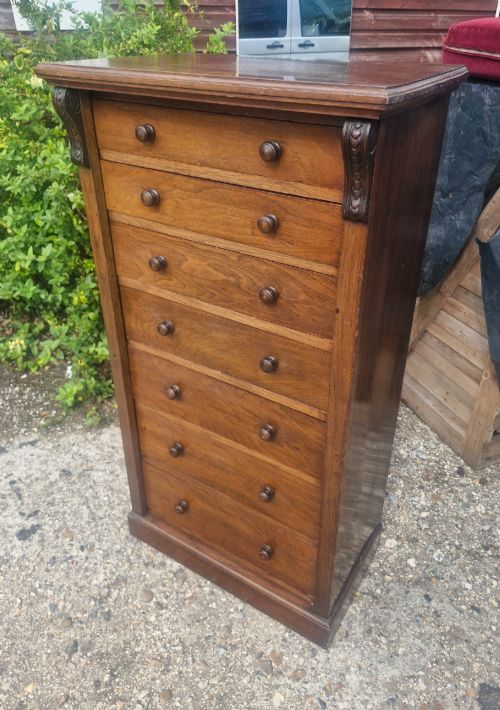
A late victorian tallboy chest represents the taller forms of bedroom storage produced during the late nineteenth century and the opening years of the twentieth century. These pieces stand higher than standard chests, often incorporating narrow proportions, Wellington formats, or multi-drawer configurations designed to maximise capacity within a compact footprint.
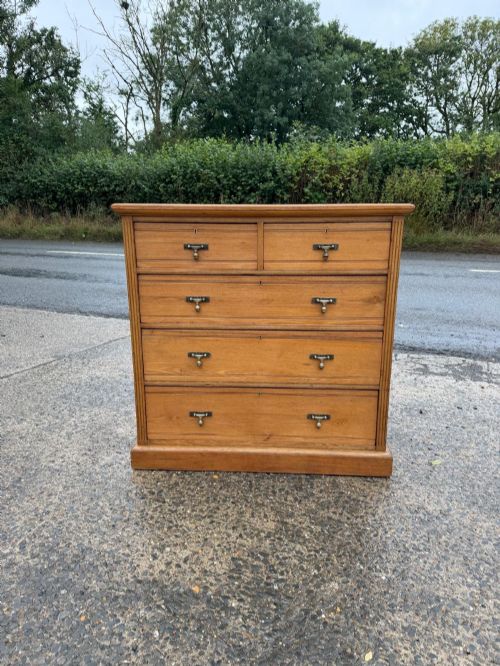
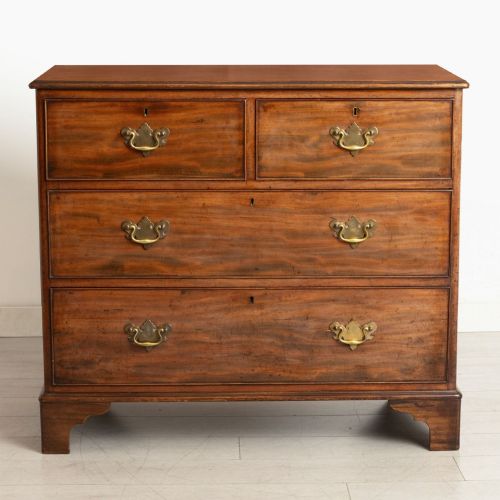
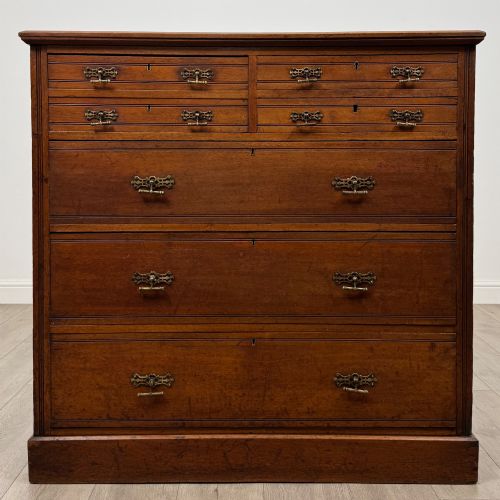
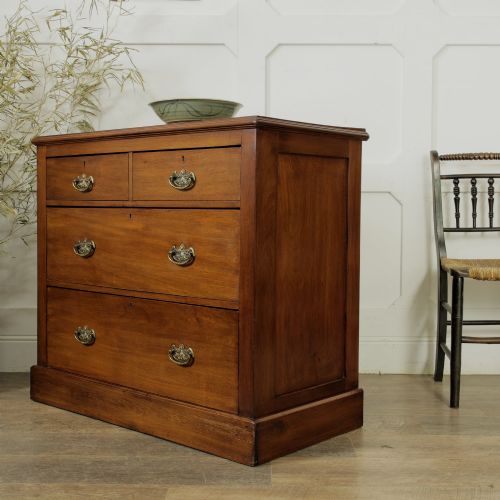
The pieces grouped under this search range from narrow walnut and mahogany designs to ash, oak, and satinwood examples influenced by the Arts and Crafts and Aesthetic movements. Buyers meet variations including gentleman's dressing chests, chest-on-chest constructions, and compact pedestal chests dating across the victorian and edwardian eras.
How they were made
Makers constructed these chests using solid and figured timbers such as Honduras mahogany, walnut, oak, satinwood, ash, and pitch pine. Structural frames relied on traditional joinery, while drawer fronts frequently displayed carefully selected wood grain, inlaid stringing, or carved details characteristic of the period.
Hardware played an integral part in the construction, featuring brass elements like acorn handles and locking mechanisms for security, particularly on Wellington styles. Secondary timbers like pine appeared in drawer linings and carcase backs, built by hand using period woodworking techniques.
Late Victorian Tallboy Chest Retail Price Guide 2026
Typical asking prices for late victorian tallboy chest among the pieces listed under this phrase on Sellingantiques today, from the lower quarter to the upper quarter. They describe what is for sale here now, not the wider market.
Design influences on this page span standard victorian styles, Arts and Crafts, Aesthetic movement, and Hepplewhite revivals.
What varies in quality
The standard of a late victorian tallboy chest depends heavily on the selection of timber and the depth of figure in the mahogany, walnut, or satinwood used across the facade. Pieces displaying book-matched veneers, crisp inlay work, and robust secondary woods sit distinctly above utilitarian workshop output.
Attention to detail in the hardware, drawer construction, and overall proportions dictates the standing of an individual piece. Original brass fittings, smooth-running drawers, and well-executed stylistic details from the Arts and Crafts or Aesthetic movements separate standard utility furniture from finer cabinet-maker work.
Jas Shoolbred·Harris Lebus of Tottenham·Druce & Co
The Late Victorian Tallboy Chest Glossary
- Wellington chest
- A tall, narrow chest of drawers secured by a hinged locking side-stile that fastens over the drawer edges. This format originated earlier in the nineteenth century but remained popular for tall storage.
- Chest-on-chest
- A tall storage unit formed by stacking one chest of drawers directly upon a larger base chest. This configuration provides substantial vertical capacity.
- Aesthetic Movement
- A late nineteenth-century design style emphasising visual beauty and simplified forms over heavy ornamentation. Pieces from this movement often utilise ebonised details or specific tonal woods.
- Arts and Crafts
- A design movement valuing visible handcraftsmanship, simple construction, and vernacular materials. Furniture from this tradition often highlights solid ash, oak, or plain satinwood.
- Gentleman's dressing chest
- A multi-functional cabinet piece combining drawer storage with specialised compartments for personal grooming. These units often incorporate mirrors or sliding desk elements.
Late Victorian Tallboy Chest: Frequently Asked Questions
What is a tallboy chest?
A tallboy chest is an elevated storage unit designed to hold garments and personal items while taking up minimal floor space in a room.
These pieces use height rather than width to provide multiple tiers of drawers, making them practical for smaller bedrooms.
How do I style a tall chest?
Position the piece against a solid bedroom wall where its vertical proportions balance surrounding furniture. Keep the top surface uncluttered with perhaps a small tray or a single decorative object.
Allow the timber grain and period hardware to serve as the main visual focal point within the room.
How do I date these chests?
Examine the secondary woods inside the drawers, the style of the brass handles, and any stylistic influences such as Arts and Crafts or Aesthetic movement details. Construction methods like dovetailing and the choice of mahogany, walnut, or oak also point toward the late nineteenth century.
Makers' stamps or labels, when present, provide definitive confirmation of the production period.
Are these chests practical for modern homes?
Their narrow footprint makes them exceptionally useful for modern rooms where floor space is limited but vertical storage is required. The deep drawers accommodate modern clothing while adding historic character to an interior.
Maintenance involves regular waxing to protect the timber surface and gentle cleaning of the original brass hardware.