


Late Victorian Serving Table
A late victorian serving table brings solid craftsmanship and practical dining utility into a room, offering sturdy timber surfaces for food, drink or display.
Late Victorian Serving Table
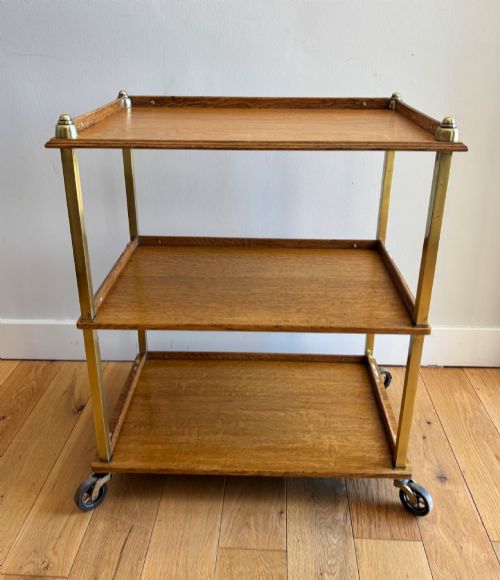
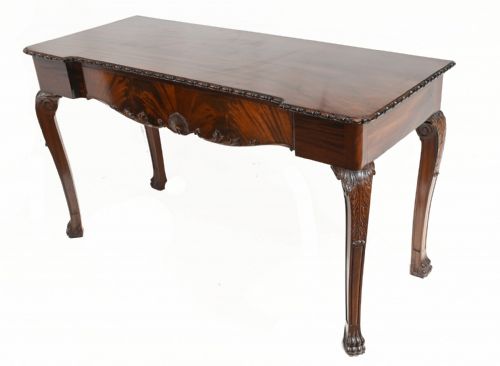
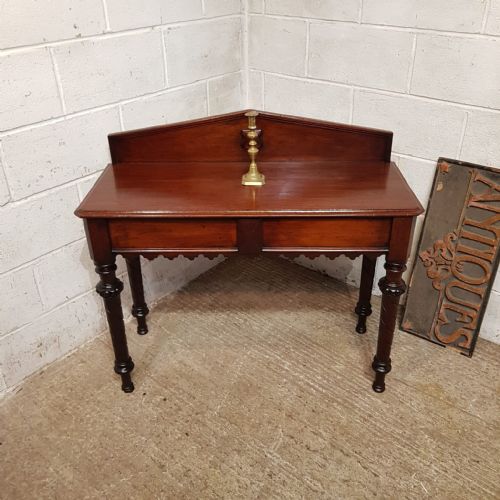
When you search for a late victorian serving table, you encounter practical dining and display furniture spanning console tables, dumb waiters, butlers trolleys and serving trays. These pieces stem primarily from the late nineteenth century, reflecting the rigorous utility and diverse aesthetic tastes of the period.
The versions most commonly met on this page include mahogany and oak serving tables alongside walnut pieces in Aesthetic Movement or Gothic Revival styles. Many items show substantial timber construction, designed specifically to assist with dining room service or household hospitality.
How they were made
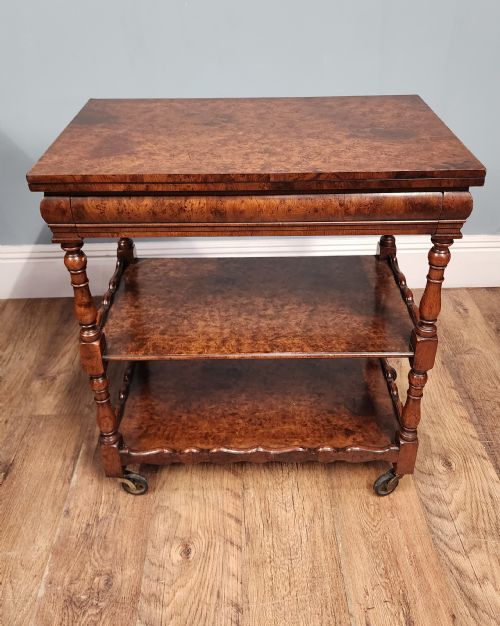
Cabinet makers utilised dense hardwoods such as mahogany, oak, walnut and pitch pine to construct the framework and surfaces of these tables. Selected pieces also incorporated burr walnut veneer to add decorative grain patterns to the top boards and fascias.
Carving and turning form the primary decorative techniques visible across the surviving pieces. Workshops employed brass hardware for castors and handles, while ceramic and earthenware components appeared in associated serving trays and tableware.
The furniture styles represented span Aesthetic Movement, Gothic Revival and late Regency influences alongside Victorian designs.
What varies in quality
The distinction between standard utility items and finer workshop production lies in timber selection and the precision of the joinery. Superior examples demonstrate careful matching of veneers, such as burr walnut, and feature crisply executed hand carving on the legs and aprons.
Construction methods also separate the grades, with solid hardwood carcases and original brass fittings indicating higher workshop standards. Simpler pine or utility pieces prioritise basic service over ornamental refinement.
Gillows Buffet·Carlton Ware·Ridgways China·Holland and Sons
The Late Victorian Serving Table Glossary
- Aesthetic Movement
- A late nineteenth century design style emphasising visual beauty over narrative subject matter. It often manifests in clean lines and subtle ornamentation on furniture.
- Gothic Revival
- An architectural and decorative style drawing inspiration from medieval forms. Pieces in this manner frequently display pointed arches, heavy mouldings and carved tracery.
- Dumb Waiter
- A tiered piece of dining room furniture used for holding food and tableware without requiring servant attendance. They appear as revolving or multi-shelf serving units.
- Burr Walnut Veneer
- A thin slice of figured walnut timber taken from a tree growth or burl. Cabinet makers applied this to table tops to create rich, swirling grain patterns.
Late Victorian Serving Table: Frequently Asked Questions
What is a late victorian serving table used for?
These tables served primarily in dining rooms to hold dishes, serving trays and glassware during large meals. They provided extra surface area when the main dining table lacked space for food placement.
Today, they function well in modern dining rooms, hallways or living spaces as sideboards or display surfaces for lamps and decorative objects.
How do I identify a late victorian serving table?
Look for construction traits typical of the late nineteenth century, including dense hardwoods like mahogany, oak and walnut. Styles often incorporate Aesthetic Movement simplicity or Gothic Revival detailing.
Check the legs, handles and undercarriage for period appropriate manufacturing techniques and original brass castors or fittings.
Are these tables made of solid wood?
Many examples utilise solid timbers such as oak, mahogany and pitch pine for their main structural frames and legs. Other pieces incorporate decorative veneers laid over a stable secondary wood base.
The use of burr walnut veneer was common for table tops to provide decorative visual patterns while maintaining structural stability.
Where should I place a serving table at home?
A serving table fits naturally against a dining room wall to hold tableware or act as a drinks station during gatherings. Their narrow proportions also make them suitable for entrance halls.
Ensure the depth of the table matches the proportions of your room to maintain clear pathways around the furniture.