




Late Victorian Oak Desk
When you search for a late victorian oak desk, you are looking at substantial pedestal forms and writing tables built from hard native timbers during the final decades of the nineteenth century.
Late Victorian Oak Desk
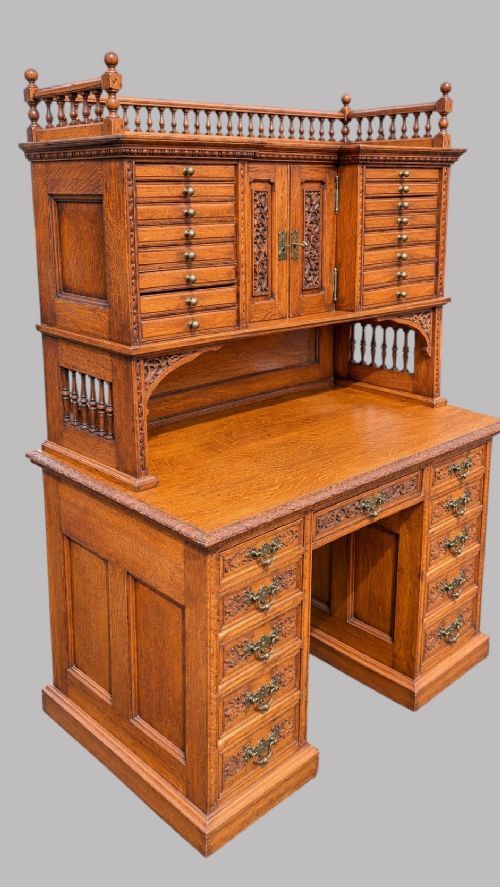
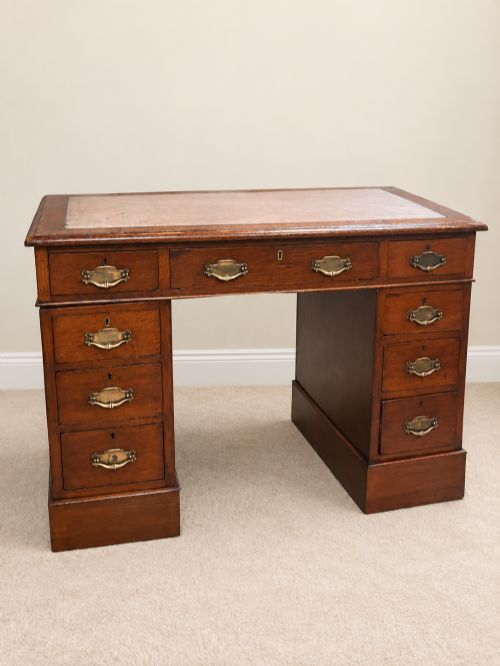
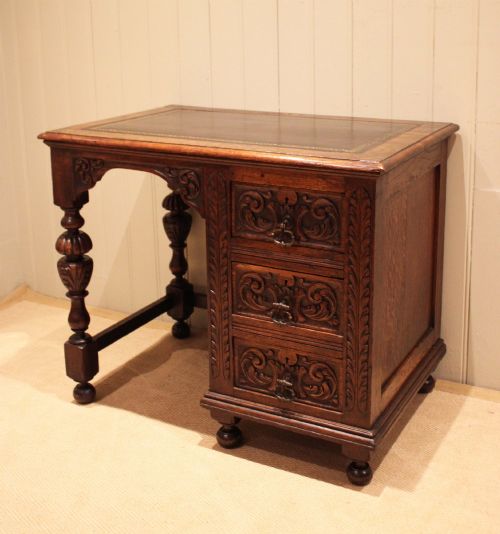
A late victorian oak desk typically takes the form of a heavy pedestal workstation, featuring twin banks of drawers flanking a central kneehole space. These pieces served as the primary administrative furniture in late nineteenth-century offices, libraries, and grand homes, designed to hold heavy ledgers and stationery.
Beyond standard twin pedestal formats, the category encompasses compact writing tables, partners desks built for simultaneous use from both sides, and roll-top variations housing internal pigeonholes. Most examples appearing here date from the eighteen-eighties and eighteen-nineties, often displaying the robust proportions favoured during the period.
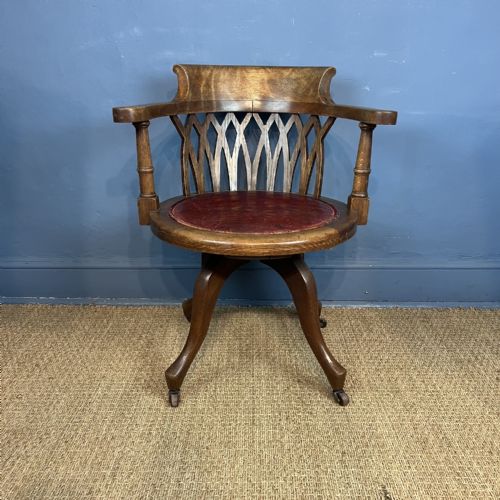
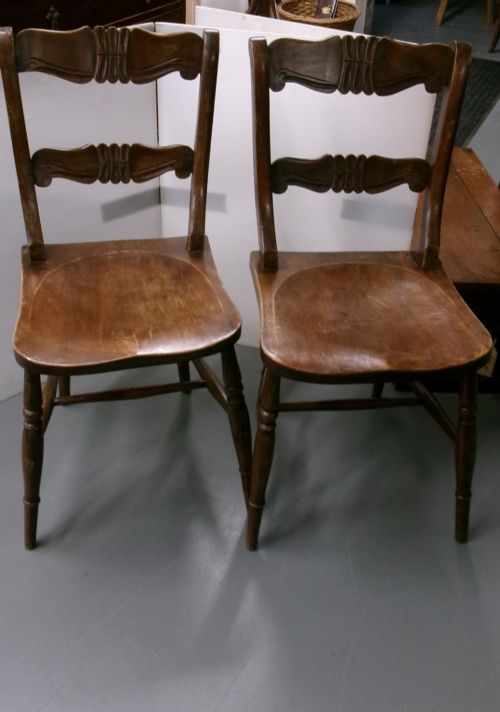
Matching seating frequently accompanies these writing surfaces, including revolving desk armchairs and swivel chairs upholstered in leather or fitted with cane work. Together, they represent the period's domestic and institutional workspaces, constructed to withstand decades of daily clerical labour.
How they were made
Makers utilised solid oak alongside figured and pollard oak veneers applied to carcases, building structural elements to endure heavy use. Timber selection often highlighted distinct grain patterns, ranging from golden oak to deeper brown tones.
Workshops integrated functional metalwork into the designs, mounting brass campaign handles, drop pulls, and silver-plate inkstands onto the wooden bodies. Writing surfaces were routinely inset with panels of tooled leather, whilst rotating desk chairs incorporated cast iron and brass swivelling mechanisms.
Several desks come equipped with perpetual calendars and railway ticket boxes, proving that nineteenth-century desk clutter was an organised art form.
What varies in quality
The standard of carving and timber selection marks the distinction between ordinary utility furniture and finer commissions. Elaborate decorative motifs, such as Greenman masks or specific regional workshop flourishes, indicate higher production ambitions than plain panelled carcases.
Internal construction details, including dovetailed drawer linings, original brass hardware, and the presence of makers' stamps, separate mass-produced items from superior workshop output. The retention of original leather writing inserts and matching swivel seating alters the integrity of the piece.
Simpsons of Kendall·Wright and Hunter of Belfast·Edward William Godwin·Liberty of London·Merryweather and Son
The Late Victorian Oak Desk Glossary
- Pedestal desk
- A heavy writing table supported by two vertical banks of drawers that rest directly on the floor. This form provides substantial storage beneath the main writing surface.
- Kneehole
- The central recessed space beneath a desk top that allows a chair and the user to sit comfortably. It is often flanked by single or double stacks of smaller drawers.
- Partners desk
- A large double-sided writing table designed for two people to work face to face, featuring drawer and cupboard banks on both sides. These were typically built for boardrooms and solicitors' offices.
- Standish
- A portable tray or stand fitted to hold inkwells, quill pens, and sanders. They were frequently mounted with brass or silver plate.
- Pollard oak
- Timber taken from trees that have been pollarded, producing a dense, highly figured grain pattern prized for decorative veneers. It offers a mottled appearance distinct from standard straight-grained oak.
Late Victorian Oak Desk: Frequently Asked Questions
How do I care for the leather top?
Clean the leather surface gently with a damp cloth, avoiding harsh chemical cleaners that strip the original dye and tooling. Apply a neutral leather wax periodically to keep the material supple and prevent cracking.
Keep the desk away from direct heat sources and strong sunlight, which cause the leather to dry out and fade unevenly over time.
Are these desks easy to dismantle?
Most pedestal desks separate into three main components: the two side drawer pedestals and the top writing section. This modular construction was designed to assist with transport through narrow doorways.
Screws or wooden connector bolts usually secure the top to the pedestals from underneath, requiring only basic hand tools to take apart safely.
How do I identify a partners desk?
Inspect both long sides of the furniture to see if they feature operational drawers and cupboards rather than a plain panelled modesty back. Partners desks are proportioned to accommodate seating on opposing sides simultaneously.
These pieces generally have a larger footprint than standard single-sided pedestal desks and occupied the centre of a room rather than sitting against a wall.
What is the difference between oak and pollard oak?
Standard oak comes from the main trunk or branches of the tree, displaying a straight and consistent grain pattern. It forms the solid structural carcase for the vast majority of these desks.
Pollard oak derives from trees pruned close to the trunk, creating tightly clustered growth rings that form highly decorative burr and mottled veneers used on drawer fronts.