


Late Victorian Necklace
A late victorian necklace brings together intricate goldwork, pearls and precious stones from the turn of the twentieth century.
Late Victorian Necklace
When you search for a late victorian necklace, you encounter jewellery spanning the late nineteenth and early twentieth centuries, featuring pendants, chains and convertible brooch pendants. These pieces bridge distinct aesthetic movements, reflecting both opulent revival styles and the emergence of simpler craftsmanship.
The version you are most likely to meet on this page combines warm yellow gold with small pearls, diamonds, opals or coloured enamel. Many items function dually as necklaces and brooches, a practical design choice favoured by makers of the era.
Materials and construction
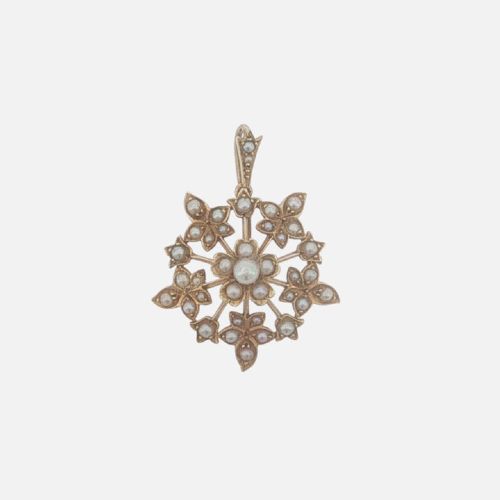
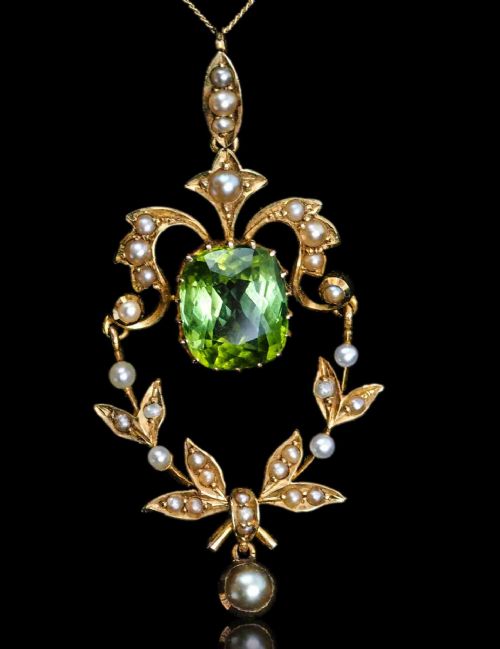
Goldsmiths of this era utilised fifteen carat and nine carat yellow and rose gold, often pairing them with silver settings to enhance the brilliance of old cut diamonds. Seed pearls and natural pearls were wired or glued into floral and geometric clusters.
Coloured enamel, peridots, opals and turquoise provide vibrant hues across pendants and lockets. Artisans shaped these metals and stones by hand, resulting in articulated joints and secure bezel settings typical of late nineteenth century workshops.
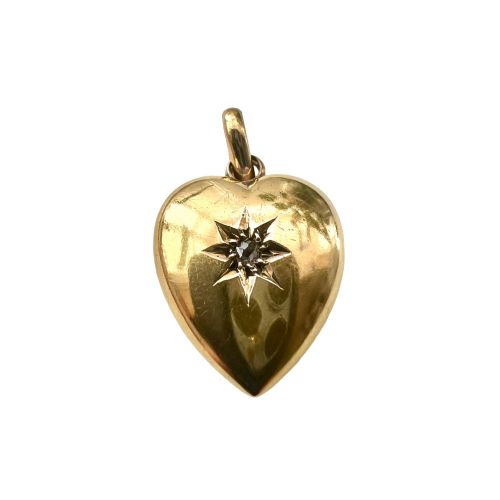
Makers occasionally hid tiny glass compartments in the backs of lockets designed to hold locks of hair or miniature painted portraits.
Evaluating quality
The distinction between ordinary and exceptional pieces lies in the subtlety of the stone setting and the integrity of the goldwork. Superior examples display perfectly matched pearls and clean enamel work without stress fractures.
Design complexity also separates standard items from the finest examples, particularly where workshops incorporated hand carved stones or integrated multiple gem varieties into a cohesive pendant.
Murrle Bennett
The Late Victorian Necklace Glossary
- Seed pearl
- A tiny, naturally formed pearl, often measuring less than two millimetres in diameter. These small spheres were drilled and strung or mounted in clusters to form delicate floral motifs.
- Old cut
- A diamond facet style popular before modern brilliant cutting was standardised in the early twentieth century. These stones feature smaller tables and higher crowns, giving a distinct candlelit sparkle.
- Brooch pendant
- A versatile jewellery form fitted with both a folding loop for a chain and a pin mechanism for clothing. This dual function allowed wearers to display the piece in multiple ways.
- Enamel
- A glassy substance fused to metal through high temperature firing to add permanent colour. In these pieces, blue and polychrome enamel work provides striking contrast against yellow gold.
Late Victorian Necklace: Frequently Asked Questions
How do I wear a convertible brooch pendant?
These pieces include a hidden loop that folds down to accommodate a fine gold chain or ribbon.
When you wish to wear the piece as a brooch, simply tuck the chain away and fasten the pin securely to heavier fabrics.
Are pearls from this period real?
The pearls found in these late nineteenth century designs are natural saltwater or freshwater seed pearls rather than modern cultured varieties.
They display organic variations in shape and lustre that distinguish them from uniform factory made beads.
What is the difference between fifteen carat and nine carat gold?
Fifteen carat gold contains a higher proportion of pure gold alloyed with other metals, yielding a richer and deeper yellow colour than nine carat alternatives.
British makers frequently used fifteen carat gold for finer gem set pendants during the Victorian era.
How do I care for my antique necklace?
Keep delicate items away from harsh chemical cleaners, ultrasonic baths and prolonged moisture to protect the pearls and enamel.
Store each piece flat in a lined box to prevent chains from tangling and stones from striking other surfaces.