


15ct Yellow Gold Pendant
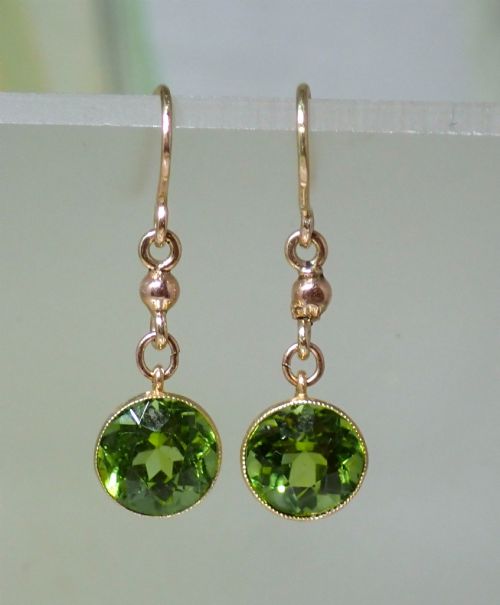
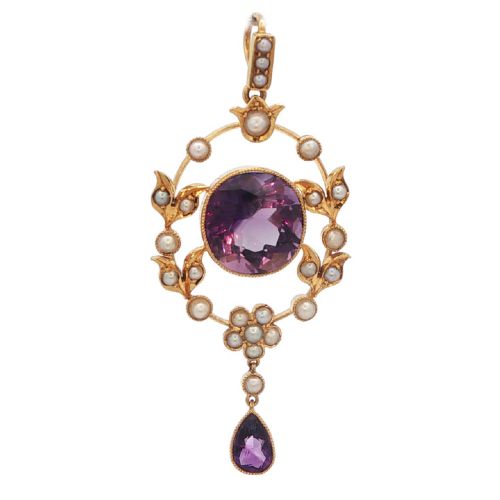
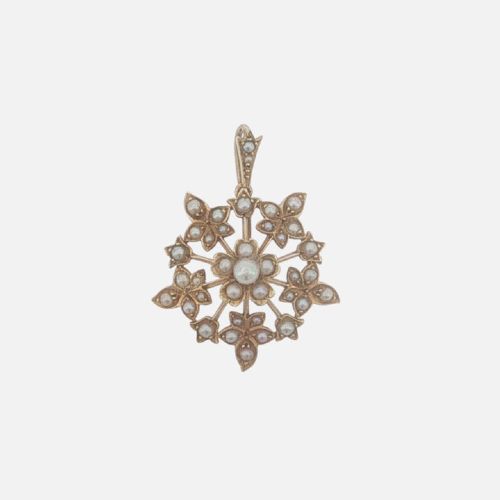
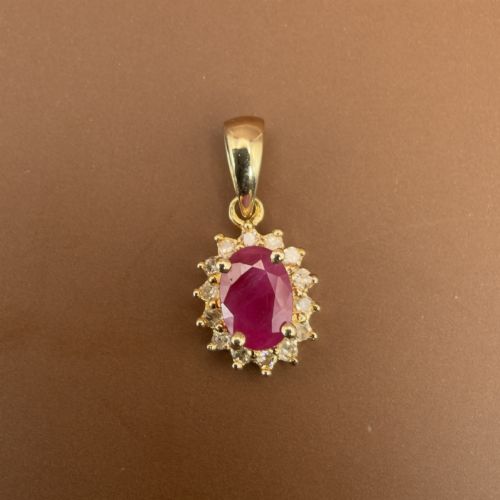
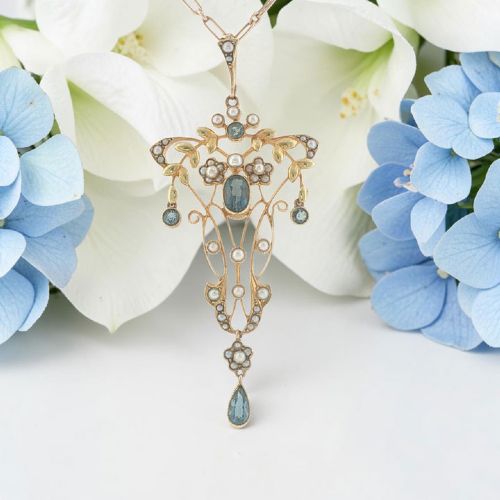
When choosing a 15ct yellow gold pendant, collectors examine historic gold work set with seed pearls, peridots and diamonds from the Victorian and Edwardian eras.
15ct Yellow Gold Pendant
A 15ct yellow gold pendant brings together nineteenth and early twentieth-century metalwork designed to suspend from a neck chain or attach as a brooch. The selection on this page centres on items made during the Victorian, Edwardian and Art Nouveau periods, spanning roughly from 1880 to 1930.
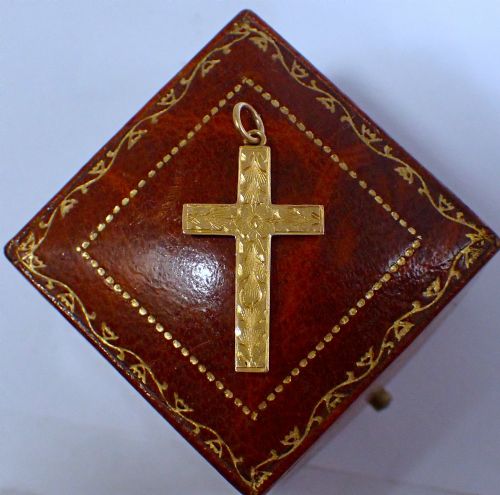
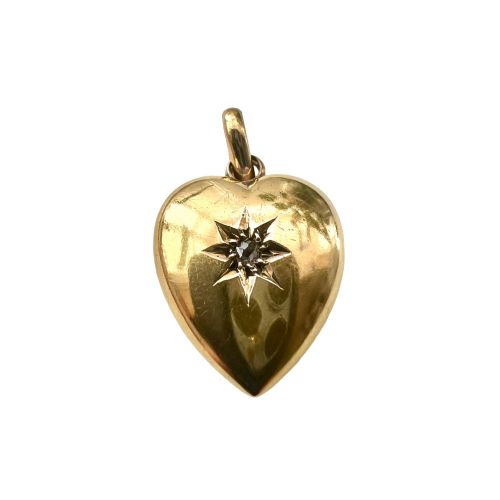
Buyers encounter forms ranging from delicate seed pearl clusters and starbursts to substantial lockets, crosses and peridot drop designs. Many pieces incorporate convertible bails, allowing a pendant to function equally as a brooch.
The material standard itself marks a specific British assay period, as 15-carat gold was widely used before being replaced by 9-carat and 18-carat standards after 1931.
How they were made
Goldsmiths of the late nineteenth and early twentieth centuries shaped 15ct yellow gold through casting, wirework, and hand engraving, often combining polished surfaces with delicate milgrain borders. Stones like peridot, aquamarine, amethyst and garnet were secured in closed or open-backed settings by hand.
Seed pearls and turquoise beads were threaded on fine silk or held with tiny peg settings, while intricate enamel work, including guilloché and plique-à-jour, introduced vibrant translucent colour to floral and geometric motifs.
Victorian snake pendants coiled close to the skin, symbolising eternal love and wisdom with ruby eyes gleaming in the dark.
What varies in quality
Quality in these pendants rests upon the crispness of the original chasing and the integrity of the gemstone settings. Superior examples display secure, even claw or collet work that holds stones firmly without distorting the surrounding gold.
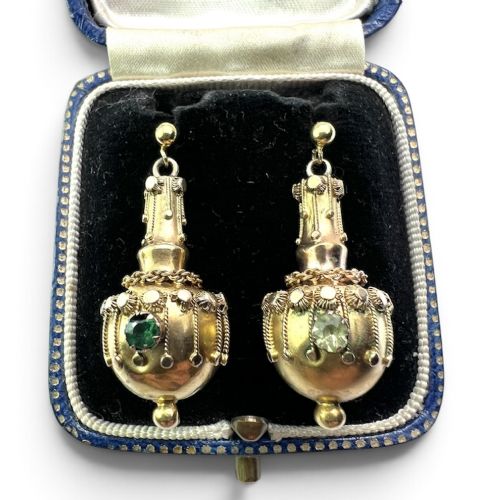
The delicacy of applied decorative elements, such as granulation in Etruscan Revival pieces or the flowing whiplash lines of Art Nouveau designs, distinguishes workshop output. Pieces retaining original pin mechanisms, jump rings and well-preserved enamel finishes represent the higher end of surviving items.
Murrle Bennett And Co
The 15ct Yellow Gold Pendant Glossary
- 15ct Gold
- An alloy containing 62.5 percent pure gold, standard in British jewellery manufacturing from the mid-nineteenth century until 1931. This metal content yields a characteristic warm, rich yellow hue distinct from later lower-carat alloys.
- Seed Pearl
- A tiny, naturally occurring or early cultured pearl, frequently drilled and threaded onto fine wire or silk. They form delicate floral garlands and star motifs in Victorian and Edwardian designs.
- Plique-à-jour
- An enamelling technique where enamel is applied within a cellular framework without a backing, resembling miniature stained glass. This lets light pass directly through the translucent coloured glass.
- Guilloché
- A decorative technique where a precise geometric pattern is mechanically engraved into a metal substrate beneath translucent enamel. It produces a repeating, shimmering wave effect.
- Lavaliere
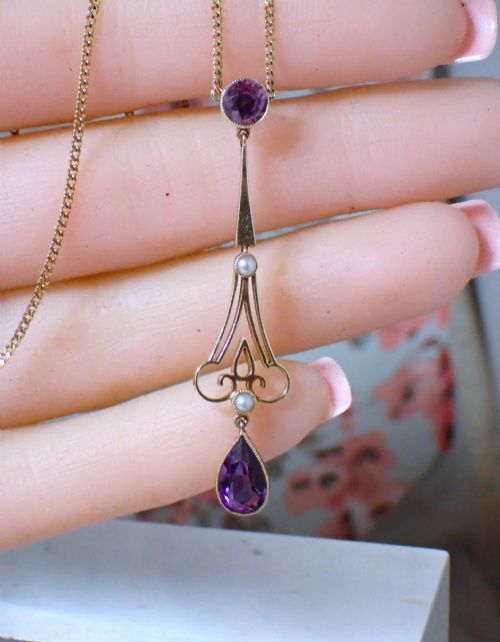
- A pendant design featuring a central gemstone or drop suspended from a secondary smaller drop or chain section. Popularised during the Edwardian period, this style places emphasis on movement.
- Etruscan Revival
- A nineteenth-century design style drawing on ancient archaeological discoveries in Italy. It uses granulation, filigree and applied wirework on high-carat gold.
15ct Yellow Gold Pendant: Frequently Asked Questions
How can I date a 15ct gold pendant?
Dating relies on stylistic clues, hallmarks and the types of gemstones used. Victorian pieces often feature heavier castings, garnet, or mourning motifs, while Edwardian examples favour light openwork frames, peridot, and seed pearls.
The British 15ct hallmark stamp itself provides a reliable window, as this specific gold standard was legally discontinued in 1931. Examining the construction of the bail and any associated chain loops offers further chronological context.
Can these pendants be worn as brooches?
Many items from this period are designed with dual functionality, incorporating both a suspension loop and a hinged pin with a C-clasp on the reverse. This allowed Victorian and Edwardian wearers to pin the piece to a bodice or suspend it from a ribbon or chain.
When wearing a convertible piece as a necklace, ensure the pin mechanism remains secure and catches properly to prevent snagging on clothing.
What is plique-à-jour enamel?
Plique-à-jour is an intricate technique where enamel is fired within open gold wire cells rather than against a solid metal backing. This creates a stained-glass effect that allows light to shine straight through the coloured glass.
Because there is no foundational metal plate, these delicate components require careful handling during daily wear and storage.
Are seed pearls durable for daily wear?
Seed pearls are organic gems that respond sensitively to moisture, perfumes, and cosmetics. Historic pieces often rely on original silk threading or fine wire to hold the pearls in place.
Owners should remove such jewellery before bathing or applying lotions, and store them away from hard metals to protect the delicate nacre surface from scratching.