

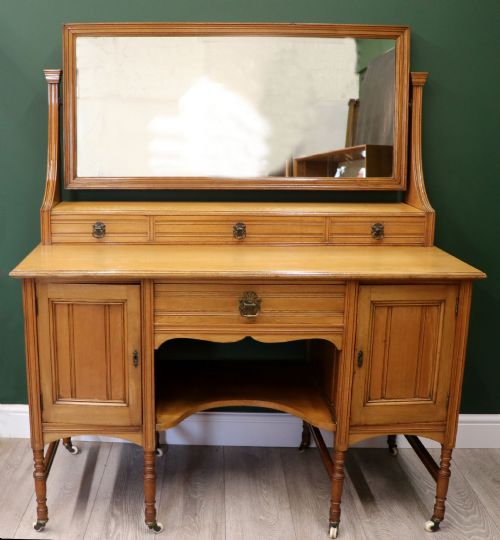


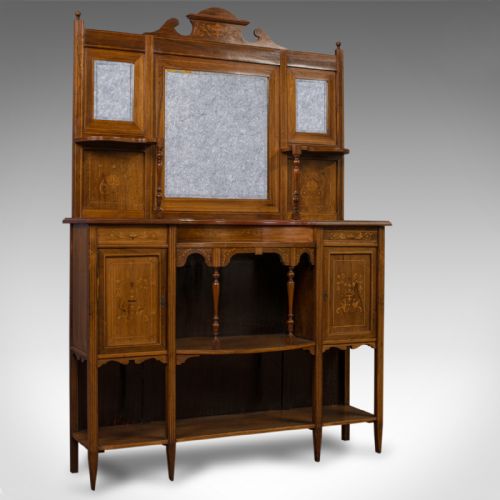


Late Victorian Mirrored Dresser
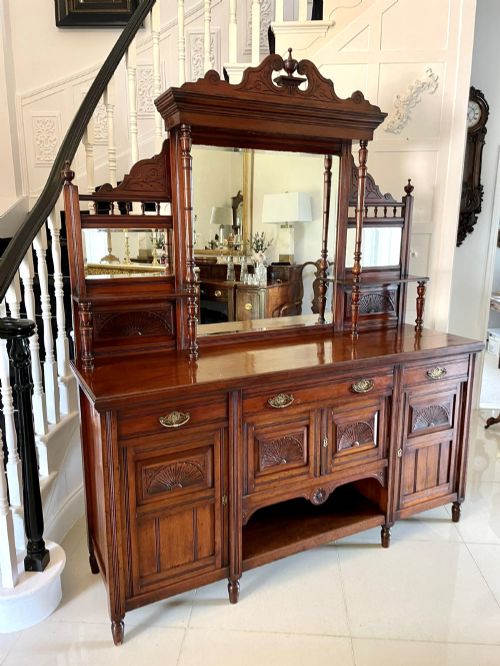
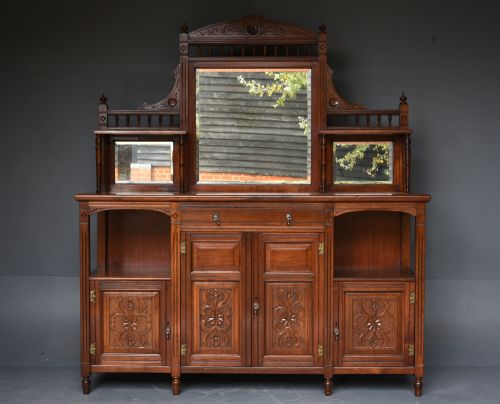
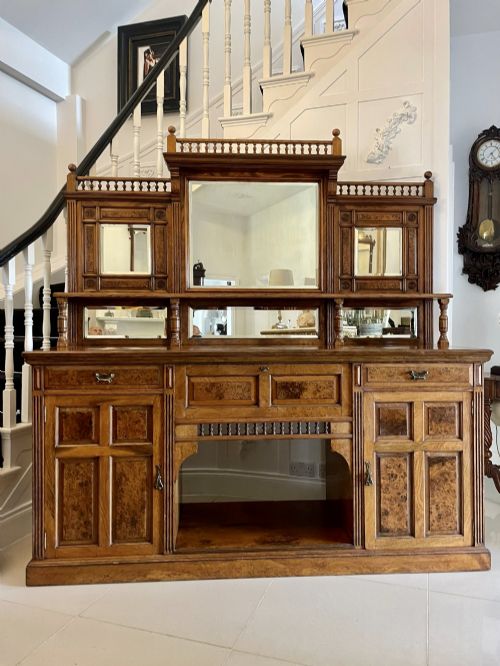
A late victorian mirrored dresser brings together generous glass and timber from the close of the nineteenth century.
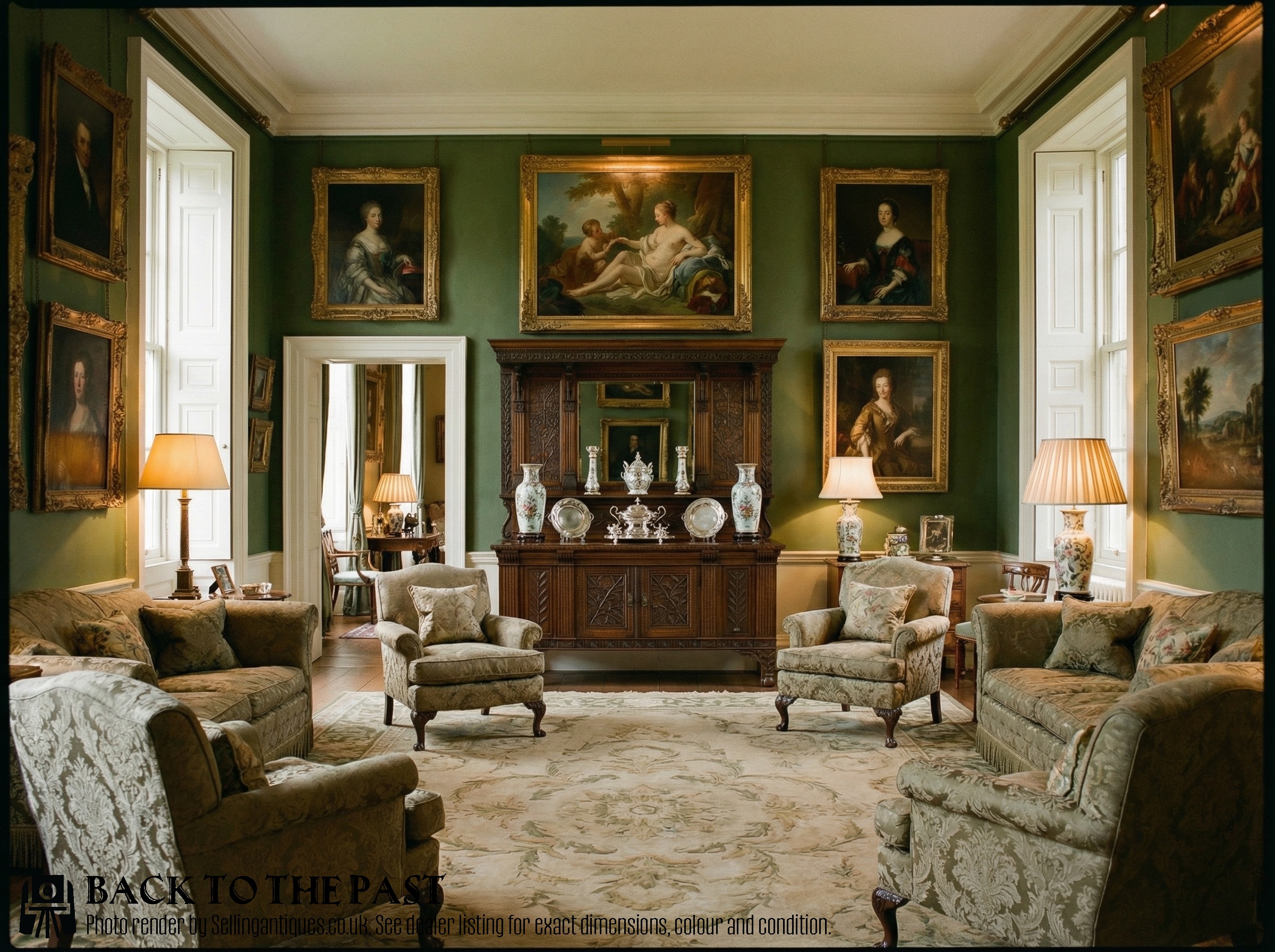
Late Victorian Mirrored Dresser
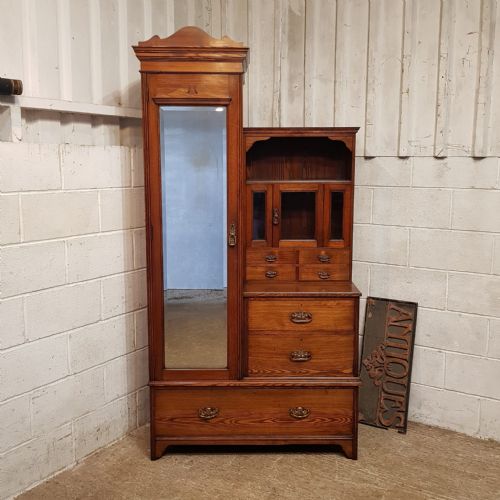
A late victorian mirrored dresser encompasses a variety of substantial domestic furniture forms produced from eighteen eighty to nineteen hundred. The listings reveal these pieces appearing primarily as mirror back sideboards, dressing tables, dressing chests, and side cabinets rather than kitchen plate dressers. Workshops of the period employed oak, walnut, mahogany, pollard oak, ash, pine, rosewood, and boxwood inlay to meet the demands of British and American households.
The aesthetic vocabulary spans standard Victorian taste alongside distinct Arts and Crafts and Victorian Faux Bamboo influences. Buyers encounter carved ornamentation, boxwood stringing, and integrated brass hardware across sideboard and wardrobe formats. Sideboards dominate the selection, offering significant timber surfaces paired with tall mirror plates intended to reflect light into nineteenth century rooms.
Materials and construction
Cabinet makers utilised a range of domestic and imported hardwoods including oak, walnut, mahogany, ash, and rosewood for structural carcases and drawer fronts. Pollard oak and boxwood inlay provided contrasting grain patterns and decorative borders on finer examples, while pine served for secondary elements such as drawer linings. Brass hardware, including handles and key escutcheons, anchored the timber doors and drawers.
Glass plates were silvered and fitted securely into architectural mirror backs and dressing table frames, often supported by carved or turned wooden uprights. Joinery methods relied on solid timber construction combined with detailed hand carving, particularly evident in the sideboard backs and dressing chest superstructures dating towards nineteen hundred.
Late Victorian Mirrored Dresser Retail Price Guide 2026
Typical asking prices for late victorian mirrored dresser among the pieces listed under this phrase on Sellingantiques today, from the lower quarter to the upper quarter. They describe what is for sale here now, not the wider market.
Cabinet makers occasionally turned solid timber into convincing bamboo stalks, proving that even Victorian trees wanted a holiday in the tropics.
Distinctions in standard
The hierarchy among these pieces rests on the choice of timber and the ambition of the workshop. Standard production yields straightforward ash wardrobes and pine-backed chests, whereas superior examples deploy figured pollard oak, rosewood, and intricate boxwood inlay. The integration of the mirror frame into the main body of the furniture further separates routine domestic items from substantial architectural sideboards.
Carving execution and decorative detailing distinguish the output. Simple turned elements contrast with deeply carved walnut and oak motifs associated with named firms and Arts and Crafts design principles. The integrity of the original glass and the harmonious proportion of the mirror back relative to the base dictate the standing of an individual piece.
The Late Victorian Mirrored Dresser Glossary
- Mirror back sideboard
- A large dining room base cabinet featuring an attached superstructure with an integrated mirror plate. These pieces served to display silver and reflect interior candlelight.
- Pollard oak
- Timber taken from trees that have been pollarded, producing a gnarled grain pattern with rich clusters of knots. Cabinet makers prized this wood for decorative veneers.
- Boxwood inlay
- Narrow strips or geometric shapes of pale boxwood inserted into darker carcase woods to create contrasting borders. This technique marks more labour-intensive furniture production.
- Faux bamboo
- Turned and carved timber designed to imitate the segmented joints of natural bamboo cane. This decorative finish gained popularity during the Victorian period for light bedroom furniture.
- Arts and Crafts
- A design movement prioritising honest construction, visible handcraftsmanship, and simple forms derived from medieval traditions. Pieces in this style reject heavy machine-made Victorian ornament in favour of structural clarity.
Late Victorian Mirrored Dresser: Frequently Asked Questions
What rooms suit a late victorian mirrored dresser?
These pieces function effectively in dining rooms, living spaces, and large bedrooms depending on whether the form is a sideboard or a dressing table. The integrated mirror plates help bounce natural light around darker interior spaces.
Buyers should measure wall clearance and ceiling height before placement, as the tall mirror backs on sideboards and wardrobes require substantial vertical room.
How do I identify an Arts and Crafts influence?
Arts and Crafts influenced examples display simplified structural lines, exposed joinery, and restrained carving that breaks away from heavy Victorian ornamentation. The timber grain and form take precedence over applied decoration.
Such pieces often utilise oak or ash and reflect the growing shift towards functional design around nineteen hundred.
What is the difference between a sideboard and a dressing table?
Sideboards were built for the dining room to store tableware and serve food, featuring deep base cupboards and drawers. Dressing tables were constructed for the bedroom with kneehole spaces and dedicated mirrors for personal grooming.
Both forms share the characteristic use of prominent mirrored superstructures during the late nineteenth century.